


Updated August 2026.
This article contains affiliate links. We may earn a commission at no additional cost to you if you make a purchase through these links. See our affiliate disclosure for details.
Sling bags have taken over as the everyday carry option for men who want something between a full backpack and stuffing everything into their pockets. They sit across your body with a single strap, keep your hands free, and hold just enough – phone, wallet, keys, maybe a slim water bottle or a paperback.
I’ve been using one for about two years now, mostly for weekend errands and short trips where a backpack feels like overkill. The format works surprisingly well once you figure out the right size and strap setup for your frame. Here’s what I’ve learned about picking a good one.
What Sets a Sling Bag Apart
A sling bag uses one diagonal strap across your chest or back. That single-strap design is the entire point. You can swing it to your front to grab something without taking it off, and you can swing it back when you don’t need access. Most hold between 4 and 10 liters, putting them in a category smaller than daypacks but roomier than fanny packs.
The shape varies quite a bit. Some look like shrunken backpacks with a teardrop profile, others are more like oversized pouches with a flat front panel. The common thread is that single strap and the quick-access design. You won’t fit a laptop in most of them, and that’s by design. They’re built for light, mobile carries where speed matters more than capacity.
What to Look for When Buying One
Strap width and padding matter more than you’d expect. A thin nylon strap cutting into your shoulder gets old after about twenty minutes of walking. Look for straps at least 2 inches wide with some foam padding, especially if you’re carrying anything heavier than a phone and wallet. Some higher-end bags use breathable mesh backing on the strap, which helps on hot days.
Size is the most common mistake. Most guys grab something too big or too small on the first try. If you’re carrying an everyday kit (phone, wallet, keys, earbuds, sunglasses), a 5-7 liter bag handles it fine. Going above 10 liters and you’re basically wearing a small backpack on one shoulder, which defeats the purpose. If you need help picking the right one for your carry, our sling bag roundup breaks down the top options by size and use case.
Material determines how long the bag lasts. Cordura nylon and ripstop are the most durable options in this category. Polyester works fine for lighter use but won’t hold up to daily abuse the way nylon does. If you’re curious about the tradeoffs, we wrote a detailed comparison of nylon and polyester that covers durability, water resistance, and cost. Canvas options exist too, though they tend to be heavier and absorb water unless treated. Leather carries the same penalty, since the hide thickness that buys durability on genuine leather backpacks is also what puts weight on the bag.
Pockets and organization vary wildly between brands. At minimum, you want a main compartment, one front quick-access pocket, and an interior zip pocket for cards or cash. Some bags add water bottle pockets on the side, which is nice but makes the bag wider and less streamlined against your body. Hidden back pockets that sit against your torso are great for travel since they’re harder for pickpockets to reach.
Three Slings That Get These Details Right
Using the criteria above (strap comfort, a size that stays in the 5 to 10 liter range, a shell that survives daily use), three bags stand out for men shopping this category.
Osprey Daylite Shoulder Sling

Osprey Daylite Shoulder Sling Bag – Compact...
Five liters is the size most guys should start at, and the padded pocket built into the strap itself puts your phone where you can reach it without swinging the bag around. Light enough that you forget it is on.
Carhartt Classic 10L Multi-Carry Sling

Carhartt Classic 10L Multi-Carry Sling Bag Black
At the top of the size range, so this is the one to pick if your everyday kit includes a tablet or a jacket. The Rain Defender coating beads off light rain, and the strap uses a side-release buckle instead of a slider that creeps loose.
Travelon Anti-Theft Classic Sling
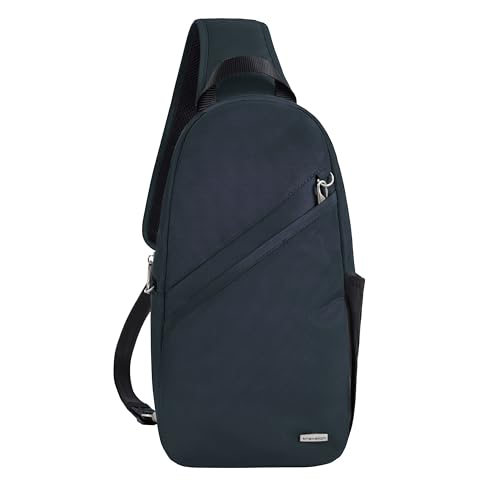
Travelon Anti-Theft Classic Sling Bag
Built for the crowded-transit problem mentioned above: locking zippers, slash-resistant panels in the body, and cut-resistant cables running through the strap. The RFID slots hold a passport and cards, which makes it a sensible personal item on a travel day.
Front Carry vs. Back Carry
Most sling bags are designed to be worn on your back and swung to the front when you need something. Some people just wear them in front all the time, which works fine for urban environments where you want to keep an eye on your belongings.
Back carry distributes weight slightly better and looks cleaner under a jacket, though for anything dressier a slim elegant backpack sits against tailoring better than a single strap does. Front carry gives you faster access and more security in crowded spaces like airports, markets, or public transit. There’s no wrong answer. It depends on where you’re wearing it and what’s in it. If security is a real concern for you, anti-theft bags add features like lockable zippers and RFID-blocking pockets that pair well with front carry.
When a Sling Bag Works (and When It Doesn’t)
Sling bags work best for situations where you need your essentials within arm’s reach but don’t want a bag hanging off one hand. Commuting, running errands, travel days where you already have a checked bag, concerts, theme parks, dog walks. Those are the sweet spot.
They don’t work as well for anything requiring a laptop, heavy gear, or sustained weight over long distances. That single strap puts all the load on one shoulder, and anything over about 5 pounds starts getting uncomfortable after an hour or two. If you’re carrying heavier loads daily, a proper two-strap backpack is still the better call.
For travel specifically, a sling bag pairs well with a larger carry-on as your personal item. It fits under the seat easily and keeps your passport, boarding pass, and headphones accessible during the flight without digging through an overhead bin.
How to Adjust the Fit
The bag should sit at your lower back or hip when worn behind you, not up between your shoulder blades. A common mistake is cinching the strap too tight, which pulls the bag high and makes it bounce when you walk. Loosen the strap until the bag rests at your waistline, then tighten just enough so it doesn’t swing freely.
If you’re over 6 feet tall, check the strap length before buying. Some compact sling bags have straps that max out around 48 inches, which can feel tight across a larger frame. Anything over 52 inches of adjustable strap length should work for most body types.
Sling Bags Side by Side
FAQ
What size sling bag should a man get?
For everyday carry (phone, wallet, keys, earbuds), 5-7 liters is the sweet spot. Under 4 liters feels cramped, and over 10 liters starts behaving like a one-strap backpack that puts too much load on one shoulder.
Can you use a sling bag as a personal item on a plane?
Yes. Most sling bags are small enough to fit under the airplane seat, which qualifies them as a personal item on every major airline. They’re actually one of the most convenient personal item options because you can access everything without pulling the bag out from under the seat.
Are sling bags bad for your back?
Carrying weight on one shoulder isn’t ideal for extended periods. Keep the load under 5 pounds and switch shoulders occasionally if you’re walking for more than an hour. For heavier loads or all-day carries, a two-strap backpack distributes weight much better.
What’s the difference between a sling bag and a crossbody bag?
They’re closely related. Sling bags tend to be larger (5-10L) with a wider strap and sit on your back, while crossbody bags are typically smaller and flatter, sitting against your hip. The terms overlap a lot, and some brands use them interchangeably.
Do sling bags work with suits or business casual?
Some do. All-black sling bags with clean lines and minimal branding look fine with business casual. For actual suits, you’re better off with a briefcase or messenger bag. The casual silhouette of most sling bags clashes with formal tailoring.