
Is an Anti-Theft Bag Worth It? (+ One HUGE Misconception)

This article contains affiliate links. We may earn a commission at no additional cost to you if you make a purchase through these links. See our affiliate disclosure for details. As an Amazon Associate I earn from qualifying purchases.
A stolen bag ends a trip faster than a delayed flight. The bag is replaceable. The passport, cards, laptop, and the rest of the day are not.
Anti-theft bags cost more than a plain backpack or crossbody of the same size. The extra money is for hardware that slows a thief: lockable zippers, slash-resistant panels, steel-cabled straps, hidden pockets, and RFID-blocking card slots. That hardware is worth buying if you spend time in crowded transit or on a first trip to a city known for pickpockets. Watching the bag still matters more than the hardware.
Airlines lose bags too. If that is the risk you are actually planning for, start with compensation for lost or delayed luggage.
What Is an Anti-Theft Bag?
An anti-theft bag looks like a normal purse, crossbody, laptop bag, or backpack. The difference is the hardware: lockable zippers, slash-resistant fabric, cabled straps, hidden pockets, and RFID card sleeves. Those parts are built to slow a thief in a crowd, not to make the bag unopenable. The same idea shows up in how you keep your belongings safe in a hostel.
Backpack versions get the most search attention. The features that matter are still the lockable zipper, the cabled strap, and the slash-resistant panel. A hangtag that says anti-theft is not one of them.
Locking Zippers and Clips
The zipper pulls clip or lock to the bag, or to each other. You'll take a second longer to open your own bag. A pickpocket who needs that same second on a platform usually moves on.
RFID Blockers
Credit cards, debit cards, and some passports use RFID chips. A skimmer in a crowd can try to read those chips from a few centimeters away. That is RFID skimming.
An RFID-blocking pocket or panel sits between the chip and the reader so the signal doesn't get out. Some bags shield the whole body. Many only shield one pocket. If the listing limits blocking to a card slot, the cards have to live in that slot.
Secret Compartments
Most anti-theft bags keep a quiet exterior and put the hiding places inside. Pockets sit behind fabric flaps so a quick look into the main compartment does not show a phone, passport, or card stack. Those pockets usually zip, and some are sized for specific items such as cards or medication. You have to know the bag to find them, which is the point.
Uncuttable Shoulder Straps
A thief who grabs a bag often cuts the strap. Anti-theft straps hide a steel cable inside the webbing. The cable is light enough to flex and hard to cut with a pocket knife. Extra seconds in a crowd are usually enough for someone nearby to notice.
Anti-Slash Body
The same idea in the body panels. Many bags weave ultra-high molecular weight polyethylene (UHMWPE) into the fabric so a blade does not open the bag in one slash. Some list a level-five cut rating, which is the top of the common scale. The useful spec is the mesh or the UHMWPE, not a "military-grade" adjective on the hangtag.
Anti-Theft Bags: Our Picks
Seven bags on Amazon, from a city crossbody to a 35-liter travel pack. Features and who each one is for sit under the cards.
Anti-Theft Bags at a Glance
Baggallini Anti-Theft Securtex Bag
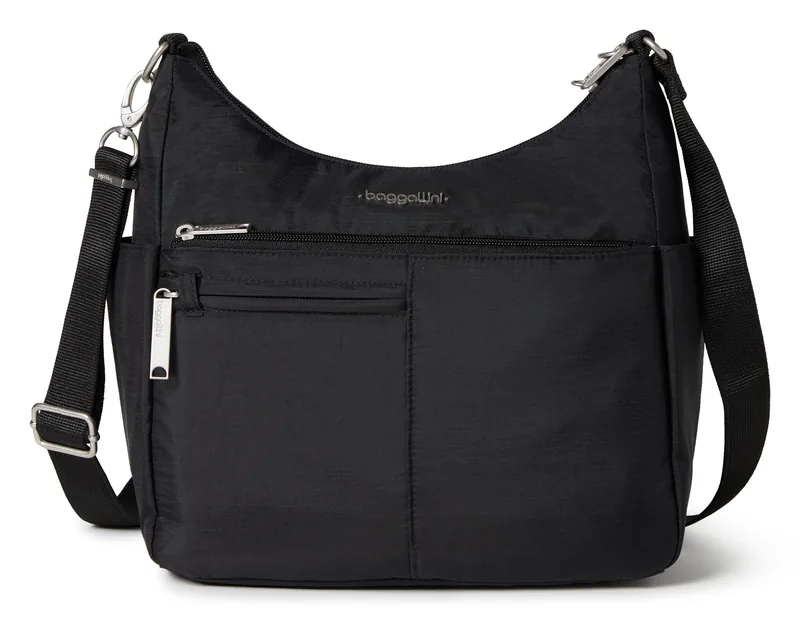
Baggallini Anti-Theft Securtex Bag
A stylish hobo-style anti-theft bag with slash-resistant panels, RFID blocking, and locking hardware for city travel.
This Baggallini costs more than a plain crossbody of the same size, and the slash panels, locking zipper, and cabled strap are what the difference buys.
The hobo-style bag measures 14 inches wide and 10 inches tall with a 29-inch shoulder drop. Slash-proof panels use SecurTex fabric, so a knife scrape is less likely to open the bag. The shoulder strap has two layers of cabling, and you can pull the cable out to lock the bag to a chair or a rail. The main zipper locks. RFID blocking covers the card slots.
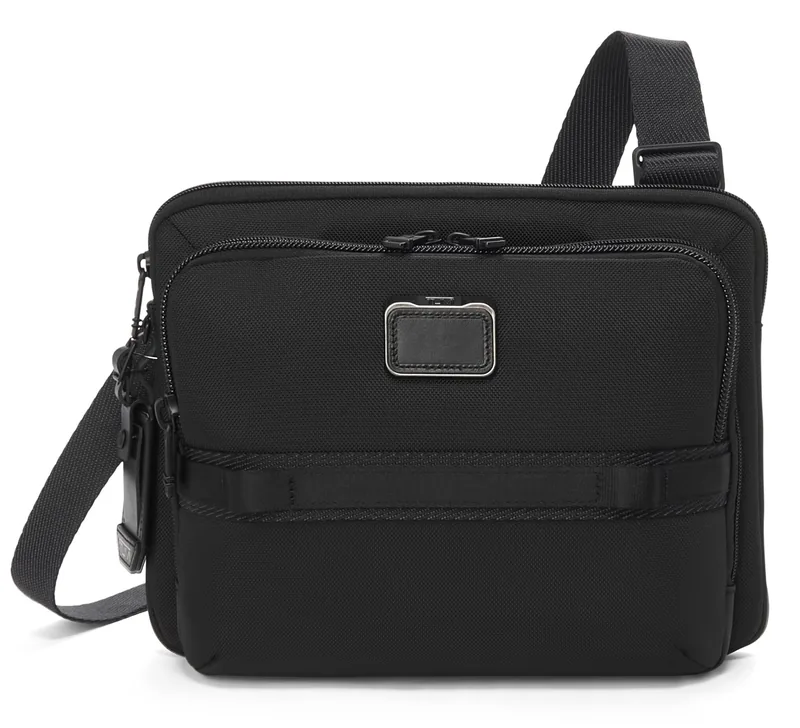
TUMI Alpha Bravo Service Crossbody Bag
The TUMI Alpha Bravo Service Crossbody is ballistic nylon in a small zip format. The material is the same family TUMI uses on luggage that sees a conveyor belt, which is why the hardware outlasts a fashion crossbody.
The exterior has a zip entry to the main compartment, a front zip pocket, and an adjustable shoulder strap. At roughly 9.3 by 12 inches it stays under the airline personal-item radar. TUMI's leather luggage tag and Tracer registration come standard.
TUMI builds the Alpha Bravo line for people who carry the same bag every day, and it shows in the hardware, not the logo. It handles a commute and a day of walking a city you don't know, which is most of what a small crossbody gets asked to do.
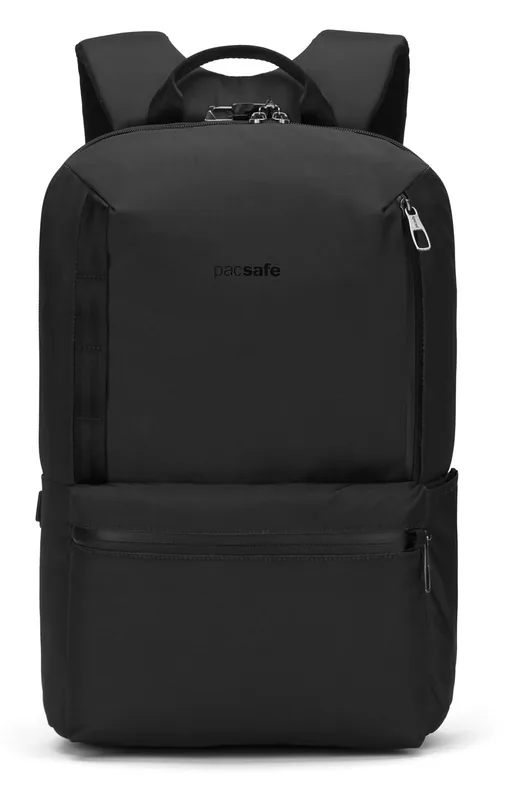
Pacsafe Metrosafe X 20L Backpack
The Pacsafe Metrosafe X 20L is the laptop-security pick of this list. Replacing a stolen laptop costs several times what the bag does, and this one is built around not letting that happen.
The padded interior sleeve fits a 16-inch laptop, and the 20-liter body leaves room for a tablet, a jacket, and the rest of a work day. It reads as a plain commuter backpack, which is part of the protection.
Pacsafe layers its usual kit through the bag: eXomesh slashguard panels in the body, cut-resistant straps, and an RFID-blocking pocket for cards and passport.
The zippers lock together so a pickpocket can't ease one open on a train, and the pulls anchor to the bag's own hardware. None of it needs a key or a combination, so getting into your own bag stays quick.
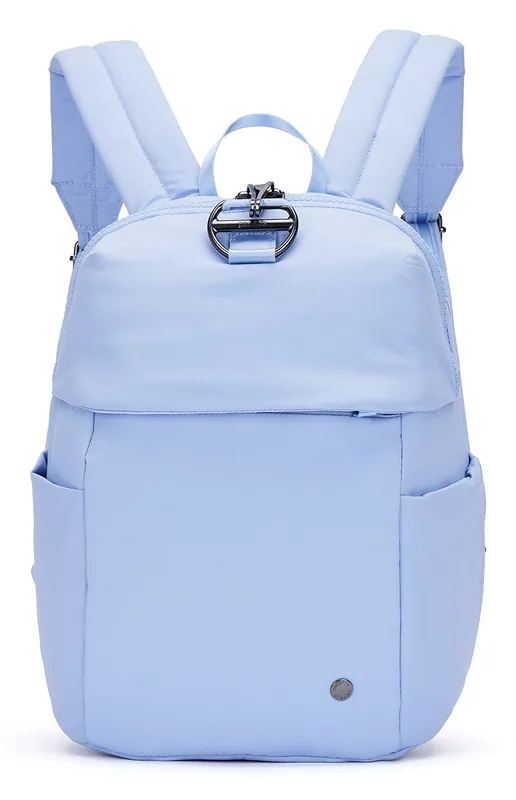
Pacsafe Citysafe CX Petite Backpack
The Pacsafe Citysafe CX Petite Backpack is for travelers who want a smaller anti-theft bag than a laptop pack. At 8 liters it carries like a purse with straps, which makes it useful for sightseeing days and dinners as much as transit.
Pacsafe uses slash-resistant materials, lockable zippers, and RFID-safe storage so cards, a passport, and daily essentials are harder to reach in a crowd.
This is the pick we would look at if you want a bag that feels less like travel gear and more like something you would carry at home. The profile is compact, the compartments are practical, and the convertible setup gives it more range than a single-purpose backpack.
Capacity is the limit. If you're carrying a full laptop setup, look toward the Metrosafe X instead. If the job is a secure daily bag for essentials, the Citysafe CX is the one that fits that job.
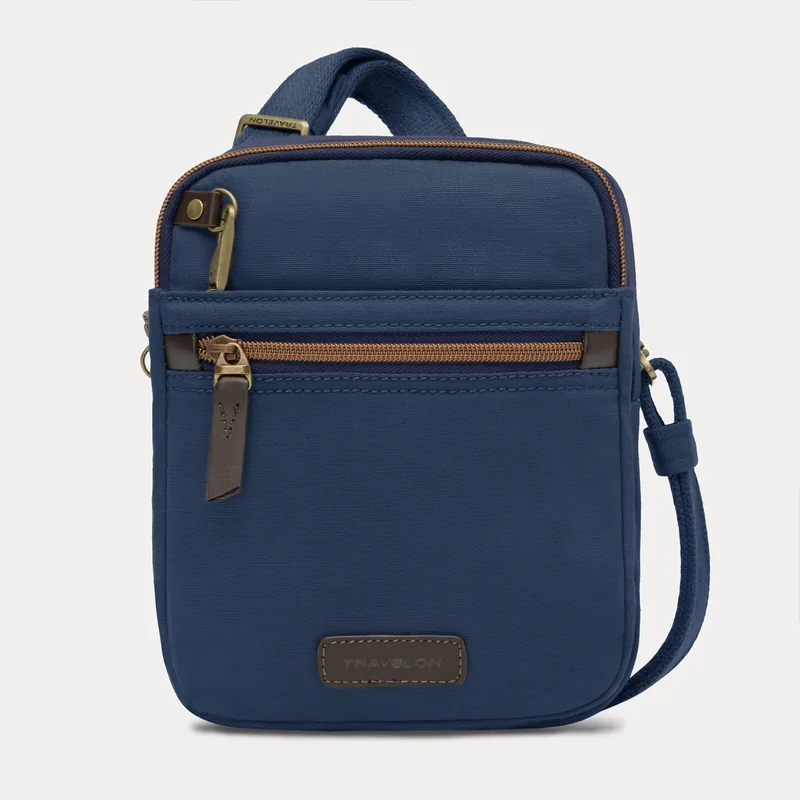
Travelon Anti-Theft Courier Slim Bag
The Travelon Anti-Theft Courier Slim Bag is the north-south crossbody in Travelon's Courier range. RFID-blocking pockets and slots inside can cover a passport, identity cards, and credit cards while you move through a crowd.
The shoulder strap hides a stainless steel cable, so a blade does not cut the bag off your shoulder in one pass. The body has a stainless steel mesh skeleton on the back, bottom, sides, and front. Locking compartments sit on top of that mesh.
An expansion pocket holds sunblock, an umbrella, sunglasses, or a water bottle, and it zips shut. The Courier Slim comes in stone gray or navy.
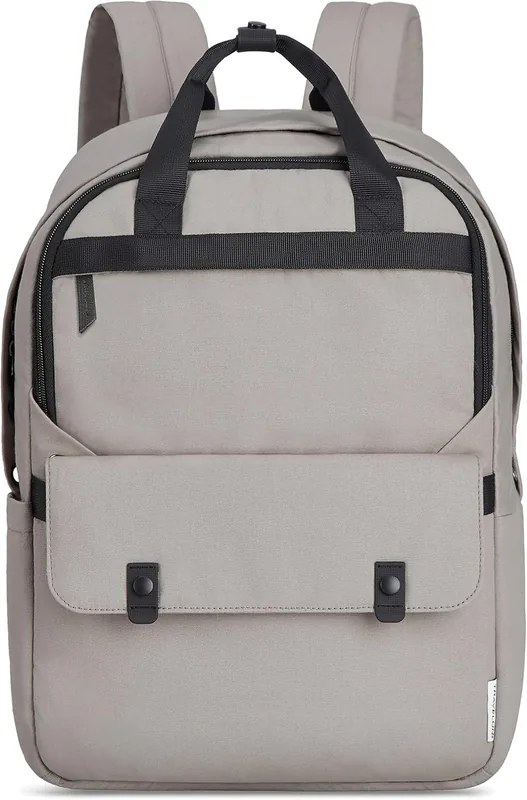
Travelon Anti-Theft Origin Backpack
The Travelon Origin is the everyday daypack of this list, and one of the more affordable picks in it. It swallows a laptop, a layer, and a water bottle without announcing that any of them are inside.
The body is a water-resistant recycled polyester, part of Travelon's Origin line, and it wears daily scuffs without looking wrecked.
The shoulder straps come padded and adjustable, and the dedicated laptop compartment keeps the hardware away from the door-side of the bag. Inside you'll find RFID-blocking card and passport slots.
The main zippers lock shut, so the bag can sit on a cafe chair back without sitting open.
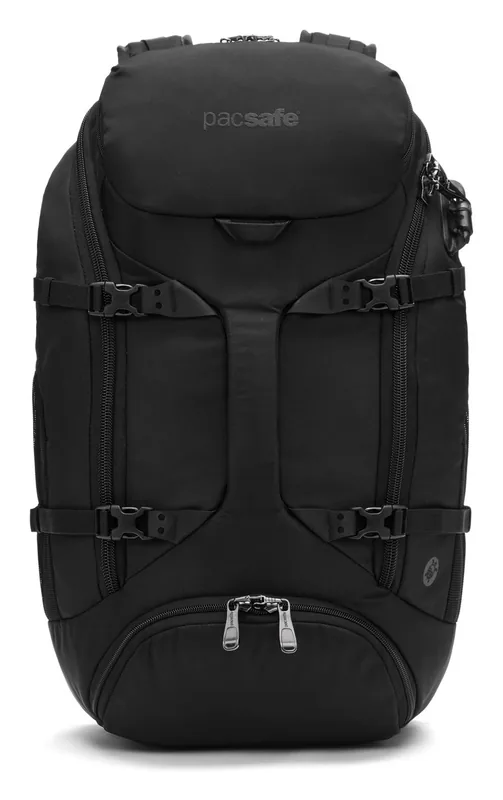
Pacsafe Venturesafe EXP35
Every other bag on this list is sized for a day out. The Venturesafe EXP35 is the one built to carry a whole trip, at 35 liters with a clamshell opening that packs like a suitcase, not a top-loading rucksack.
The anti-theft hardware is Pacsafe's usual kit, scaled up: self-locking zipper pulls, a slash-resistant mesh through the body panels, and an RFID-blocking pocket for passport and cards. On a longer trip the bag spends time out of your sight, on a hostel bunk or a train luggage rack, and the lockable zippers matter more there than they do on a city street.
Weight is the price. A 35 liter pack with steel mesh in the panels is heavier than a plain travel backpack of the same volume, so buy one only if you actually want the security on the road, not around town.
Is an Anti-Theft Bag Worth It?
The hardware works at slowing a thief. Slash-resistant panels, cabled straps, and zippers that don't slide open on a train add seconds. Pickpocketing has to finish in seconds, so extra time is usually enough for the thief to drop that bag and move on. A determined thief with time and a tool can still get in.
RFID blocking is the feature people get wrong. Some bags shield the whole body. Many only shield one pocket. If you leave cards in an unshielded slot, the blocking does nothing. Read the listing and put the cards where the shield actually is.
The usual worry is that an anti-theft bag advertises you have something worth stealing. Quiet models look like any other crossbody or backpack. The hardware sits inside the strap and the zipper, not on a logo.
A money clip costs less and holds less. It is also easier to lose. A men's crossbody sling carries less than a backpack and keeps the zipper against your body, which is a different kind of protection.
An anti-theft bag does not replace paying attention. Don't leave it on the floor. Don't hang it on the back of a chair in a packed bar if you can keep it in your lap.
So, Is an Anti-Theft Bag Worth It?
Buy one when you spend time in crowds with a passport, cards, or a laptop you cannot replace on the trip. Pay for lockable zippers, a cabled strap, and slash-resistant panels. Skip a hangtag that only prints the words. Watch the bag anyway.
Filed in Travel Bag Tips