Compression Bags for Travel: Vacuum, Roll-Up and Cubes

This article contains affiliate links. We may earn a commission at no additional cost to you if you make a purchase through these links. See our affiliate disclosure for details. As an Amazon Associate I earn from qualifying purchases.
For clothes you’ll unpack every day, we’d start with compression cubes: on the BAGSMART set below, the second zipper takes each cube down to 1.8 inches deep without a pump. Choose a vacuum bag for a bulky item you can leave packed, provided you’ll have its pump when you need to repack. Roll-up bags suit travelers who want to squeeze air out by hand. None of these methods makes your clothes lighter.
The five sets below serve different jobs, including one regular packing-cube alternative. We checked their listed specifications and TSA and FAA guidance on October 3, 2026. We haven’t tested compression, creasing, or durability, so the recommendations reflect the set contents and packing method.
- Pack the clothes in
- Close the zip seal
- Roll toward the one-way valve
- Unroll it, the bag stays flat
Which compression method fits your trip?
| Type | How it compresses | Repacking away from home | Best reason to choose it |
|---|---|---|---|
| Vacuum bag | A compatible pump or vacuum removes air through a valve. | Bring the correct pump and, for a rechargeable model, its charging lead. | Reducing bulk when the bag and garment instructions permit compression. |
| Roll-up bag | Rolling pushes air through the bag’s outlet. | Follow the rolling direction and keep the outlet clear; no separate pump. | Compressing suitable clothing without carrying a pump. |
| Compression cube | An extra zipper reduces the filled cube’s depth. | Repack and close the main zipper, then the compression zipper, without forcing either. | Separating clothing categories you’ll open regularly. |
Choose around the return trip. A bag that requires a household vacuum is less useful when you won’t have one at your destination. A rechargeable pump adds a charging task. If you’d rather avoid both, consider cubes or roll-up bags, but check what the particular bag can hold. The Amazon roll-up set below specifically advises against bulky clothes.
Eagle Creek explains the distinction between regular cubes, compression cubes, and compression bags. You can mix methods: a cube for everyday clothing and a separate bag for an item you won’t need until later. You don’t have to use every piece in a set.
How to choose a compression bag
Check the filled size and the seal
Measure the usable space inside your suitcase, including around the handle rails. Then check the individual bags’ dimensions. A listing’s single “product dimensions” field may describe the whole kit or just one component; it doesn’t necessarily describe every bag you’ll receive.
Flat bag dimensions also don’t tell you the size of the packed bundle. Fill it with your planned clothes and try it in the case before departure. Leave room for shoes, toiletries, and the pump. If you have to force the suitcase shut, reduce the load rather than depending on more compression.
Leave wrinkle-prone clothing out of the experiment
Don’t count on compression to keep shirts ready to wear. Follow garment care instructions, and pack a structured jacket or delicate item without compression if you’re unsure. Keep the outfit you need on arrival separate. For insulated clothing, check the maker’s packing and storage advice before squeezing it down.
Saving space doesn’t remove your clothes’ weight
Compression removes trapped air. Your clothes still count toward the weight allowance, and the bags and pump add weight. Weigh the complete suitcase against your airline’s allowance after packing, and again if you fill the newly available space. A smaller bundle isn’t permission to bring a heavier bag.
Use regular cubes when organization is the problem
If your suitcase closes easily but finding socks means unpacking everything, regular cubes may be enough. Separate clothes by outfit or category, and take only the cubes you need. Our guide to whether packing cubes are worth it explains when that organization earns its space.
Compression bags and cubes to compare
1. Amazon Basics Vacuum Storage Bags: Hand-Pump Set, 12 Bags
Amazon Basics Vacuum Bags
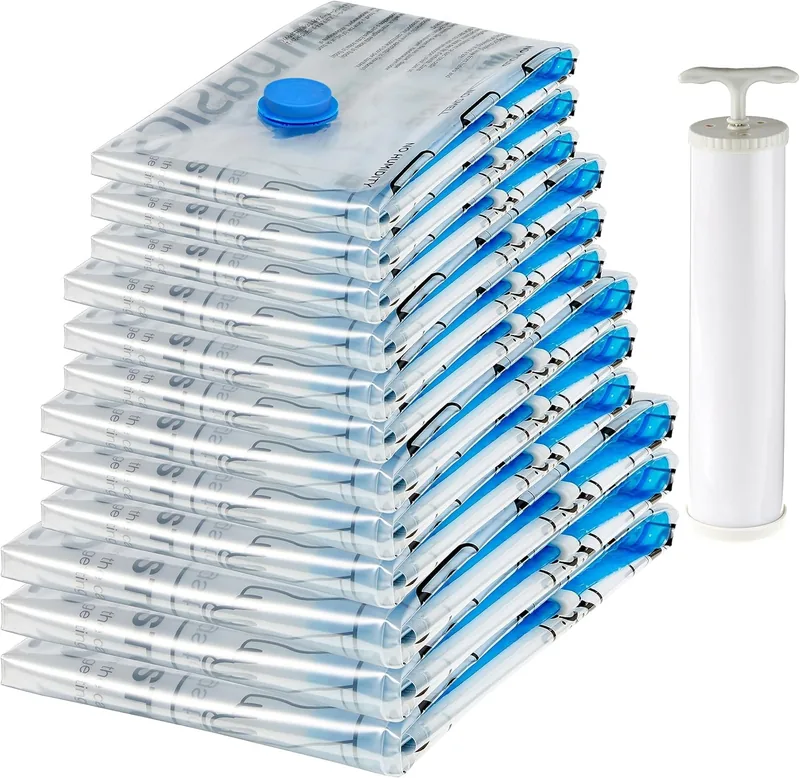
A 12-bag assortment with an included hand pump. Check how many of its larger storage bags you’ll actually use.
This exact 12-pack includes three bags in each listed size: small at 24 × 16 inches, medium at 28 × 20, large at 32 × 24, and jumbo at 40 × 30. The included hand pump removes air through the valve; the listing also permits a standard vacuum-cleaner hose.
We’d consider this assortment if you want bags for home storage as well as travel. Even the smallest bags need a packed trial in your suitcase. If you only need a few small pouches, much of this bundle could stay in the closet.
The bags use PA/PE film and a double-zip seal. Follow the instructions printed on them, including how to close the valve. Don’t base your luggage plan on the advertised percentage reduction: the result depends on the clothes and how you pack them.
2. BAGSMART Compression Packing Cubes: Zipper Compression, 6-Piece Set
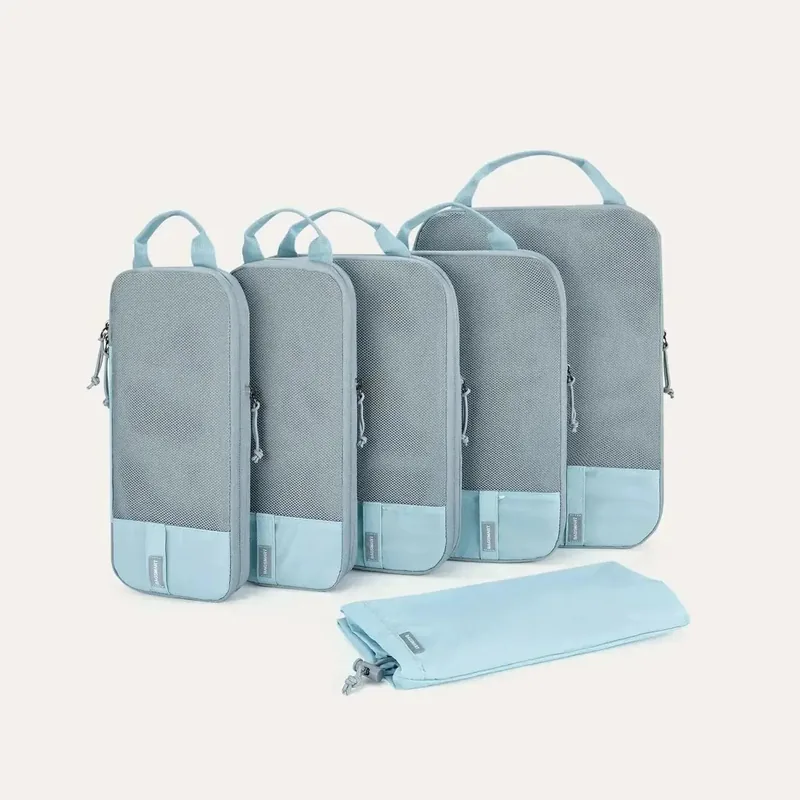
The linked variant is the Baby Pink six-piece set, model BM0104003AN012-FUS-A. Its listing describes large, medium, and small organizers plus a drawstring bag; don’t read the six-piece count as six identical compression cubes. The outer compression zipper is the feature that separates these from regular cubes.
We’d choose this method for moving between hotels or opening the suitcase daily. Divide your clothes into manageable groups, close the main compartment, then compress it with fabric clear of the zipper. If the zipper catches or strains, take something out.
Check the selected set’s individual cube sizes before ordering. The page lists several bundles, and one overall size field doesn’t establish the dimensions of every piece. We haven’t verified a complete size breakdown for this exact variant, so there’s no carry-on fit promise here.
3. BAGSMART Vacuum Bags: Rechargeable-Pump Kit, 18 Pieces
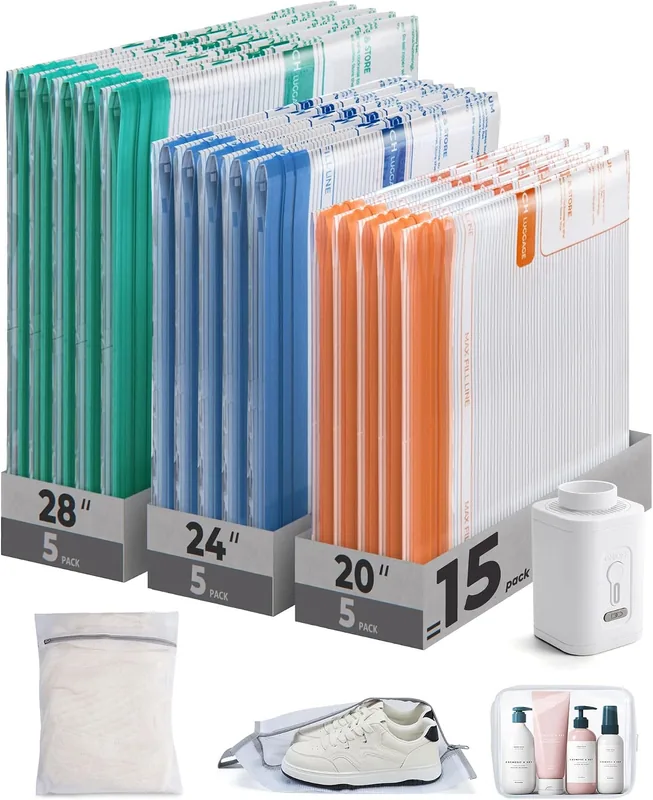
BAGSMART Travel Vacuum Bags
BAGSMART’s 18-piece travel set contains 15 vacuum bags plus a shoe bag, laundry bag, and toiletry bag. The listing includes a cordless pump with Type-C charging. The headline count doesn’t mean 18 vacuum bags.
Consider it if you prefer powered air removal and are willing to carry and charge the pump. Before choosing it for a particular suitcase, confirm the individual bag sizes: the listing’s single dimensions field doesn’t provide a usable breakdown of all 15 bags. Keep the charging lead with the pump and try the complete setup before departure.
For flights, read the pump’s battery label and check your airline’s requirements against FAA battery guidance. A spare lithium battery must stay in the cabin, including when your carry-on is gate-checked. A rechargeable pump’s inclusion in a travel kit doesn’t establish its eligibility for your flight.
4. Amazon Basics Roll-Up Compression Bags: No-Pump Set, 12 Bags

Amazon Basics Roll-Up Bags
This 12-pack contains six small bags listed at 24 × 16 inches and six medium bags at 28 × 20 inches. You close the seal and roll from the zipper end so air exits at the bottom. No pump is needed.
The useful limitation is easy to miss: Amazon advises against duvets and bulky clothes for this set. We’d consider it for suitable garments or towels, then check the filled shape in the suitcase. Don’t choose it for a thick winter coat just because another brand’s compression bag is designed for that job.
The PA/PE bags are listed as reusable. Keep clothing clear of the seal and follow the rolling direction. If air returns, check the closure and inspect for damage before relying on the bag for another trip.
5. Amazon Essentials Packing Cubes: Organizing Cubes, Set of 4
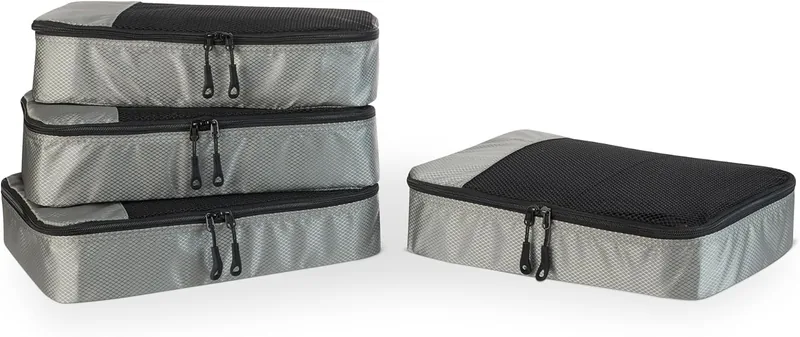
Amazon Essentials Packing Cubes
The linked Gray set has four medium cubes, each listed at 13.75 × 9.75 × 3 inches. These are regular polyester organizers with mesh tops, handles, and double zipper pulls. Two pulls on the opening aren’t an extra compression zipper.
We’d choose these when separating clothes matters more than squeezing them down. Four equal-size cubes can work for shared packing or dividing clothing by category, but check their arrangement in your suitcase instead of assuming all four will fit. Use fewer if that leaves a better space for shoes or a toiletry bag.
The listing now uses Amazon Essentials and notes its previous Amazon Basics name. It also describes the cubes as machine washable; follow the care label for the actual wash and drying instructions.
Compare the five sets
| Set | What’s in it | Bag or cube sizes | Listed weight |
|---|---|---|---|
| Amazon Basics Vacuum Storage Bags | 12 vacuum bags and a hand pump | 3 each at 24 x 16, 28 x 20, 32 x 24 and 40 x 30 in | 2.9 lb, whole pack |
| BAGSMART Compression Packing Cubes | 6 pieces: compression cubes and a drawstring bag | Large 15 x 10.5 x 6 in, Medium 13 x 9 x 5 in, Small 13 x 5 x 5 in; each zips down to 1.8 in deep | 0.4 kg, whole set |
| BAGSMART Travel Vacuum Bags | 15 vacuum bags, a shoe bag, a laundry bag, a toiletry bag and a rechargeable pump | Not listed | 3.1 lb, whole kit |
| Amazon Basics Roll-Up Compression Bags | 12 roll-up bags, no pump | 6 at 24 x 16 in, 6 at 28 x 20 in | 0.63 kg, whole pack |
| Amazon Essentials Packing Cubes | 4 regular cubes, no compression zipper | 13.75 x 9.75 x 3 in each | 3.5 oz |
How to pack with compression bags
Use a repeatable packing method
- Start with the clothes you need. Set aside your travel outfit and arrival essentials. Compression shouldn’t decide the packing list.
- Pack clean, dry clothing. Follow the bag’s fill line or instructions and leave its closure clear. Use the garment’s care label to decide whether compression is appropriate.
- Compress as directed. Use the matching valve and pump, roll in the marked direction, or close the cube’s second zipper. Stop if a seam, zipper, or plastic panel is under strain.
- Check the whole case. Fit the compressed items around everything else you’re taking, close the case normally, and weigh it. Leave some room to repack.
Before reusing a bag, check its seams, seal, and valve or air outlet. Clean it according to its own instructions and let it dry before putting it away. Don’t apply a fabric cube’s machine-wash instructions to a plastic bag, valve, or electric pump.
Keep essentials accessible
Leave medication, documents, toiletries, and your arrival outfit outside the compressed clothing. Use a small separate pouch or an easy-to-reach compartment. Keep damp laundry separate and dry it before sealing it for storage.
Plan for reopening the bags
Practice opening and repacking a bag once with the equipment you’ll actually carry. That reveals whether you’ve depended on a household vacuum, forgotten a charging lead, or packed more than you can comfortably fit back in.
TSA permits vacuum-sealed clothing bags but discourages them because an officer may need to open one if it triggers an alarm. Leave time and space to repack after inspection. If your case only closes under maximum compression, remove some clothing before the trip.
FAQ
Do compression bags damage clothes?
There’s no single answer for every garment. Follow its care instructions, and don’t assume compression prevents creases. Pack delicate or structured items without compression if you’re unsure. Check the maker’s storage advice for insulated clothing rather than leaving it tightly packed between trips.
Do compression bags help with airline weight limits?
They reduce bulk, not the weight of your clothing. The bags and any pump add weight, and filling the space you’ve saved adds more. Check your allowance and weigh the complete suitcase after packing.
Can you take compression bags through airport security?
TSA lists vacuum-sealed clothes bags as permitted in carry-on and checked bags, but discourages them because officers may need to open them if they trigger an alarm. The officer makes the final checkpoint decision. Contents and any battery-powered pump have separate rules. Outside the US, check the relevant screening authority.
Are vacuum compression bags reusable?
Some are designed for reuse; both Amazon bag sets here are listed that way. Inspect the seal, seams, and any valve or air outlet before packing again. A damaged bag or one that won’t hold compression shouldn’t be the reason your suitcase can close.
What’s the difference between compression bags and packing cubes?
Vacuum and roll-up bags remove air to reduce bulk. Regular packing cubes separate clothing, while compression cubes add a zipper that reduces the filled cube’s depth. Choose around how often you’ll unpack and whether you want to carry a pump.
Choose a method you can repack
For daily access, start with cubes. For air removal without a pump, check a roll-up bag’s size and clothing limits. Choose a vacuum set only when its bags and return-trip pumping method suit your plan. Try the load at home, then weigh the entire suitcase.
Filed in Packing Tips