

Updated August 2026.
This article contains affiliate links. We may earn a commission at no additional cost to you if you make a purchase through these links. See our affiliate disclosure for details.
A luggage strap is the cheapest piece of travel gear we own, and it earns its spot on every trip. It keeps an overstuffed suitcase from popping open on the carousel, it makes a plain black bag visible from thirty feet away, and the bungee style turns a rolling carry-on plus a heavy tote into one easy push through the terminal.
We sorted through dozens of listings, threw out the flimsy ones and the cargo-grade overkill, and landed on five straps that cover every real use case: stacking a second bag, locking a zipper shut, color-coding a family’s worth of suitcases, and surviving years of baggage handlers.
What to Look for in a Luggage Strap
Buckle quality decides everything
The webbing on most straps is polyester or nylon and rarely fails. The buckle is where cheap straps die. Look for a wide, positive-click buckle that holds tension under load; a strap rated for 500 pounds of pull tells you the maker actually tested the clasp, not just the fabric.
Length and fit for your suitcase
Most straps adjust between roughly 40 and 80 inches, which wraps anything from an underseat bag to a 28-inch checked spinner. Measure the girth of your biggest suitcase before buying. And if your second bag is one of our favorite personal item bags, the bungee pick below anchors it to your suitcase handle with room to spare.
TSA locks deter, they don’t fortify
A strap with a built-in TSA combination lock stops casual zipper-pulls and marks your bag as a harder target. It won’t stop a determined thief with a blade, so treat it as a deterrent layer. For tracking rather than securing, an AirTag inside your bag covers the other half of the problem.
A color you can spot across the carousel
Half the value of a strap is identification. A bright orange or rose band across a black suitcase ends the awkward tag-checking ritual at baggage claim. Multi-packs with four distinct colors let a family spot every bag at a glance. Pairing the band with monogrammed luggage tags makes the bag identifiable at the handle too.
Bungee and buckle do different jobs
A buckle strap compresses and secures one bag. A bungee add-a-bag strap anchors a second bag (a tote, a duffel, a laptop bag) to your rolling suitcase’s handle so your shoulder stops paying the price. Plenty of travelers end up carrying one of each, and at these prices that’s a reasonable plan; this is exactly the kind of cheap travel gear where the budget option performs like the premium one.
The Picks: 5 Luggage Straps Worth Buying
1. RUMILLA Add a Bag Luggage Strap

RUMILLA Add a Bag Strap
One bungee turns a rolling carry-on and a heavy tote into a single push through the terminal.
$6.99 on Amazon, price may vary
This is the strap we recommend first because it solves the most painful airport problem: the second bag. Loop the elastic bungee over your suitcase handle, cinch your tote or duffel against it, and both bags roll as one unit while your hands stay free for coffee and boarding passes. It’s hands-down the simplest quality-of-life upgrade in our travel kit, and a couple thousand reviewers landed on the same conclusion before us.
2. Gorilla Grip Adjustable Luggage Straps (2 Pack)

GORILLA GRIP Heavy Duty Luggage Straps for Suitcase
The classic do-everything strap, done right. The buckle clicks in with real authority, the polyester webbing is rated to 500 pounds of pull, and the bright colorways make a black spinner identifiable from across baggage claim. You get two in the pack, which covers a checked bag and a carry-on, or both checked bags on a longer trip.
3. Travelkin TSA Approved Luggage Strap with Lock

Travelkin Luggage Straps TSA Approved, Suitcase Straps...
The only pick here with a built-in four-digit TSA combination lock. The cross-strap design wraps the bag in both directions, and security agents can open the lock with their master key instead of cutting it off. We’d frame it honestly: it deters opportunists and keeps zippers from creeping open, and that’s what a strap lock is for.
4. BILIONE Luggage Straps (4 Pack)

BILIONE Luggage Straps for Suitcases,79" Long...
Four straps, four colors (blue, orange, rose, green), one low price. This is the family solution: every suitcase gets its own color, and nobody hauls the wrong bag off the carousel. The 79-inch nylon straps fit large checked bags, and the per-strap cost lands near pocket change.
5. Gorilla Grip Heavy Duty Luggage Straps (4 Pack)

GORILLA GRIP Heavy Duty Luggage Straps for Suitcase
Same buckle system and 500-pound rating as our number two, multiplied by four. If you check multiple heavy bags a few times a year (think relocations, ski trips, or a family of four), this is the bulk buy that standardizes your whole luggage set on one proven strap.
At a Glance: Side-by-Side
How to Strap a Suitcase the Right Way
Route it through the handles when you can
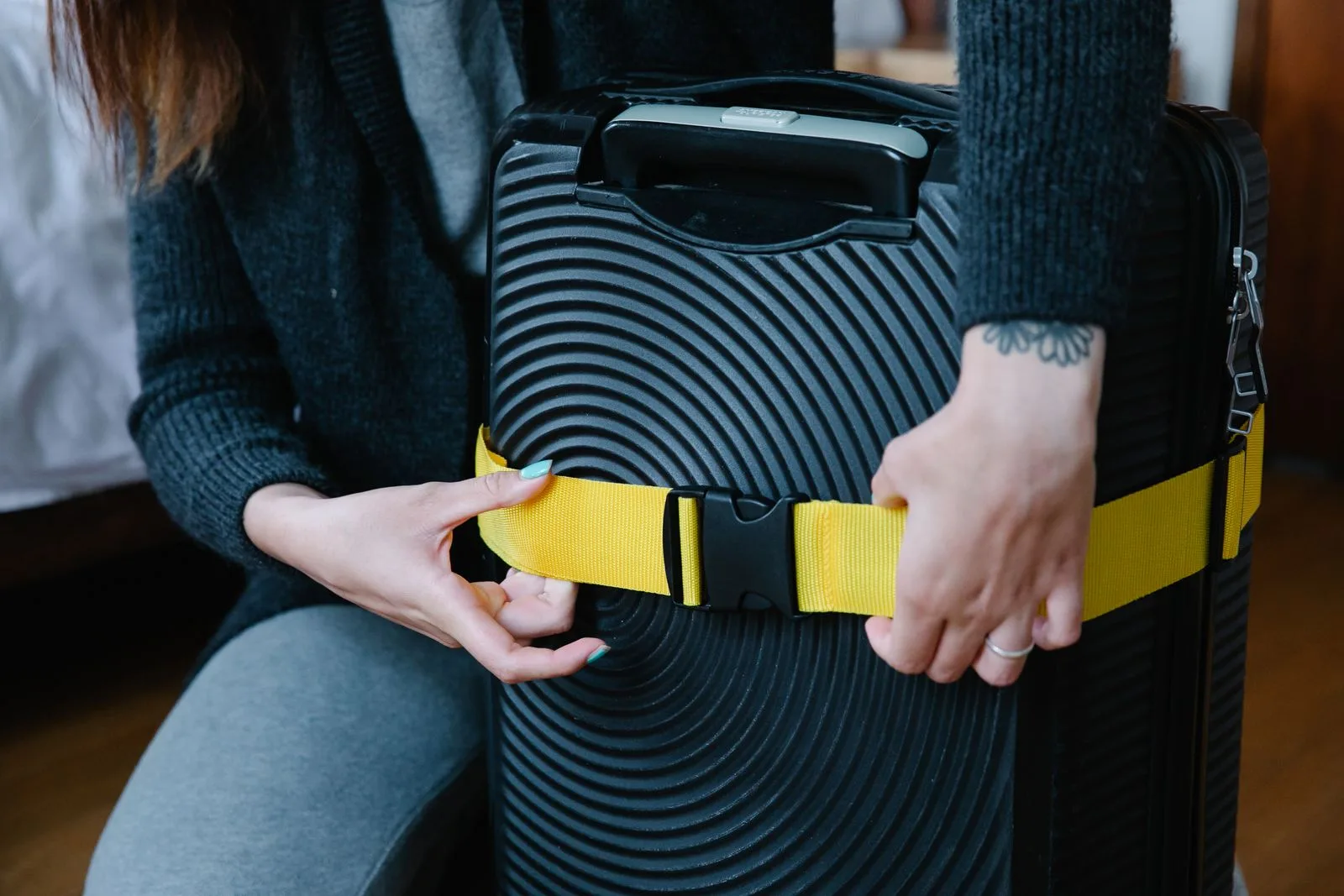
A strap that passes under or through a fixed handle can’t slide off in transit. On hardside spinners without side handles, center the strap on the bag’s girth and cinch it until the shell flexes slightly.
Tight beats pretty
Baggage handlers toss bags by whatever sticks out. A loose strap becomes a grab handle and a snag hazard; a tight one becomes part of the bag. Cinch it, then tuck the loose tail under the band.
Write your combo down somewhere that isn’t the strap
If you buy the TSA lock version, store the combination in your phone notes. Resetting a forgotten combo at the airport is nobody’s favorite pre-flight ritual.
Don’t strap over the expansion zipper
If your suitcase is expanded, position the strap below the expansion seam. Compressing the expanded section pulls the zipper teeth at an angle, and that’s how zippers give out somewhere between check-in and the carousel.
Beyond the Strap: Protecting the Bag Itself
A strap holds a case shut and makes it easy to spot on a carousel. It does nothing about the rest of what happens to checked luggage. Bags get dragged, stacked, dropped, rained on and yanked off belts by tired travelers, and the damage lands in the same places every time: wheels, handles, corners, zippers, seams, and whatever liquid you packed.
- Pack under the limit, not right at it. An overstuffed case puts the zipper under tension before it leaves the house, and tension is what splits seams.
- Contain liquids twice. A zippered toiletry bag, then a second pouch for anything that can leak. A shampoo bottle that opens at altitude ruins the contents, not the shell.
- Carry a small repair kit. A few feet of tape and a couple of zip ties will get a broken zipper pull or a split seam home.
- Cover the shell on rough routes. A luggage cover or an airport wrap earns its keep across multiple connections and is pointless on a direct flight.
- Make the bag identifiable. A clear name tag, some visual marker and a photo taken at check-in. The photo is what you show the desk when the bag does not arrive.
- Keep fragile things with you. Anything breakable or hard to replace belongs in the cabin.
| Risk | Best prevention |
|---|---|
| Broken zipper or seam | Pack lighter, never force the case shut, carry tape or zip ties |
| Leaking toiletries | Zippered toiletry bag plus a backup pouch for liquids |
| Scuffed or dirty shell | Luggage cover or wrap when the route is rough |
| Broken wheel or handle | Stronger hardware, and no overweight packing |
| Carousel mix-up | Clear tag, a visible marker or a strap, and a current photo |
| Fragile contents | Carry on anything truly fragile or hard to replace |
FAQ
Will TSA cut off my luggage strap?
If your bag is selected for physical inspection and the strap blocks access, agents will remove it, and a non-TSA lock may be cut. Straps with TSA-approved locks (like our number three pick) can be opened with a master key and re-secured, which is the whole argument for buying one.
Are luggage straps allowed on checked bags?
Yes. Airlines and TSA both allow external luggage straps on checked bags. Keep the strap tight and tuck the tail so it can’t catch in conveyor machinery.
Do luggage straps actually prevent theft?
They prevent opportunistic theft and accidental openings, not determined attacks. A strap adds a visible layer of friction that makes a thief move on to an easier bag. For valuables, use your carry-on.
Bungee strap or buckle strap, which do I need?
Buckle straps secure and identify one bag. Bungee add-a-bag straps attach a second bag to your rolling suitcase. They solve different problems, and frequent travelers usually end up with both.
How tight should a luggage strap be?
Tight enough that you can slide no more than a couple of fingers underneath. The strap should compress the bag slightly; if it shifts when you shake the suitcase, cinch it further.
Our Take
Start with the RUMILLA bungee if you’ve ever finished a layover with a tote strap carving into your shoulder; it’s the pick we’d hand to almost anyone. Add the Gorilla Grip 2-pack for checked bags, or step up to the Travelkin if a built-in TSA lock helps you board calmer. None of these costs more than a mediocre airport sandwich combo, and all five outlast the suitcases they’re strapped to.