

Updated June 2026.
This article contains affiliate links. We may earn a commission at no additional cost to you if you make a purchase through these links. See our affiliate disclosure for details.
A travel wallet is a larger-than-normal wallet designed to hold a passport, boarding passes, multiple currencies, and the usual cards and cash. Your everyday bifold doesn’t fit a passport without folding it, and it’s not set up to separate euros from dollars from receipts. A travel wallet solves that by giving everything a designated slot in one place. You pull it out at check-in, customs, and currency exchange, then tuck it back into your jacket or daypack.
The category is broader than people expect. It includes zip-around organizers the size of a small clutch, slim bifolds that fit a front pants pocket, and neck wallets that hang under your shirt. The right format depends on how you carry it and what you need to access during transit.
Travel Wallet vs. Regular Wallet
A regular wallet holds cards and cash. A travel wallet holds cards, cash, a passport, boarding passes, and sometimes a pen for customs forms. The size difference is the obvious trade-off: travel wallets are bigger because they carry more. Most people don’t use a travel wallet as their everyday carry. They keep it in a daypack or jacket pocket during travel and switch back to a normal wallet when they’re home.
The exception is the slim travel wallet format. Brands like Allett make travel wallets that are close to bifold size while still holding a passport. These work as a hybrid daily/travel wallet if you don’t mind the slightly larger footprint in your pocket. For everyone else, a travel wallet is a purpose-built tool for transit days (airports, train stations, border crossings), and it stays in the bag the rest of the time.
Types of Travel Wallets
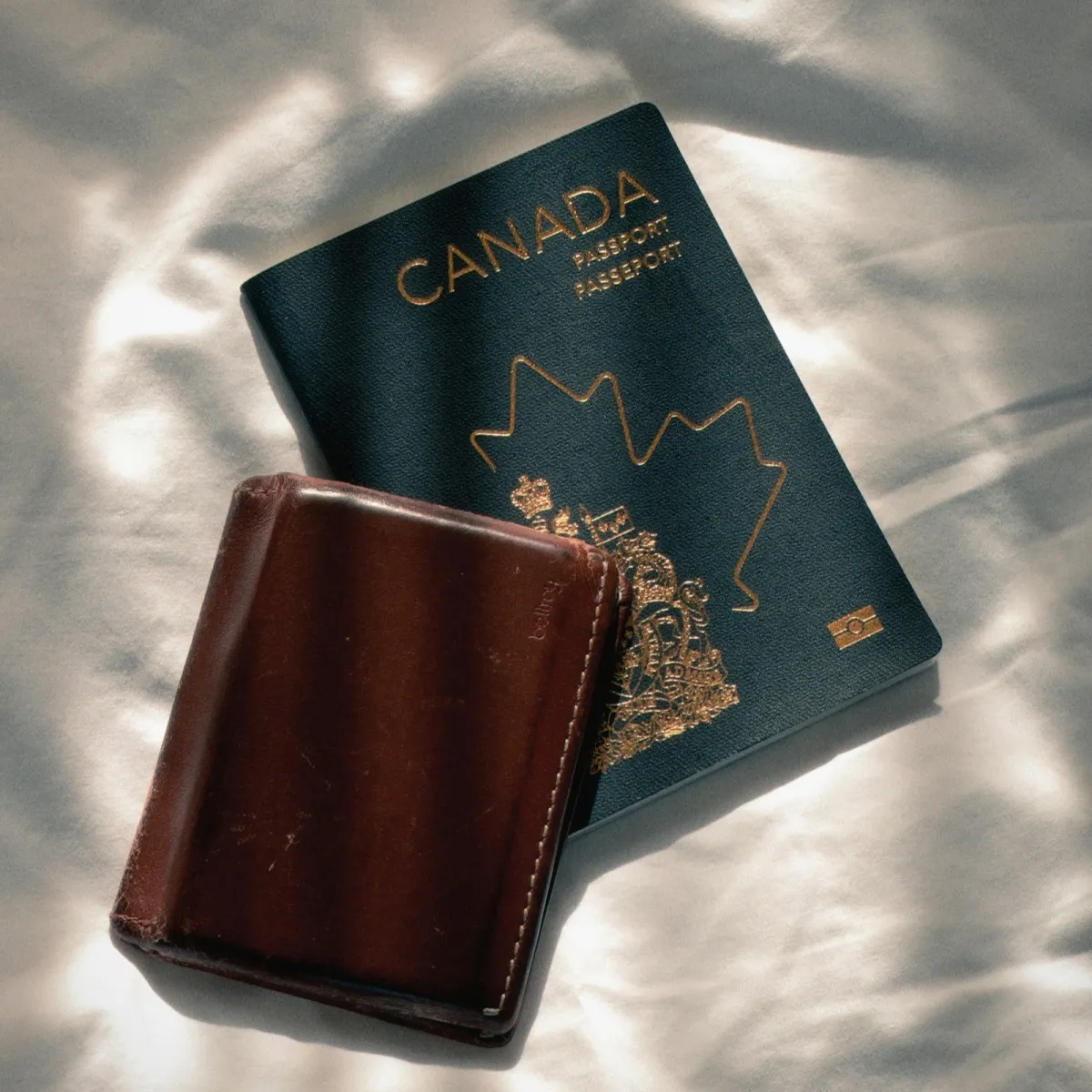
Zip-around organizers are the most common travel wallet format. They close with a YKK zipper that runs along three sides, keeping everything secure. Inside, you’ll find passport slots, card dividers, a pen holder, currency pockets, and sometimes a SIM card pocket. Bellroy, Zero Grid, and Travelon all make well-reviewed versions. The trade-off is size: these don’t fit in a pants pocket. They go in a jacket, sling, or daypack where security matters.
Slim bifolds are travel wallets compressed into a pocket-friendly format. They hold a passport and 8-10 cards in a bifold profile, usually with RFID blocking built in. The Allett Travel Wallet is the benchmark here; it fits in a front pocket despite holding passport-sized documents. The compromise is fewer organizational pockets. You’re not getting currency dividers or a pen loop in something this thin.
Neck wallets and money belts are the security-first option. They hang under your shirt on a lanyard or strap around your waist under your pants. These are popular with travelers going to high-theft destinations where keeping documents invisible is the priority. The downside is access speed: you’re reaching under your clothes every time you need your passport. If you’re using it in a busy airport where you’re pulling documents every 10 minutes, a neck wallet becomes annoying fast.
Passport wallets are the minimalist option. They hold a passport and a few cards but not much else. If you already have a daily wallet you’re happy with and just need something to keep your passport and boarding pass together, a passport holder might be all you need. They’re smaller and cheaper than full travel wallets.
RFID Blocking
Most travel wallets now include RFID-blocking lining. The feature uses metallic fabric to prevent radio frequency scanners from reading the chips in your credit cards and passport wirelessly. Every major brand in the travel wallet space includes it as a standard feature, not a premium add-on.
The practical value depends on who you ask. RFID skimming (where a thief uses a wireless reader to steal your card data through your wallet) is theoretically possible but rarely documented in real-world theft reports. Credit card companies have built-in fraud protection that makes the attack unprofitable for most thieves. That said, RFID blocking adds negligible weight and cost to a wallet, so there’s no reason to avoid it.
The one place RFID blocking matters more is passport protection. Modern e-passports contain RFID chips with biometric data. Unlike credit cards, passport data isn’t protected by a fraud department. An RFID-blocking pocket for your passport is a reasonable precaution even if you’re skeptical about card-skimming risks.
What to Carry in a Travel Wallet
The point of a travel wallet is to consolidate everything you need for transit into one place. That means passport, boarding pass (or a printout if you don’t trust your phone battery), one or two credit cards, your travel insurance card if you have a physical one, and whatever local currency you’re carrying. Some travelers also keep a photocopy of their passport’s photo page as a backup.
What doesn’t go in a travel wallet: your entire card collection. Leave the gym membership and loyalty cards at home. Every card you add is a card you can lose. Bring one primary credit card, one backup card (ideally from a different network), and a debit card for ATM withdrawals. That covers every realistic scenario.
Materials
Travel wallets come in leather, nylon, and polyester. Full-grain leather looks professional and develops a patina over time. The downside is weight and water sensitivity: a leather wallet in a rainstorm or next to a sweating water bottle will show damage. Bellroy’s travel wallets are the standard-bearer for leather options.
Nylon and polyester wallets are lighter, more water-resistant, and generally cheaper. Ripstop nylon is the most durable fabric option; it’s the same material used in outdoor gear and military equipment. G-1000 fabric from Fjallraven is a cotton-polyester blend that can be waxed for additional water resistance. The trade-off is aesthetics: fabric wallets look more utilitarian than leather, which may or may not matter depending on your travel style.
How to Choose
If you travel internationally more than twice a year, a zip-around organizer with passport slots and currency dividers pays for itself in reduced fumbling at customs counters. Pick leather if you want it to look good at a business dinner. Pick nylon if you want it to survive getting rained on.
If you travel domestically and don’t need passport access, a slim bifold or even your regular wallet with a separate passport holder is enough. Don’t buy a zip-around organizer for a domestic flight where you need a driver’s license and a credit card.
For our picks on specific products, check our best travel wallets roundup with detailed reviews and comparisons.
Traveling on a tight budget changes the math too. Our Amazon Haul guide breaks down which cheap travel accessories hold up and which ones waste even the few dollars they cost.
FAQ
Do I need a travel wallet if I already have a passport holder?
A passport holder covers the document-carrying function but doesn’t help with currency separation, card organization, or pen access for customs forms. If your trips involve multiple currencies or frequent document checks, a travel wallet consolidates everything a passport holder doesn’t. If you’re just going to one country with a single currency, a passport holder plus your regular wallet works fine.
Are leather travel wallets worth the premium?
For travelers who want something that looks professional at a hotel check-in or business meeting, yes. Bellroy’s leather travel wallets run several times the price of nylon alternatives from Zero Grid or Fjallraven. You’re paying for aesthetics and feel, not function. A budget ripstop nylon wallet holds the same documents as a leather one costing six times more.
Can a travel wallet replace my everyday wallet?
Slim travel wallets from brands like Allett can work as a daily wallet. Zip-around organizers are too big for everyday pants-pocket carry. Most travelers use a travel wallet only during transit and switch to their regular wallet at the destination.
Where should I carry a travel wallet?
Front jacket pocket, daypack with a secure closure, or sling bag worn across the front. Never in a back pants pocket, and never in an open-top tote or bag. The zip-around style is too large for pants pockets, so plan for a jacket or bag. Slim bifolds can go in a front pants pocket.
Is RFID blocking necessary in a travel wallet?
It’s standard in nearly every travel wallet sold today, so you’ll get it whether you prioritize it or not. The protection against credit card skimming is largely theoretical. The protection against passport chip reading has more practical value. Either way, it adds no weight or bulk, so there’s no reason to choose a wallet without it.