


Updated June 2026.
This article contains affiliate links. We may earn a commission at no additional cost to you if you make a purchase through these links. See our affiliate disclosure for details.
Long flights wreck your legs. Sitting for 4+ hours with your knees bent and your feet on the floor slows blood circulation, which leads to swollen ankles, achy calves, and that heavy-legged feeling that lasts well into your first day at the destination. Compression socks fix this by applying graduated pressure – tighter at the ankle, looser toward the knee – which pushes blood back up toward your heart instead of letting it pool in your lower legs.
The medical evidence is solid. Graduated compression between 15-30 mmHg reduces the risk of deep vein thrombosis (DVT) on flights over 4 hours and reduces leg swelling by up to 50%. You don’t need a prescription for travel-grade compression – anything in the 15-20 mmHg (moderate) or 20-30 mmHg (firm) range works. The difference between those two levels comes down to how much squeeze you can tolerate and whether you have existing circulation issues.
Our Top Picks at a Glance

What to Know Before You Buy
Compression level is the most important spec. Travel compression socks come in two ranges: 15-20 mmHg (moderate) and 20-30 mmHg (firm). Moderate works for most travelers on flights under 8 hours who don’t have existing circulation problems. Firm compression is better for long-haul international flights, people with varicose veins, and anyone whose legs swell regularly. If you’ve never worn compression socks before, start with 15-20 mmHg – the squeeze is noticeable but not uncomfortable.
Material determines comfort across different climates. Synthetic blends (nylon/spandex) are the most common, dry fast, and work well in warm weather. Merino wool blends regulate temperature – warm in cold cabins, breathable in heat – but cost 3-4x more per pair. Copper-infused fabrics claim antimicrobial benefits, which matters on multi-day trips where you’re re-wearing socks between washes.
Fit matters more than with regular socks. Compression socks that are too loose don’t compress. Too tight and they cut into your skin behind the knee or leave deep marks on your calves. Most brands size by calf circumference and shoe size – measure both before ordering. If you’re between sizes, go up. A slightly loose compression sock still works; a too-tight one becomes something you take off mid-flight and stuff in your packing cubes.
1. Physix Gear Sport Compression Socks – Top Pick

Physix Gear Sport Compression Socks
Physix Gear built their reputation on one product, and the review count shows it. At 20-30 mmHg, these deliver firm graduated compression that’s strong enough for long-haul flights and post-surgical recovery. The nylon/Lycra blend is thin enough to fit inside any shoe without making your feet feel stuffed, which matters when you’re walking through airports after wearing them on a 10-hour flight.
The double-stitched construction holds up through repeated washing without the elastic breaking down – a common failure point with cheaper compression socks. The toe seam is flat rather than raised, so it doesn’t create a pressure ridge across your toes. Sizing runs true if you follow the calf measurement chart, though people with wider calves report the S/M being tight at the top.
At ~$19 per pair, these cost more than the budget multi-packs but less than premium brands like Sockwell. For travelers who fly frequently and want one pair they can trust on every trip, the durability justifies the per-pair cost.
- Medical-grade 20-30 mmHg compression
- 94,000+ reviews with 4.4-star average
- Thin enough to fit inside regular shoes
- Double-stitched seams resist elastic breakdown
- Unisex fit with 3 size options
- Sold as single pair – no multi-pack discount
- S/M can be tight on wider calves
- 20-30 mmHg may feel too firm for first-time users
The Physix Gear is the safest pick for frequent travelers. Firm compression, proven durability, and a review base large enough to trust. If you only buy one pair of compression socks for travel, make it these.
2. Sockwell Women’s Damask – Best Premium

Sockwell Women's Damask
Sockwell is what you get when a company that actually understands wool makes compression socks. The merino blend regulates temperature naturally – it stays warm in over-air-conditioned cabins and breathes when you land somewhere hot. The wool also resists odor better than synthetics, which is a genuine advantage on multi-leg trips where you’re wearing the same pair for 16+ hours.
The damask pattern looks like a normal dress sock, not a medical device. That matters if you’re wearing compression socks with business attire or don’t want the athletic look of brands like Physix Gear. Sockwell makes dozens of patterns across their line, so you’re not stuck with one style.
At $33 per pair, these are 3x the cost of budget options. The merino wool justifies some of that premium – it genuinely performs differently from synthetic blends in comfort and temperature management. But the 15-20 mmHg compression is moderate, which means less anti-swelling power than the 20-30 mmHg options. For short-haul flights or travelers who prioritize comfort over maximum compression, that tradeoff makes sense.
- Merino wool regulates temperature in any climate
- Looks like a regular dress sock, not medical gear
- Made in USA with high build quality
- Natural odor resistance for long travel days
- $33/pair is expensive for a single pair of socks
- Women’s sizing only (Sockwell makes separate men’s line)
- 15-20 mmHg may not be enough for very long flights
The Sockwell Damask is for travelers who want compression without the sporty look or synthetic feel. The merino wool genuinely outperforms nylon blends on comfort and temperature regulation. Worth the premium if you fly often and care about what’s on your feet.
3. CHARMKING 3-Pack – Best Budget
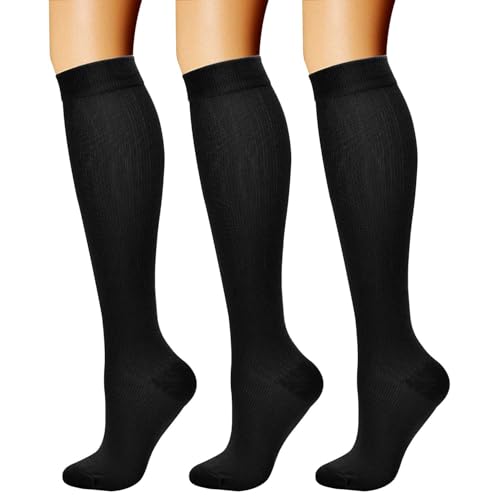
CHARMKING Compression Socks 3-Pack
CHARMKING dominates Amazon’s compression sock category on volume alone. Three pairs for under $10 means you’re paying about $3.33 per pair – less than most regular socks. The 15-20 mmHg compression is moderate but effective for flights in the 3-6 hour range, and the 40+ color options mean you can match them to anything.
The tradeoffs are predictable at this price. The fabric is thinner than Physix Gear or Sockwell, which means less padding underfoot and faster elastic degradation. Expect 6-12 months of regular use before the compression starts feeling loose. The sizing runs slightly small, so the common advice in the reviews is to size up if you’re on the border.
For infrequent travelers or someone who wants to try compression socks without committing $20-30, CHARMKING removes the financial barrier. Pack three pairs in your packing cubes – one for the outbound flight, one for sightseeing days, one for the return.
- 3 pairs for under $10
- 87,900+ reviews – the most-reviewed compression sock brand
- 40+ color and pattern options
- Thinner fabric wears out in 6-12 months
- Sizing runs small – order up
- 15-20 mmHg may not cut it for long-haul flights
- Elastic loosens faster than premium options
CHARMKING is the entry point. If you’re trying compression socks for the first time or only fly a few times a year, three pairs for $10 lets you test whether compression works for you without investing in a premium pair you might not like.
4. FITRELL 3-Pack – Best Value
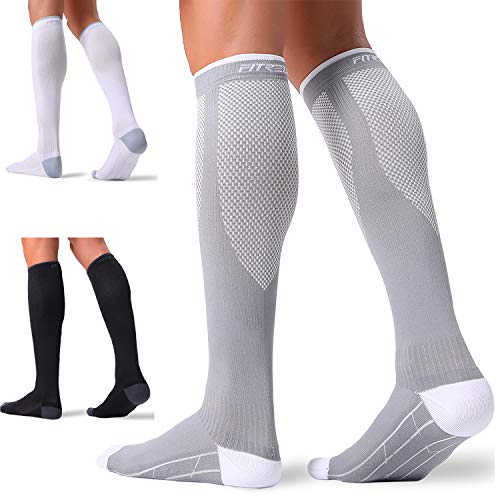
FITRELL Compression Socks 3-Pack
FITRELL threads the needle between CHARMKING’s budget pricing and Physix Gear’s medical-grade compression. You get 20-30 mmHg (firm) in a 3-pack for ~$13, which works out to about $4.33 per pair. That’s real graduated compression at multi-pack pricing – a combination that’s hard to find elsewhere.
The reinforced heel and toe add durability where compression socks usually fail first. The nylon/spandex blend is slightly thicker than CHARMKING, which translates to better compression retention over time and more cushioning underfoot. Moisture-wicking performance is solid: feet stay drier than you’d expect on a long flight.
Where FITRELL loses points is the color selection. You get a handful of options compared to CHARMKING’s 40+. And the 20-30 mmHg firmness can feel aggressive if you’re new to compression – it takes genuine effort to pull these on, especially the first few wears.
- 20-30 mmHg firm compression at budget multi-pack pricing
- Reinforced heel and toe for durability
- 37,000+ reviews with strong satisfaction ratings
- Thicker fabric than CHARMKING retains compression longer
- Limited color options
- Firm compression takes effort to put on
- Can feel too tight for first-time compression sock users
FITRELL is the value sweet spot. You’re getting the same compression level as the $19 Physix Gear at $4 per pair. If you want firm compression for long-haul flights and don’t care about having 40 colors to choose from, these are the pick.
5. FuelMeFoot Copper 3-Pack – Best Copper-Infused
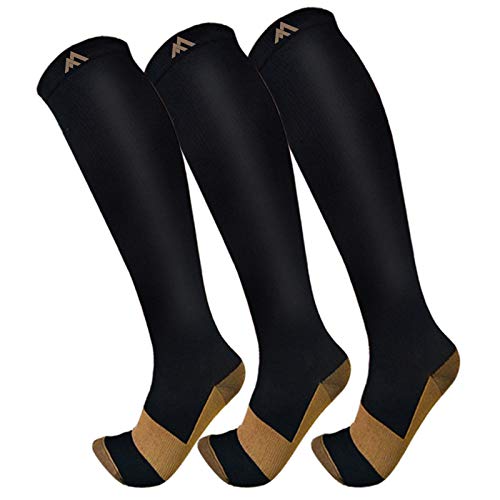
FuelMeFoot Copper Compression Socks 3-Pack
Copper-infused fabric has antimicrobial properties that reduce odor and bacteria growth – copper’s antimicrobial properties are well-documented in textile research. For travelers, the practical benefit is socks that don’t smell terrible after a full day of flying and walking. On multi-day trips where you’re packing light and re-wearing socks, the copper infusion earns its keep.
The compression itself is moderate at 15-20 mmHg. The fabric has a slight sheen from the copper threading that’s visible up close but not from a normal distance. Construction quality falls between CHARMKING and Physix Gear. Decent stitching, reasonable elastic retention over 6-9 months of use.
At ~$11 for three pairs, the value proposition is similar to CHARMKING with the added antimicrobial angle. If odor control matters to you – and it should on flights where you’re taking shoes off under the seat – these are worth the small premium over basic budget options.
- Copper infusion provides genuine antimicrobial benefit
- 66,400+ reviews with consistent ratings
- Good for multi-day trips with limited laundry access
- Copper threading gives fabric a slight sheen
- 15-20 mmHg compression only – no firm option
- Elastic degrades at about the same rate as other budget options
FuelMeFoot makes sense for travelers who care about hygiene and odor on long trips. The copper infusion isn’t a gimmick – it keeps socks fresher than straight nylon blends. Solid choice for backpackers and anyone who packs light and re-wears layers.
6. Aoliks 4-Pack – Best Multi-Pack

Aoliks Compression Socks 4-Pack
Aoliks wins on pure volume. Four pairs for under $9 works out to about $2.12 per pair, which is the cheapest per-unit cost on this list. The patterns are fun – florals, stripes, geometrics – and the lightweight fabric makes them easy to pull on. They’re less effort to put on than the firmer 20-30 mmHg options, which is a plus for travelers who find compression socks annoying to get into.
The fabric is the thinnest of any option here. Compression retention drops noticeably after 3-4 months of regular use. These are trip socks, not everyday compression wear – buy them for a vacation, use them on the flights and walking days, and replace them before the next trip. At $2 a pair, treating them as semi-disposable travel accessories makes financial sense.
- 4 pairs for under $9 – lowest per-pair cost
- Easy to put on thanks to lighter compression
- Fun patterns and color variety
- 19,000+ reviews
- Thinnest fabric – compression fades in 3-4 months
- Not durable enough for daily use
- Moderate compression only
Aoliks is the disposable razor of compression socks. Buy a pack, use them for a trip or two, replace. If you don’t want to invest in socks you might lose in a hotel room, the $2/pair math works out in your favor.
How to Wear Compression Socks for Flying
Put them on before you leave for the airport, not on the plane. Your legs start swelling the moment you sit down in the car or train to the terminal. Getting compression socks on in an economy seat is an acrobatic exercise nobody wants to attempt. The socks should already be on when you board.
Keep them on for 2-3 hours after landing. The anti-swelling benefit continues working as you walk through the arrival terminal and get to your hotel. Taking them off immediately after landing means your legs swell during the recovery period when circulation is still adjusting.
Pair them with movement. Compression socks aren’t a substitute for getting up and walking the aisle every 1-2 hours on long flights. They work best in combination with ankle rolls, calf raises in your seat, and periodic standing. The socks maintain baseline circulation; movement actively pumps blood back up. If you’re curious about other ways to pack smarter for flights, lightweight compression socks take up almost no room in your bag.
FAQ
What mmHg compression socks should I wear for flying?
15-20 mmHg works for most travelers on flights under 8 hours. 20-30 mmHg is better for flights over 8 hours, people with varicose veins, or anyone with a history of leg swelling. If you’ve never worn compression socks, start with 15-20 mmHg and move up if you want more support.
Can you wear compression socks on a plane?
Yes, and you should. The TSA doesn’t restrict compression socks, and airlines have no policies against them. Vascular specialists routinely recommend compression socks for flights over 4 hours to reduce DVT risk and leg swelling. Put them on before you leave for the airport for maximum benefit.
How long can you wear compression socks while traveling?
Most people can wear 15-20 mmHg compression socks for 12-16 hours without issues. Remove them at night when you’re sleeping flat – compression isn’t needed when your legs are elevated. For 20-30 mmHg socks, 8-12 hours is a reasonable limit. If you notice numbness, tingling, or skin discoloration, remove them immediately.
Do compression socks actually prevent DVT?
A Cochrane review of 12 clinical trials found that graduated compression socks reduce DVT risk on long-haul flights, particularly for travelers in higher-risk categories (older adults, those with circulation issues, anyone sitting immobile for 6+ hours). They aren’t a guarantee, but they’re one of the most effective preventive measures alongside staying hydrated and moving periodically during the flight.