American Tourister vs Samsonite: Same Company, Different Bags

This article contains affiliate links. We may earn a commission at no additional cost to you if you make a purchase through these links. See our affiliate disclosure for details. As an Amazon Associate I earn from qualifying purchases.
American Tourister and Samsonite are owned by the same parent company, Samsonite International. That means the same corporation designs, manufactures, and markets both brands. The difference is positioning: Samsonite targets mid-to-premium travelers willing to pay $200-$600 for durability and features. American Tourister targets budget-conscious buyers who want a decent suitcase for under $150.
We compared the two lines on published specifications, warranty terms, and owner reviews. Samsonite costs two to three times as much as a similar-looking American Tourister carry-on. The extra money buys polycarbonate instead of ABS, branded zippers, and a 10-year warranty.
Price
American Tourister carry-ons start around $60-$80 and max out around $150 for larger checked bags. Samsonite carry-ons start around $130 and run up to $400+ for their premium lines like the Outline Pro. Above that tier the direct-to-consumer brands take over, and our Monos vs Away carry-on comparison covers what the extra money buys there. The luxury tier sits above even that, and our Tumi vs Rimowa carry-on comparison shows where the money goes at the top of the market.
For a typical 21-inch hardside carry-on, you’re looking at about $80 from American Tourister versus $180-$250 from Samsonite. Our Samsonite luggage review walks through what the extra $100-$170 buys, tier by tier.
Build Quality and Materials
Samsonite uses polycarbonate shells on their hardside luggage, which is lighter and more impact-resistant than the ABS plastic on most American Tourister bags. Polycarbonate flexes on impact and springs back. ABS cracks under the same force. For frequent flyers who check bags regularly, polycarbonate handles the abuse of conveyor belts and baggage handlers better, lasting 2-3x longer under checked-bag conditions.
American Tourister’s ABS shells are fine for occasional travel. If you fly twice a year and mostly carry on, the shell material difference won’t matter much. For frequent checked use, compare the specific models' shell construction and hardware rather than assuming a set lifespan from ABS or polycarbonate alone.
Samsonite uses branded, self-repairing zippers on their mid-range and premium lines. American Tourister uses standard zippers that work fine but can catch or split under heavy loads. On a budget bag, the zipper is the part most likely to fail first.
Wheels and Maneuverability
Both brands use spinner wheels (four wheels) on their popular models. Samsonite’s wheels are generally larger, more recessed into the body (less exposed to breaking), and smoother on uneven surfaces. Their premium models use dual-spinner wheels that roll quieter and handle carpet-to-tile transitions without stuttering.
American Tourister’s wheels are functional but less refined. They roll fine on smooth airport floors. The wobble shows up on cobblestones, curb cuts, and rough sidewalks.
Organization and Features
Samsonite packs more features into their interiors. Cross straps, mesh dividers, TSA-approved combination locks (built-in on many models), expandable capacity, and dedicated shoe compartments are standard on their $200+ bags. Some models include USB charging ports, which is one of the splits in our Samsonite Freeform vs Outline Pro comparison.
American Tourister keeps interiors simple. You get a basic divider, maybe a mesh pocket, and cross straps. No built-in TSA locks (you’ll need to buy one separately). Traveler’s Choice builds one into its budget hardsides, which our Traveler’s Choice luggage review covers. No USB ports. Fewer features also means fewer things to break. If you want the suitcase to do the organizing, Samsonite gives you more to work with.
Warranty
Samsonite offers a 10-year limited warranty on most products. American Tourister offers a shorter warranty, typically 3-5 years depending on the product line. Both cover manufacturing defects but not airline damage or normal wear.
The warranty difference matters most for checked luggage. A handle failure may or may not qualify for warranty service; eligibility depends on the model's current terms, exclusions, and claim review. For carry-ons that don’t take as much abuse, the warranty gap is less significant.
Which Should You Buy?
American Tourister fits a few trips a year, mostly carry-on, and a functional suitcase under $200. The Disney and licensed designs also make it the kids’ option. Samsonite does not sell licensed character shells.
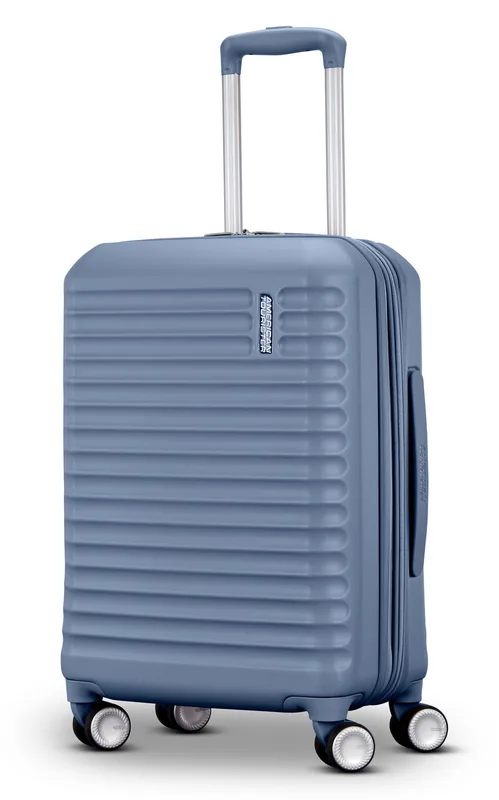
American Tourister Stratum 3.0 Carry-On
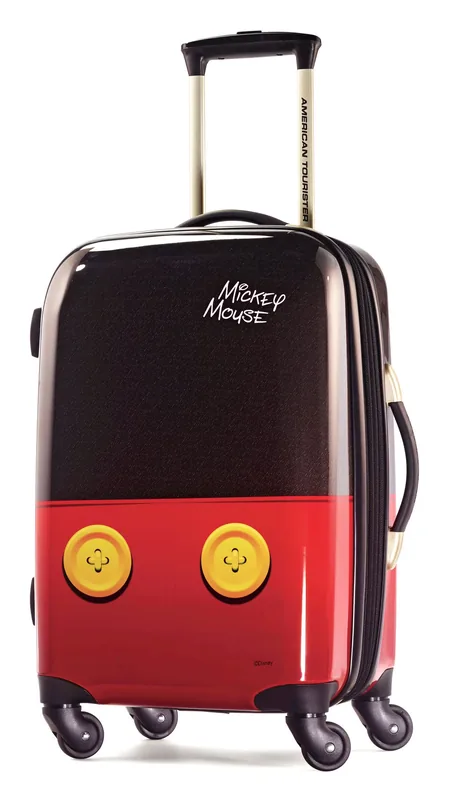
American Tourister Disney Hardside Spinner
The Stratum 3.0 is the plain-wrapper version of that budget carry-on. The Mickey Mouse shell is the same bag with a licensed print, so the character bag does not cost more than the plain one.
Compare each specific model's construction, current price, and current warranty terms. Polycarbonate shells, better zippers, and the 10-year warranty are the reasons to pay more when the bag takes heavy use. The best luggage for international travel list skews toward this durability tier.
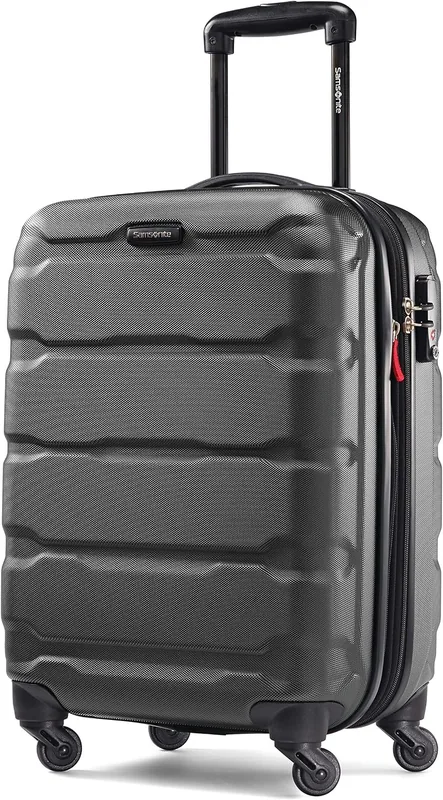
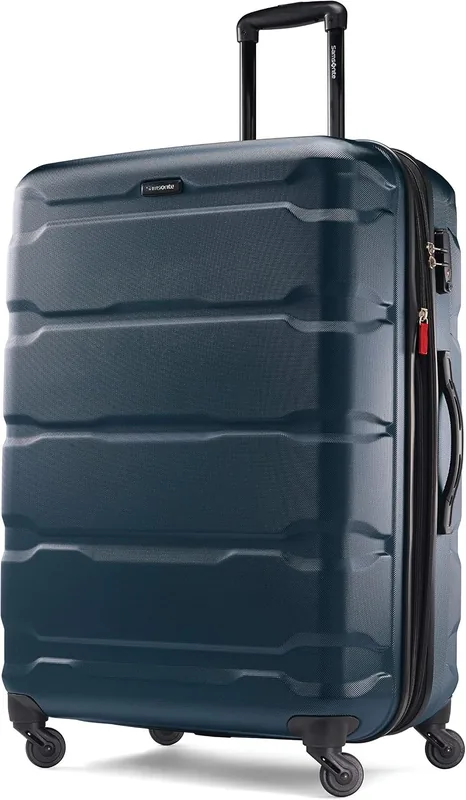
The Omni PC is Samsonite's best-known carry-on: polycarbonate shell, built-in TSA lock, and the side-mounted expansion zipper the American Tourister lines skip.
A split buy also works: American Tourister for carry-ons, which take less abuse, and Samsonite for checked bags, where the durability gap is wider. That keeps the extra money on the bag that hits the conveyor. Our it luggage vs Samsonite comparison runs the same math against a lighter budget brand.
A 20-inch bag and a 28-inch bag read as flat numbers in a table. Our luggage size visualizer draws both at true scale against a 5 ft 7 in person and the 22 x 14 x 9 gate sizer frame, so the inch sits next to a body and a gate sizer.

At a Glance: American Tourister vs. Samsonite
FAQ
Are American Tourister and Samsonite made by the same company?
Yes. Samsonite International acquired American Tourister in 1993. Both brands are designed and manufactured under the same parent company. American Tourister is positioned as the budget line, while Samsonite targets mid-to-premium buyers.
Is American Tourister good quality?
For the price, yes. American Tourister luggage is well-made for occasional travelers who fly a few times a year. It won’t hold up to the same level of abuse as Samsonite, and the materials (ABS vs. polycarbonate, standard zippers vs. self-repairing) match the lower price point.
How long does American Tourister luggage last?
There is no fixed replacement schedule for either brand. Service life depends on the model, handling, loading, maintenance, and repairs.
Is Samsonite worth the extra money?
For frequent travelers, yes. The polycarbonate construction, better zippers, and 10-year warranty make it a better long-term investment. For occasional travelers (2-4 trips per year), American Tourister does the job at half the price. Compare current price, construction, and warranty terms rather than assuming a fixed replacement schedule.
Filed in Luggage Reviews