
Is an Anti-Theft Bag Worth It? (+ One HUGE Misconception)

Updated August 2026.
This article contains affiliate links. We may earn a commission at no additional cost to you if you make a purchase through these links. See our affiliate disclosure for details.
One of the worst things that could ever happen while traveling would be getting your bag stolen. Not only is the bag itself valuable, but then there are all the items you’re carrying within it. Plus, you’d be stranded without your stuff, which would ruin your trip. You’ve recently heard of anti-theft bags, but you’re just not sure: is an anti-theft bag worth it for you?
Anti-theft bags, while generally more expensive, can be incredibly worthwhile, as it’s always better to be safe than sorry. If you’re visiting somewhere for the first time or you’re in a country known for its pickpocketing especially, then it’s never a bad idea to have an extra means of safeguarding your things.
In this extensive guide, we will explain what makes a bag anti-theft in more detail. We’ll also cover things like price, and we’ll even provide a few examples (and shopping links) to real anti-theft bags for your consideration. By the time you’re done reading, you’ll know if these bags are a good option for your travels.
And take a look at this guide if you want to be prepared for airlines losing your luggage: find out how to get compensation for lost or delayed luggage!
What Is an Anti-Theft Bag?
When it comes to travel, safety and security are always top concerns. One way to ease those worries is by using an anti-theft bag. These bags come with various features designed to deter thieves and keep your belongings safe.
Anti-theft bags can come in a variety of styles, including purses, cross-body bags, laptop bags, business bags, and backpacks. At first glance, they may not look all that different from a regular bag, but the added security features make all the difference. Backpack versions get the most attention, which makes it worth separating the anti theft backpack features that matter from the ones that do not.
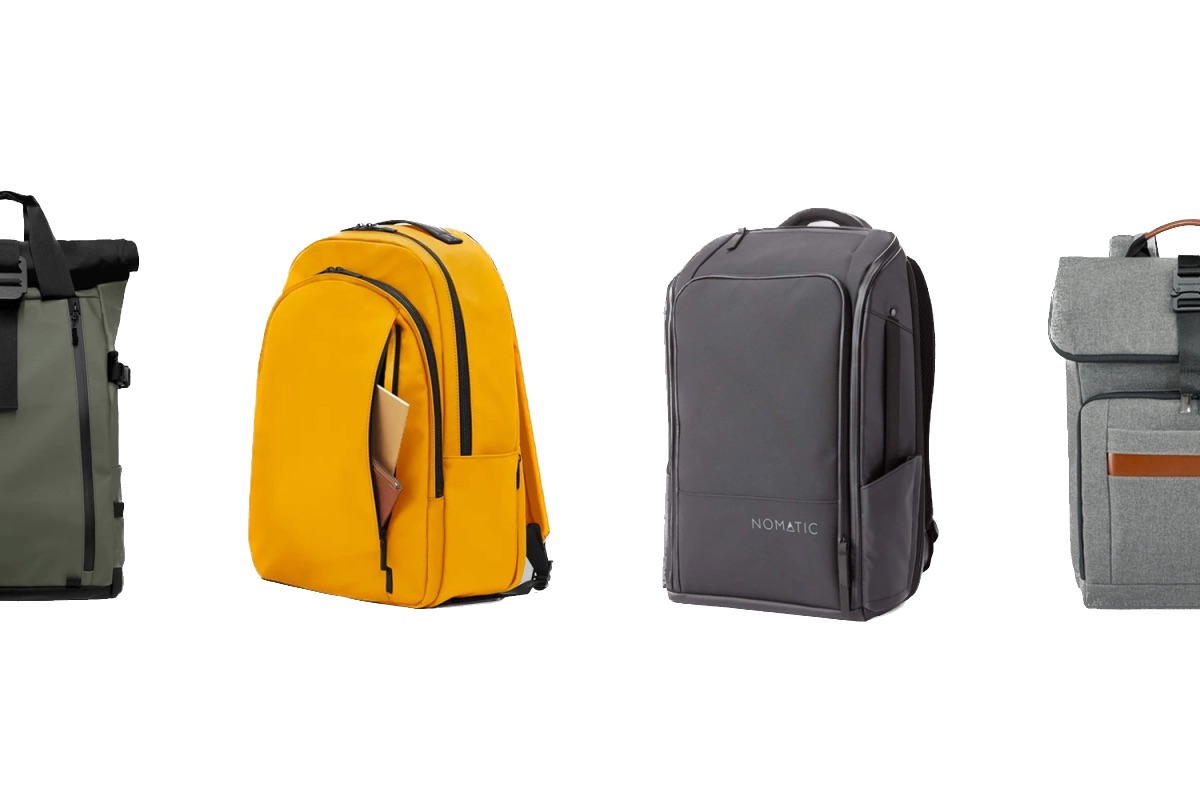
Here’s an overview of the features.
Locking Zippers and Clips
The zippers and clips throughout the exterior of an anti-theft bag are quite durably designed. A clip will be attached to a zipper’s pull tag opening. It might make it a little harder for you to open your zippers and clips to access your bag, but it would also make it more difficult for unsavory characters to do the same. That may be enough to stop them from getting into your bag, successfully helping you avoid theft.
RFID Blockers
Radio-frequency identification, commonly abbreviated to RFID blocking, is another feature you want in your anti-theft bag.
Why is this? Well, your debit cards, credit cards, and other related cards all have chips operating on a certain frequency. If a criminal could use RFID to find that frequency, then they could grab your credit or debit card information and begin using your card for fraudulent purposes. This is known as RFID skimming.
If your anti-theft bag has RFID blockers, then your cards are off-limits. Now, criminals can’t get the right radio frequency to steal your private information. The entirety of your bag may be made of a material that has RFID blockers or only parts of the bag may block these frequencies. Either way, you’ll be glad you’ve it.
Secret Compartments
While the exterior of most anti-theft bags isn’t designed in such a way to draw much attention, the interior of these bags will amaze you. Once you get the zipper open, you’ll find a backpack with secret compartment has a multitude of hidden areas. These are made for hiding everything from your smartphone to your passport and your credit card, pretty much anything you wouldn’t want a robber to steal.
To even find a secret compartment, you’ve to know where to look. That’s because anti-theft bag manufacturers (and those who make backpacks with secret compartment) will cover the compartments with fabric layers so that at first glance, the compartments almost don’t seem to exist.
The hidden compartments come zippered to add an extra layer of security to your favorite possessions. There are also often specific compartments for each type of item, from medications to cards, so you can keep everything neat.
Uncuttable Shoulder Straps
Whether it’s a purse or a backpack carried on your shoulders, a criminal who tries to steal your bag may grab it or cut at the straps. With most bags, the strap will cut right off, allowing the criminal easy access into your personal belongings.
That’s not so with an anti-theft bag. These will have a cable hidden inside the shoulder strap(s) that are made of steel. While the cable doesn’t weigh much and moves with you, it’s still not easy to cut. Even if the thief had a knife and tried slashing through the strap, their blade likely wouldn’t slice through the cable within the strap.
All this time they’ve wasted means other people have probably noticed a theft is ongoing. These passersby may have called the police, so the criminal won’t want to stick around long. Once they realize they can’t cut your bag’s shoulder straps, they’re going to hightail it on to some other hapless victim.
Anti-Slash Body
Besides the straps, a robber may attempt to cut into the bag itself, hoping all its contents will come tumbling out. Many anti-theft bag manufacturers have thought about this possibility as well and safeguarded you against it.
The military-grade material used to create many anti-theft bags is resistant to slashes with a knife or another blade. The bag’s material is reinforced with ultra-high molecular weight polyethylene, also known as UHMWPE. For even more safety when carrying your bag, the fibers get woven extremely tightly to have a level five cut rating, which is the best it can get.
Anti-Theft Bags: Our Picks
You’re probably at least curious about anti-theft bags by this point. If so, then this is the section for you. In it, we’ll provide shopping links to seven anti-theft bags, all courtesy of Amazon. We’ll also discuss things like features and pricing for each bag.
Anti-Theft Bags at a Glance

Baggallini Anti-Theft Securtex Bag

Baggallini Anti-Theft Securtex Bag
A stylish hobo-style anti-theft bag with slash-resistant panels, RFID blocking, and locking hardware for city travel.
$80.00 on Amazon, price may vary
Anti-theft bags come in all shapes and sizes, including purses. This Baggallini anti-theft bag costs more than a plain crossbody of the same size, and the slash panels, locking zipper, and cabled strap are what the difference buys.
This hobo-style bag measures 14 inches wide and 10 inches tall with a shoulder drop that’s 29 inches. You also get a slew of safety features sure to give you confidence on your travels. These include several slash-proof panels made of SecurTex fabric. Should this fabric ever come into contact with a knife, it maintains its high-quality looks so it’s like the attempted robbery never happened.
The shoulder strap has two layers of cabling so it can’t be cut off the Baggalini. You can take the cable out of your own volition to use it to secure other items. The main zipper of the bag locks so your possessions stay right where you want them. Also, with RFID blocking, your cards are safe from theft.
TUMI Alpha Bravo Service Crossbody Bag

TUMI Alpha Bravo Service Crossbody
The TUMI Alpha Bravo Service Crossbody is a high-quality travel bag that combines design, performance, and functionality. Made of durable ballistic nylon, this crossbody bag is built to withstand frequent use and harsh conditions.
The bag’s exterior features a zip entry to the main compartment, a front zip pocket, and an adjustable shoulder strap for comfortable wear, and at roughly 9.3 by 12 inches it stays under the airline personal-item radar. TUMI’s leather luggage tag and Tracer registration come standard.
TUMI builds the Alpha Bravo line for people who carry the same bag every day, and it shows in the hardware rather than the branding. It handles a commute and a day of walking a city you don’t know, which is most of what a small crossbody gets asked to do.
Pacsafe Metrosafe X 20L Backpack

Pacsafe Metrosafe X 20L Backpack
Getting into backpacks now, the Pacsafe Metrosafe X 20L is the laptop-security pick of this list. Replacing a stolen laptop costs several times what the bag does, and this one is built around not letting that happen.
The padded interior sleeve fits a 16-inch laptop, and the 20-liter body leaves room for a tablet, a jacket, and the rest of a work day. It reads as a plain commuter backpack, which is part of the protection.
Pacsafe layers its usual anti-theft kit through the bag: eXomesh slashguard panels in the body, cut-resistant straps, and an RFID-blocking pocket for cards and passport.
The zippers lock together so a pickpocket can’t ease one open on a train, and the pulls anchor to the bag’s own hardware. None of it needs a key or a combination, so getting into your own bag stays quick.
Pacsafe Citysafe CX Petite Backpack

Pacsafe Citysafe CX Petite Backpack
The Pacsafe Citysafe CX Petite Backpack is built for travelers who want a more polished anti-theft bag than a standard laptop pack. At 8 liters it carries like a purse with straps, which makes it useful for sightseeing days and dinners as much as transit.
Its security features are the real reason it belongs here. Pacsafe uses slash-resistant materials, lockable zippers, and RFID-safe storage so your cards, passport, and daily essentials are harder to access in crowded places.
This is the pick we would look at if you want a bag that feels less like travel gear and more like something you would carry at home, too. The profile is compact, the compartments are practical, and the convertible setup gives it more range than a single-purpose backpack.
The tradeoff is that it is not the largest option in this list. If you are carrying a full laptop setup, look toward the Metrosafe X pick instead. If your priority is a secure daily bag for essentials, the Citysafe CX makes the strongest case.
Travelon Anti-Theft Courier Slim Bag

Travelon Anti-Theft Courier Slim Bag
Our next pick is the Travelon Anti-Theft Courier Slim Bag, the north-south crossbody in Travelon’s Courier range. The RFID blocking pockets and slots inside can protect your passport, identity cards, and credit cards while you move through a crowd.
The backpack straps have cables made of stainless steel so thieves don’t stand a chance when trying to cut your backpack’s slaps.
The bag’s body also has a stainless steel mesh skeleton on the back, bottom, sides, and front of the backpack. When accompanied by the locking compartments and straps, that makes Travelon’s anti-theft bag quite safe.
An expansion pocket is made for keeping must-haves like sunblock, an umbrella, sunglasses, or a water bottle. With a zipper to close the pocket, you won’t lose these items. The Travelon Anti-Theft Courier Slim Backpack comes in two colors, stone gray or navy.
Travelon Anti-Theft Origin Backpack

Travelon Anti-Theft Origin Backpack
The Travelon Origin is the everyday daypack of this list, and one of the more affordable picks in it. It swallows a laptop, a layer, and a water bottle without announcing that any of them are inside.
The body is a water-resistant recycled polyester, part of Travelon’s sustainable Origin line, and it wears the daily scuffs without complaint.
The shoulder straps come padded and adjustable, and the dedicated laptop compartment keeps the hardware away from the door-side of the bag. Inside you’ll find RFID-blocking card and passport slots.
The locking compartments are the feature that earns the daypack slot: the main zippers secure shut, so the bag can sit on a cafe chair back without becoming an invitation.
Pacsafe Venturesafe EXP35
Pacsafe Venturesafe EXP35
Every other bag on this list is sized for a day out. The Venturesafe EXP35 is the one built to carry a whole trip, at 35 liters with a clamshell opening that packs like a suitcase rather than a top-loading rucksack.
The anti-theft hardware is Pacsafe’s usual kit, scaled up: self-locking zipper pulls, a slash-resistant mesh through the body panels and an RFID-blocking pocket for passport and cards. The difference on a longer trip is that the bag spends time out of your sight, on a hostel bunk or a train luggage rack, and the lockable zippers matter more there than they do on a city street.
Weight is the price. A 35 liter pack with steel mesh in the panels is heavier than a plain travel backpack of the same volume, so buy one only if you actually want the security on the road rather than around town.
Is an Anti-Theft Bag Worth It?
While you’re certainly intrigued by the multitude of features found in anti-theft backpacks, purses, and business bags, you’re still left with one question. Do these theft-proof features even work, or do they just drive up the cost of the bag?
Yes, the features of anti-theft bags work. Does that necessarily mean they can deter theft? Not always. From slash-resistant exteriors and straps to hard-to-open zippers, many of these features are designed to slow down a criminal. Since pickpocketing has to occur in a matter of seconds so the criminal can avoid being caught, if they take too long with a bag, then maybe they’ll deem it not worth it.
However, with anti-theft bags becoming more and more of a phenomenon for traveling and even everyday use, it seems like it will only be a matter of time before some savvier thieves figure out ways past even the layers of security offered by an anti-theft bag.
There’s also the issue that the RFID blocking might not work across the entirety of the bag. You will have to do some digging into the bag you choose and look closer at its features. For some anti-theft bags, they only have RFID blocking capabilities in certain pockets. If you don’t put your credit or debit card in those pockets then, you could still get your info stolen. It’s best if you’ve a bag with RFID blocking throughout.
That doesn’t mean an anti-theft bag isn’t worth carrying.
Plus, there’s a huge misconception going around on anti-theft bags:
People think that if you invest in one, it’s like walking around showing off a big wad of money. You’re essentially telling criminals you’re an easy target.
However, that’s not true. Today’s anti-theft bags look like any other purse, backpack, or business bag on the market. It won’t be like you’re walking around with a target on your back inviting people to try and rob you. You’ll blend in with everyone else.
Others believe that a money clip is a better option. While it certainly costs less, a money clip isn’t as secure as an anti-theft bag. That said, if you feel more comfortable with a money clip or a similar, cheaper option, then that’s your choice. The same goes for a men’s crossbody sling, which carries less but keeps everything zipped against your body.
We do just want to mention that carrying an anti-theft bag shouldn’t replace common sense. You still want to be alert and aware of your surroundings when venturing somewhere new. Don’t leave your bag on the floor unattended at any point, either. It will more than likely end up stolen.
So, Is an Anti-Theft Bag Worth It?
An anti-theft bag is one that includes a slew of safety features for the user. These are locking zippers that are hard to access, slash-proof exterior materials and straps, backpack with secret compartments, and RFID blocking.
There are many bags in all sorts of styles with anti-theft features, from backpacks to business bags, purses, and everything in between. While these are more expensive than your average bag, they otherwise don’t stand out.
As a traveler who wants to enjoy your time visiting a new country, carrying an anti-theft bag is a great idea. You can ward off pickpockets since it’s not so easy to get into your bag. That said, you should still keep your head about you when traveling, even if you do have an anti-theft bag. Failing to stay alert could still make you a target of theft. Best of luck!
Filed in Travel Bag Tips