

Updated August 2026.
This article contains affiliate links. We may earn a commission at no additional cost to you if you make a purchase through these links. See our affiliate disclosure for details.
Compression packing cubes look like regular packing cubes with one addition: a second zipper that squeezes out the air between your folded clothes. The result is a flatter, denser pack that takes up less space in your bag. If you’ve been using regular packing cubes and still running out of room, compression cubes are the next step.
This guide covers how they work, when they’re worth the upgrade, and what to look for when buying your first set.
How Compression Packing Cubes Work
Every compression cube has two zipper tracks. The first is the main opening where you load your clothes. The second runs along the outside edge and compresses the contents when zipped shut. You pack your clothes normally, close the main zipper, then zip the compression panel to flatten everything down.
The compression zipper pushes the top panel down against your clothes, forcing out the dead air between folds and layers. Most compression cubes reduce their packed volume by 30-40%, depending on how tightly you pack and what type of clothing is inside. Bulky items like hoodies and sweaters compress more than thin t-shirts.
Compression Cubes vs Regular Packing Cubes
Regular packing cubes organize your clothes into separate compartments. That’s their entire job. Compression cubes do the same thing and also reduce volume. The trade-off is weight (slightly heavier due to the extra zipper), cost ($5-10 more per cube), and a minor increase in wrinkling.
If you’re checking luggage with plenty of room, regular cubes are fine. The organization alone justifies them. Compression cubes earn their keep when space is tight: carry-on only trips, travel backpacks with fixed capacity, or any trip where you’re packing more than your bag wants to hold.
Most travelers need at least two sizes, which is why compression cubes usually sell as sets rather than singles.

BAGSMART 6-Piece Compression Set
Six cubes in one box, so you can work out which sizes you actually reach for before committing to a pricier brand.
$26.99 on Amazon, price may vary
One common misconception: compression cubes don’t actually compress your clothes the way a vacuum bag does. They press out the air gaps between folded items. Your clothes stay the same size. The cube just eliminates wasted space.
Sizing Guide
Compression cubes come in three standard sizes, and most travelers need at least two. If you already know you want a set, our guide to the best compression packing cubes ranks specific options.
Small cubes (roughly 10″ x 7″) handle underwear, socks, and small accessories. One small cube holds about 5-7 days of undergarments for most people. These compress the least because the items inside are already compact.
Medium cubes (roughly 14″ x 10″) are the workhorse size. One medium cube fits 4-6 rolled t-shirts or 2-3 folded button-downs. This is the size most people buy first, and two medium cubes cover a week’s worth of tops for most travelers.
Large cubes (roughly 18″ x 13″) handle pants, jeans, hoodies, and bulkier layers. One large cube fits 2-3 pairs of pants and a sweatshirt. These benefit most from compression because bulky clothing has more air to squeeze out.
| Size | Rough dimensions | What it holds | How much compression helps |
|---|---|---|---|
| Small | 10″ x 7″ | Underwear, socks, and small accessories, roughly 5-7 days of undergarments | Least, the contents are already compact |
| Medium | 14″ x 10″ | 4-6 rolled t-shirts or 2-3 folded button-downs, two cubes cover a week of tops | In between the other two sizes |
| Large | 18″ x 13″ | Pants, jeans, hoodies, and bulkier layers, roughly 2-3 pairs of pants plus a sweatshirt | Most, bulky clothing has the most air to squeeze out |
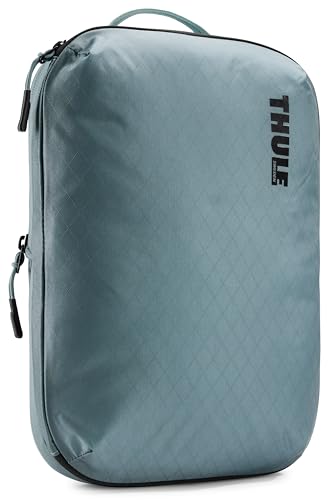
Thule’s medium cube is a plain example of that workhorse size, and it is one of the brands that sizes cubes to fit backpack packing compartments.
$29.95 on Amazon (price may vary)
How to Pack a Compression Cube
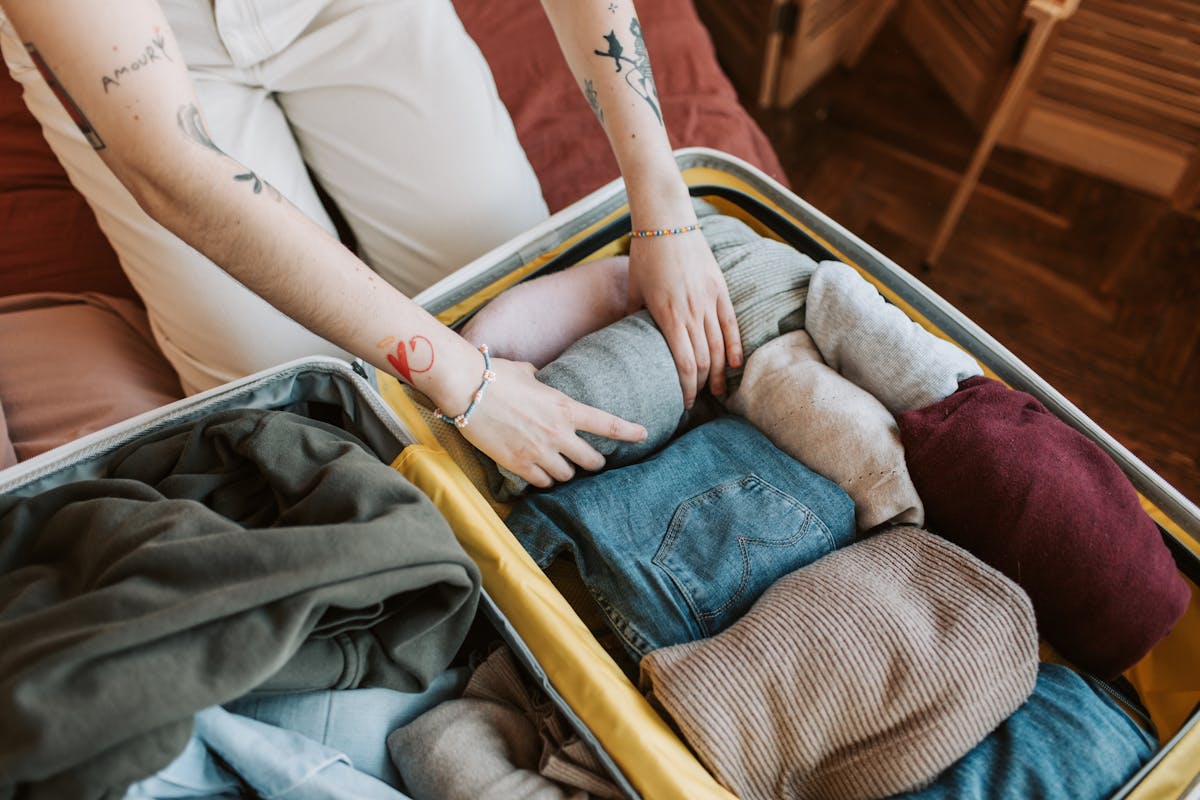
The packing method matters more than the cube itself. Rolling clothes before placing them in a compression cube produces better results than folding flat.
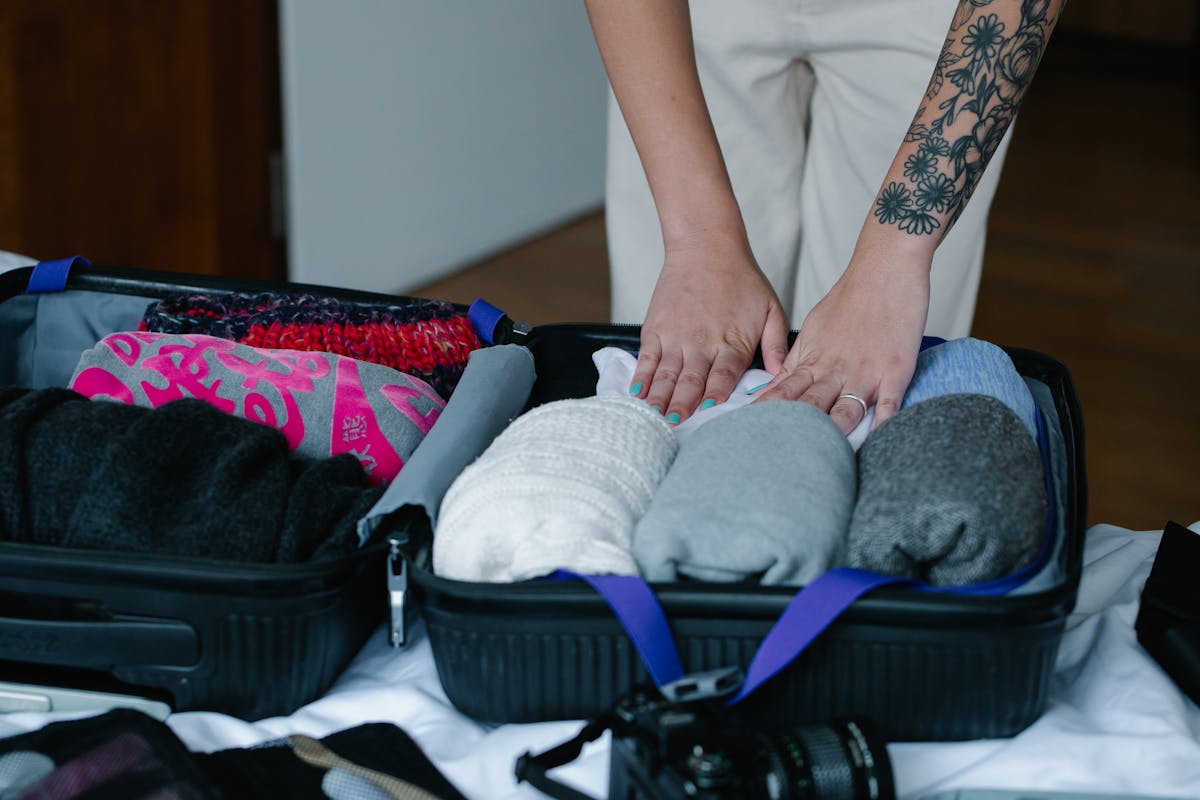
Roll each item tightly and place them side by side in the cube with the rolled edges facing up. Fill gaps with socks or small items. Once the cube is full, zip the main compartment shut. Then zip the compression panel slowly, holding the interior fabric away from the zipper track with your free hand. That last step prevents the most common complaint about compression cubes: zipper snagging.
If you’re using packing cubes for the first time, start with the medium size. Pack it with a few days of shirts, compress it, and see how much space you save before investing in a full set.
Materials and Durability
The material affects both weight and compression performance. Nylon is the most common fabric for compression cubes. Heavier nylon (70D+) holds its shape better under compression but adds weight. Lighter nylon (30-40D) saves weight but allows the cube to bulge in the center when packed full.
Recycled fabrics have become standard in premium compression cubes from brands like Eagle Creek and Osprey. The recycled nylon performs identically to virgin nylon in our experience. The eco claim is legitimate without sacrificing durability.

$30.00 on Amazon (price may vary)
The zipper is the failure point on most compression cubes. YKK zippers are the industry benchmark. Budget cubes with unbranded zippers tend to snag more frequently and wear out faster, especially on the compression track where the zipper is pressing against packed fabric.
When Compression Cubes Don’t Help
Compression cubes aren’t the right tool for every packing situation.
If you’re already a light packer who fills a carry-on with room to spare, compression cubes won’t change your life. The organization benefit of regular cubes is identical, and you don’t need the space savings.
Wrinkle-prone fabrics like linen, silk, and dress shirts do worse in compression cubes than in regular cubes or garment folders. The extra pressure creates creases that are harder to shake out at your destination. If you’re packing business attire, use a garment folder for those items and compression cubes for casual clothes only.
Fragile items (electronics, toiletries, anything breakable) should never go in a compression cube. The compression force can crack containers or damage screens.
Care and Maintenance
Most compression cubes are machine washable on a gentle cycle with cold water. Air dry them rather than using a dryer. The heat can warp the zipper tracks. If the compression zipper starts snagging, run a bar of soap or a candle along the zipper teeth to lubricate them.
Store cubes uncompressed when not in use. Leaving them compressed long-term can weaken the zipper track and stretch the compression panel. Most cubes fold flat and take up almost no storage space.
FAQ
Do compression packing cubes damage clothes?
No. Compression cubes apply even pressure across the surface of your clothes, which is different from cramming items into a tight space. Wrinkle-prone fabrics will crease more than in a regular cube, but the clothing itself isn’t damaged. Rolling clothes before packing minimizes wrinkling.
Are compression cubes allowed on planes?
Yes. Compression packing cubes are allowed in both carry-on and checked luggage with no restrictions. They’re fabric organizers, not pressurized containers. TSA doesn’t treat them any differently from regular packing cubes or clothing.
How much space do compression cubes actually save?
Most compression cubes reduce packed volume by 30-40%. The exact savings depend on what you’re packing. Bulky items like sweaters and hoodies compress more than thin t-shirts. Rolling clothes before packing maximizes the compression benefit.
Can I use compression cubes in a backpack?
Yes, and they work particularly well in travel backpacks. Backpacks have deep, irregular compartments where flat, compressed cubes stack better than loose clothes. Some brands (Thule) make compression cubes specifically sized for backpack packing compartments.
What’s the difference between compression cubes and vacuum bags?
Compression cubes use a secondary zipper to press out air gaps between clothes. Vacuum bags use a valve and pump (or rolling) to remove air from around the clothes entirely. Vacuum bags compress more but are harder to repack on the go, can’t be partially opened, and leave you with a pile of loose clothes if the seal fails mid-trip. Compression cubes are faster, reusable on the go, and have no seal to fail.