Best Packing Cubes (2026): 6 Sets That Actually Organize Your Bag

This article contains affiliate links. We may earn a commission at no additional cost to you if you make a purchase through these links. See our affiliate disclosure for details. As an Amazon Associate I earn from qualifying purchases.
Packing cubes are one of the easiest upgrades you can make to how you pack a suitcase or travel backpack. They weigh very little, they stop the inside of your bag from turning into a laundry pile, and they make repacking during a multi-stop trip much less annoying. There are a lot more packing cube sets now, and most of them look similar in product photos. The differences show up once they are full: zippers catch, fabric balloons, oversized cubes waste corners, and aggressive compression can turn neat shirts into creased bricks. After comparing sets across price points and bag types, these six hold up on zipper quality, size mix, and bag fit.How We Picked These Packing Cubes
We compared each set on four points from listings, spec sheets, and owner ratings: zipper reliability when the cube is full, whether the cube holds its shape, suitcase and backpack fit, and whether it solves a specific packing problem or just adds another pouch.
For compression cubes, we looked past the marketing claim and focused on packed volume, wrinkle risk, and zipper stress. A cube that flattens a sweatshirt is useful. A cube that saves a little space but strains the zipper or turns shirts into a mess is not.
We also weighed use case. A family packing checked luggage needs different cubes than a one-bag traveler using a soft-sided backpack. The right set depends on your bag shape, clothing type, and how much wrinkling you’re willing to accept.
Which Type of Packing Cube To Buy
Standard mesh cubes are the safest first set. They’re easy to see into, kinder to wrinkle-prone clothes, and ideal for checked bags or roomy carry-ons.
Compression cubes are best for carry-on-only trips, sweaters, gym clothes, and soft casual layers. They save space, but they add zipper stress and usually create more wrinkles.
Ultralight cubes make the most sense for backpackers and one-bag travelers. Look for slippery ripstop fabric, low weight, top handles, and shapes that slide into a travel backpack without creating dead space.
Clean/dirty cubes are useful on multi-stop trips, beach trips, gym-heavy itineraries, and anywhere damp or worn clothes need to stay away from clean layers.
Vacuum cubes can create the most space, but they are less flexible in real travel. You have to manage the pump or valve, and the packed shape can become rigid enough to fight the corners of your bag.
Liters of the box, not days of clothes
Geometric volume is length times width times height, divided by 61.024. The count is a simple repeated-orientation grid estimate against the outside of the case unless a lining number exists. Actual interior may be smaller, and mixed arrangements are not searched. Compressed height stays blank until you type a tape reading.| Cube | Outside | Liters |
|---|---|---|
| Samsonite Compression Cube, large | 17 x 12.5 x 4.3 in | 14.97 |
| Samsonite Compression Cube, medium | 13 x 9.8 x 3 in | 6.26 |
| Samsonite Compression Cube, small | 11 x 7 x 3 in | 3.79 |
| Osprey Ultralight Packing Cube, large | 12 x 7.87 x 6.69 in | 10.35 |
| Eagle Creek Pack-It Reveal Cube, extra small | 7.5 x 4.5 x 2.5 in | 1.38 |
| Eagle Creek Pack-It Reveal Cube, small | 10 x 7 x 3 in | 3.44 |
| Eagle Creek Pack-It Reveal Cube, medium | 14 x 10 x 3 in | 6.88 |
Our Packing Cube Picks at a Glance
- Samsonite Compression Cube Set: best overall, three graded sizes that all compress.
- Eagle Creek Pack-It Reveal: best for visibility and simple organization.
- TravelWise 5-Piece Cube Set: best complete carry-on set, five cubes in three sizes.
- Osprey Ultralight Packing Cubes: best for backpacking and weight-conscious travel.
- Gonex Compression Cubes: best budget compression set.
- Amazon Basics Packing Cubes: best starter set.
Why Packing Cubes Work
The concept is simple: instead of stacking clothes directly in your suitcase, you sort them into small fabric containers. Shirts in one cube, pants in another, underwear and socks in a third. When you open your bag, everything is organized. When you arrive at your hotel, you pull out the cubes and put them directly in drawers. Unpacking takes almost no time. The real benefit shows on return trips. Without cubes, repacking a suitcase mid-trip turns into a chaotic stuffing exercise. With cubes, you put the same items back in the same cubes and zip up. The system stays the same from hotel to hotel. Compression cubes add another layer: a second zipper compresses the cube and squeezes air out of your clothes. This saves space but wrinkles clothes more. Standard (non-compression) cubes keep clothes neater; compression cubes fit more in less space. Both approaches work. Your choice depends on whether you prioritize wrinkle-free clothes or maximum capacity. We’ve covered whether packing cubes are worth it in detail. For most travelers they are.1. Samsonite Compression Cube Set: Best Overall
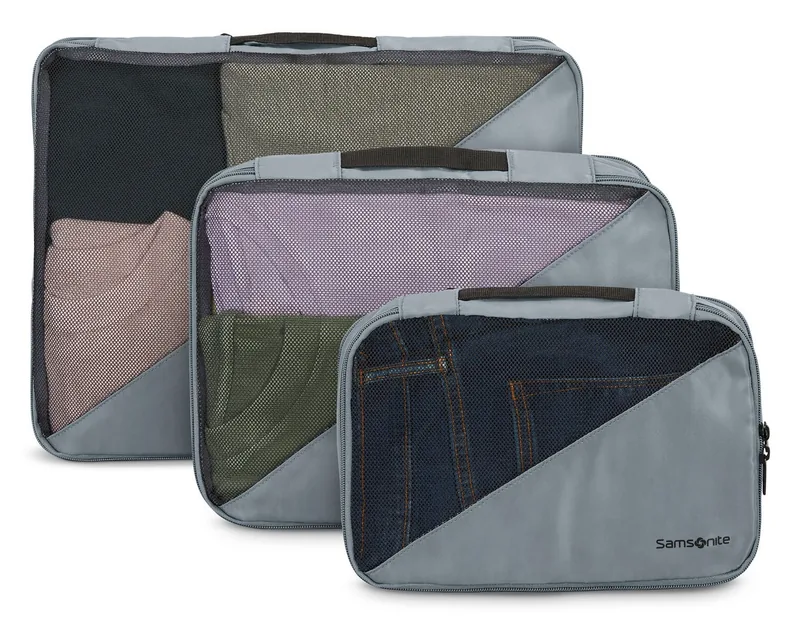
Samsonite Compression Cube Set
Three compression cubes in graded sizes, so one purchase covers a whole carry-on instead of half of it.
- Three graded sizes in one purchase
- Compression zipper on all three cubes
- Large cube spans 17 by 12.5 inches, about half a carry-on
- 0.88 pounds for the full set
- Compression creases soft clothes, as all compression cubes do
- Heavier than the ultralight cubes on this list
- Three cubes cover a carry-on, so a big checked bag wants a second set
2. Eagle Creek Pack-It Reveal: Best for Organization
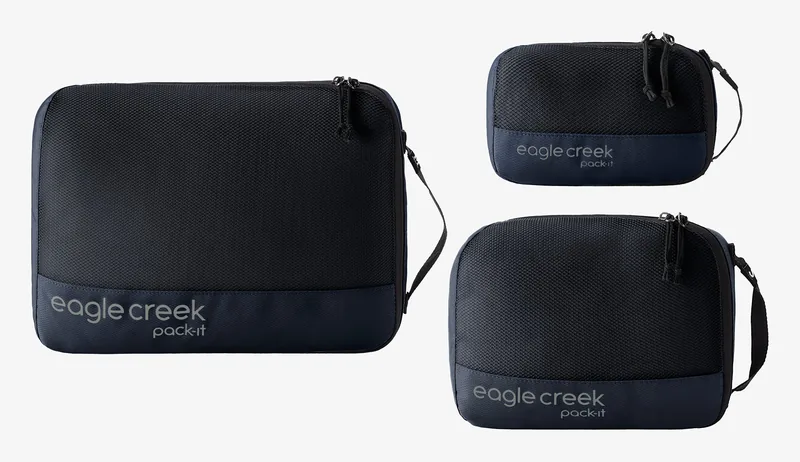
Eagle Creek Pack-It Reveal
- Translucent panels for instant content identification
- Ultra-light ripstop fabric
- Wide range of sizes available
- Lifetime warranty from Eagle Creek
- No compression feature
- Translucent fabric shows wear over time
- Pricier than basic mesh-top cubes
3. TravelWise 5-Piece Cube Set: Best Carry-On Set
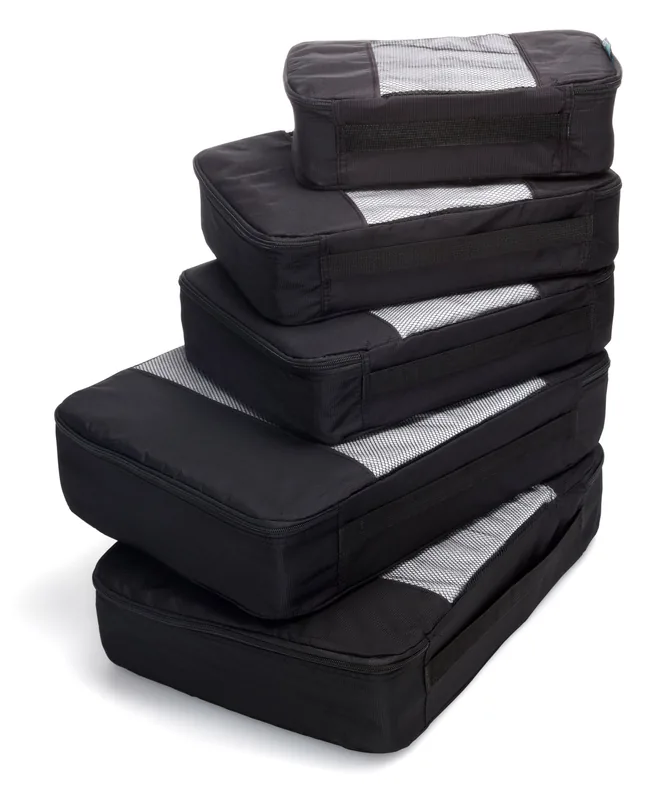
TravelWise 5-Piece Cube Set
- Five pieces in three sizes, one small, two medium, two large
- Front mesh panel on each cube for airflow and visibility
- Webbing grab handle lifts one cube out without unpacking the rest
- Poly ripstop shell, half a pound for the whole set
- No compression feature
- Hand wash and hang dry only
4. Osprey Ultralight Packing Cubes: Best for Weight-Conscious Packers
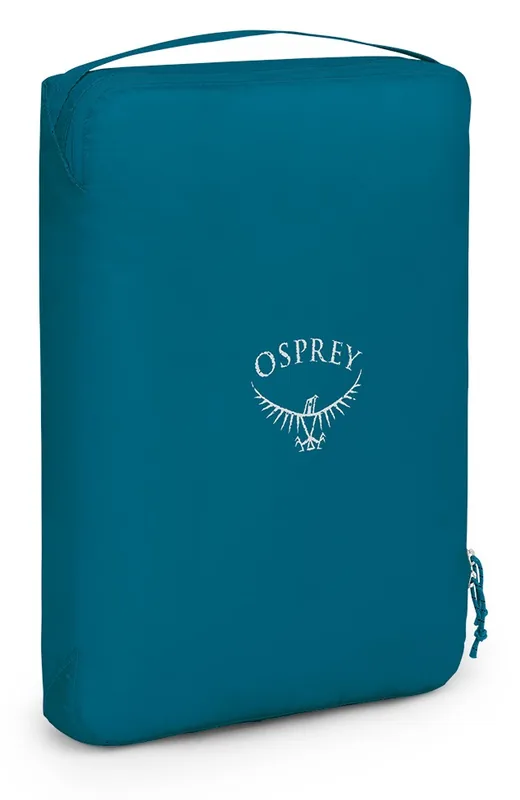
Osprey Ultralight Packing Cube
- Sold individually, so you buy only the sizes you use
- J-zip opening loads flat in a tight compartment
- Two zipper pullers, so it opens from either end
- bluesign approved, GRS certified 100 percent recycled main fabric
- No compression feature
- Buying cubes one at a time costs more than buying a set
- A full three-size kit is three separate orders
Best Packing Cubes for Backpacking
For backpacking, the Osprey Ultralight cubes are the easiest recommendation in this lineup. They’re light, slippery enough to slide into a packed travel backpack, and structured enough to keep shirts, socks, and base layers from migrating into every pocket, which is how they stand in for the graded compartments you get on backpacks with lots of pockets. The biggest backpacking mistake is an oversized cube that creates a hard rectangle in a curved backpack shell. Two medium cubes usually pack better than one large cube because they can stack vertically, sit beside a toiletry pouch, or tuck around the frame sheet. That matters if you’re packing an Osprey Farpoint, a clamshell travel pack, or a smaller personal item backpack. If your trip includes hiking, hostels, or rainy transfers, prioritize ripstop fabric, a grab handle, and at least a little water resistance. Mesh is useful in a suitcase, but too much exposed mesh can snag when you’re sliding cubes in and out of a tight backpack.5. Gonex Compression Cubes: Best Budget Compression
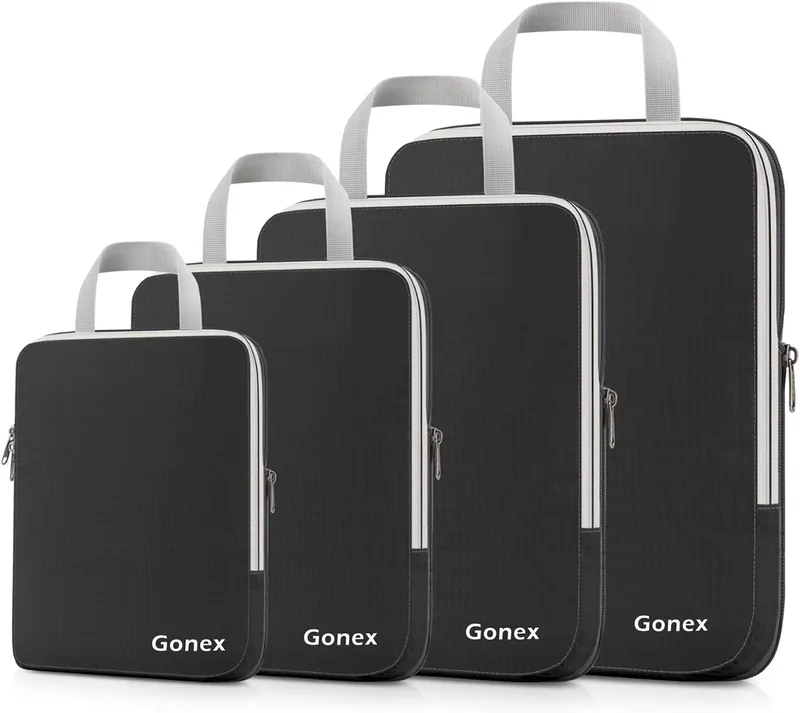
Gonex Compression Cubes
- Full compression set at a starter price
- Dual-zipper compression can noticeably reduce packed volume
- 4-piece set covers most packing needs
- Thinner fabric than premium competitors
- Zippers aren’t as smooth as Eagle Creek’s
- May wear faster under heavy use
6. Amazon Basics Packing Cubes: Best Starter Set
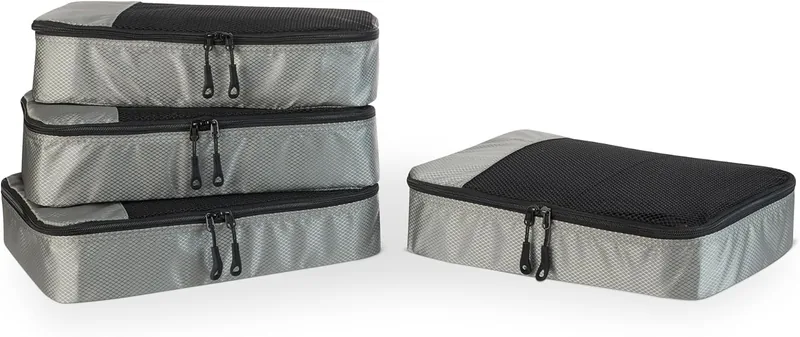
Amazon Essentials Packing Cubes
- Accessible 4-piece starter set
- Broad size and color availability
- Simple, reliable design
- Easy to replace if a cube gets lost or worn
- No compression feature
- Basic polyester fabric
- No warranty beyond Amazon’s return policy

Best Compression Packing Cubes: What to Look For
Compression cubes help, but they have limits. Our explainer on compression packing cubes covers the dual-zipper mechanics and where the space savings actually come from. They work best on soft clothes with trapped air: fleece, socks, underwear, casual tees, and workout layers. They work poorly on dress shirts, linen, structured pants, and anything you need to wear straight out of the bag. Samsonite covers the most ground here because the compression comes in three sizes at once. Small, medium and large all carry the compression zipper, so you can flatten the cube holding sweaters and leave the cube holding shirts alone, rather than committing the whole bag to one approach. Gonex uses the familiar dual-zipper approach: close the cube, then run a second zipper around the edge to flatten it. It’s simple and effective for casual clothes, but it puts more stress on the zipper when the cube is overfilled. Eagle Creek’s Reveal cube on this list isn’t a compression cube, which is part of the point: if your priority is visibility, lighter fabric, and lower wrinkle risk, a standard Eagle Creek cube is often a better travel companion than a compression cube. If your priority is max capacity, choose Samsonite or Gonex from this list and accept the wrinkle tradeoff. For more space-saving habits beyond cubes, pair them with the packing order in our guide to maximizing suitcase space and avoid the common trap of compressing so much that your bag becomes heavy, rigid, and hard to close.At a Glance: Packing Cube Comparison
Beyond Cubes: Toiletry and Tech Organizers
Cubes solve clothes. Toiletries and cables are what still turn a tidy suitcase into a scramble, and each has a dedicated answer worth packing alongside a cube set.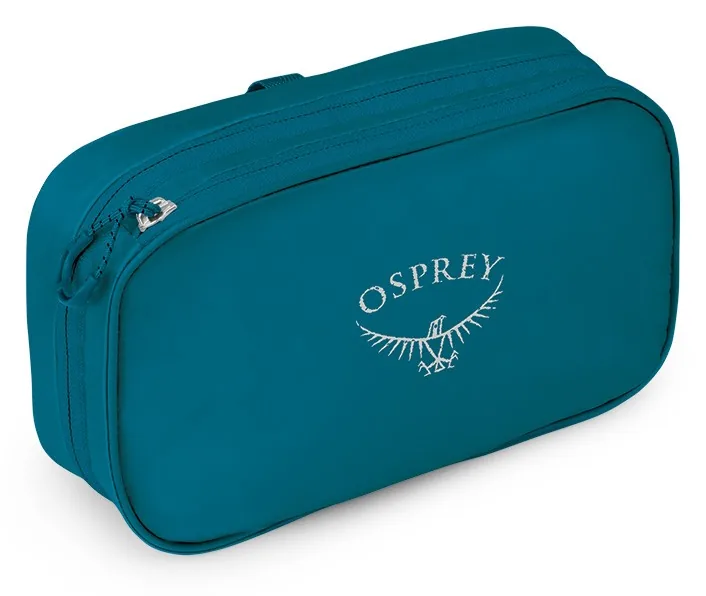
Osprey Ultralight Zip Organizer
Check Price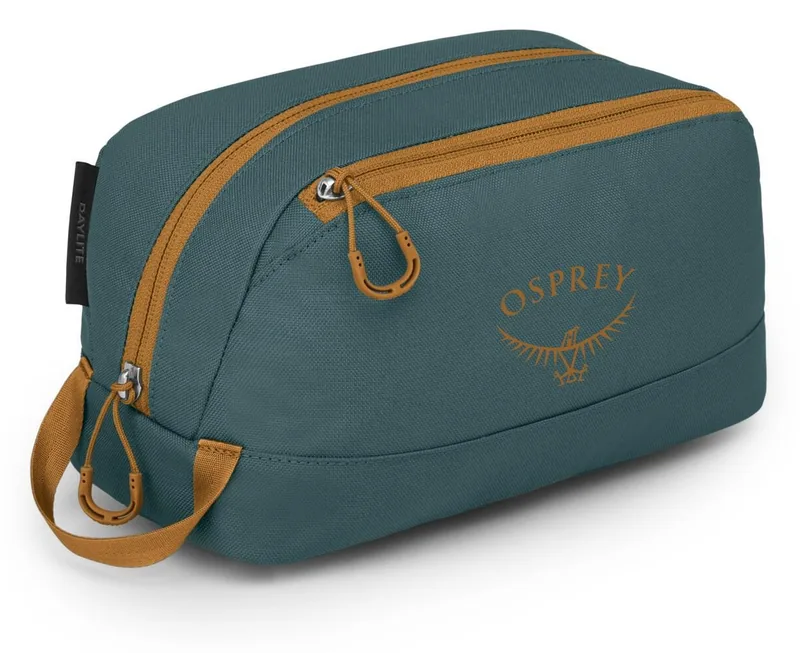
Osprey Daylite Toiletry Kit
Check Price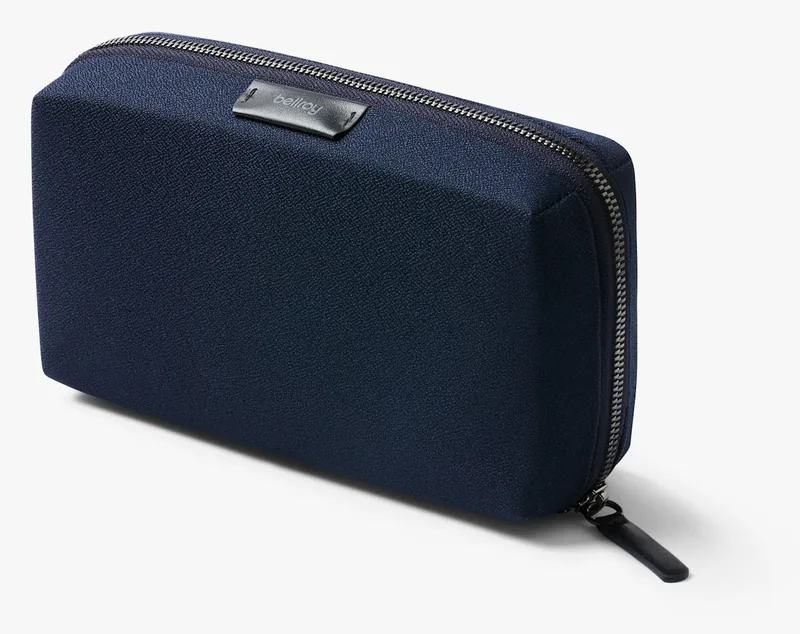
Bellroy Tech Kit
Check Price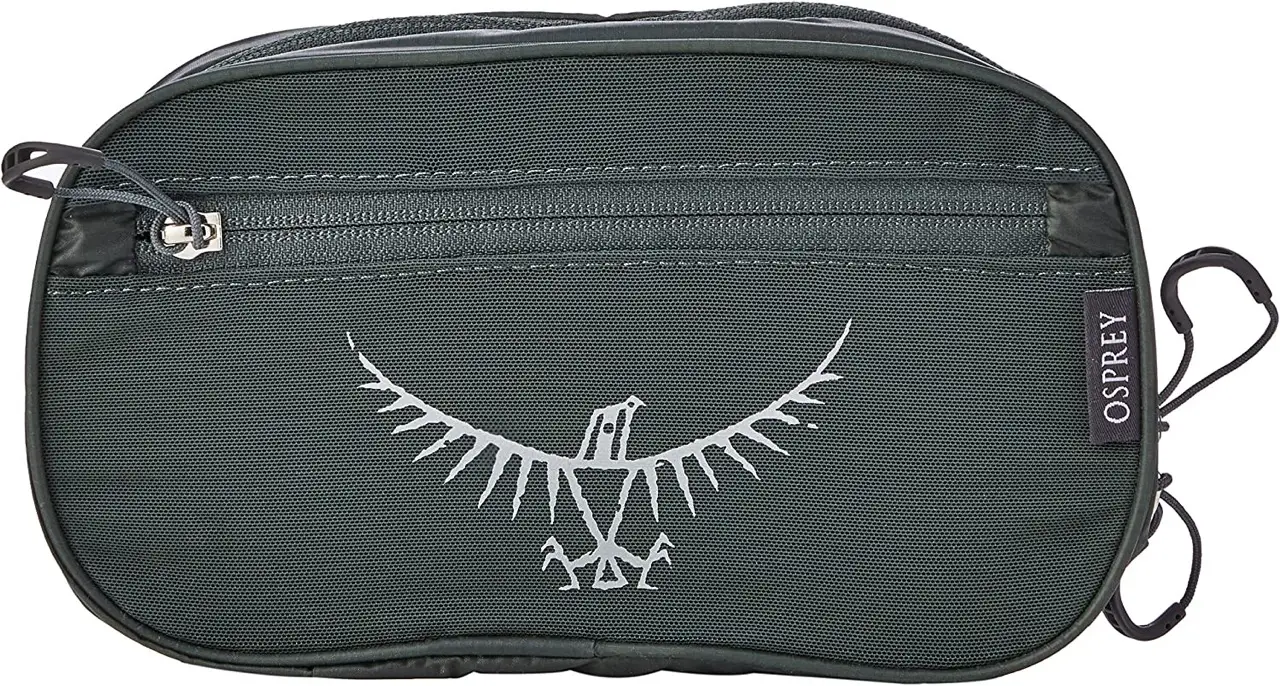
What to Avoid With Packing Cubes
Avoid cubes that are larger than the compartment they’re supposed to organize. One huge cube can look efficient at home, then waste space in a rounded backpack or force your suitcase divider to bulge.
Be careful with snaggy zippers and fabric liners that catch in the track. A packing cube gets opened and closed often during a trip, so zipper feel matters more than the specs suggest.
Don’t compress everything. Compression is excellent for soft layers, but it’s the wrong tool for clothes that wrinkle easily. If you’re packing button-downs, linen, or anything tailored, use a standard cube and leave enough room for the fabric to breathe.
Finally, cubes aren’t an excuse to pack more. They’re best when they help you separate outfits, keep worn clothes contained, and avoid unpacking your whole bag every night. If the cube system encourages you to fill every empty corner, our overpacking guide is worth reading before your next trip.
FAQ
Best packing cubes for backpacking
The Osprey Ultralight cubes are the best backpacking pick here because they’re light, durable, and easy to slide into a travel backpack. For backpacking, we prefer two or three smaller cubes over one large cube because they fit around curves, frame sheets, and water bottles more easily.Compression packing cubes vs regular packing cubes
Compression cubes are better when space is the main problem. Regular cubes are better when you care more about visibility, access, and fewer wrinkles. For most travelers, the best setup is mixed: one compression cube for soft clothes and one or two standard cubes for shirts, pants, and daily essentials.Packing cubes in suitcases vs backpacks
They work in both, but the ideal shape changes. Suitcases handle larger rectangular cubes well because the interior is flat. Backpacks usually pack better with smaller, softer cubes that can stack vertically and move around the bag’s curve.How to stop packing cubes from wrinkling clothes
Don’t overfill the cube, and avoid compressing wrinkle-prone fabrics. Fold shirts cleanly, place heavier items at the bottom of the cube, and use compression only for soft layers like socks, knits, and athletic clothes. For dressier trips, pair standard cubes with a garment folder or a dedicated garment bag.How many packing cubes fit in a carry-on
Most carry-ons fit three to five cubes comfortably: one large or medium cube for tops, one medium cube for bottoms, one small cube for underwear and socks, and one slim cube for swimwear, workout gear, or laundry. If you’re using a built-in shelf suitcase like the Solgaard Carry On Closet, you may need fewer cubes because the suitcase already creates compartments.How to wash packing cubes
Most packing cubes can be washed on a gentle cycle and air dried, but check the care label first. Don’t put coated nylon, mesh panels, or compression zippers through high dryer heat. Between trips, a wipe with a damp cloth and a full air dry is usually enough for light dirt or odors.Filed in Packing Tips