Best Carry-On Luggage 2026: 6 Picks From Budget to Premium

This article contains affiliate links. We may earn a commission at no additional cost to you if you make a purchase through these links. See our affiliate disclosure for details. As an Amazon Associate I earn from qualifying purchases.
The best carry-on luggage in 2026 comes down to empty weight, construction, organization, and how the full exterior fits the airline’s published box. American, JetBlue, and United publish 22 x 14 x 9 inches for the overhead bag. Frontier publishes 24 x 16 x 10 inches and a 35 lb maximum. There is no universal carry-on size: the useful test is the tightest named rule on your ticket.
We compared manufacturer specifications and marketplace listings for Travelpro, Samsonite, Away, Delsey, and Rockland. The 5.4 lb Travelpro Maxlite 5 is our pick when its 23 x 14.5 x 9-inch listed exterior is allowed. If your ticket says 22 x 14 x 9 inches, start with a smaller model: none of the five manufacturer-documented ranked picks below is fully inside that box, and the Rockland's exact variant needs checking.
Carry-On Size Limits in 2026
American, JetBlue, and United publish a 22 x 14 x 9-inch overhead-bag limit. American explicitly says its measurements include handles and wheels, and comparing the full exterior is the safer method for every carrier. It is a common reference point, not a universal US limit. Frontier’s paid overhead bag can be 24 x 16 x 10 inches and up to 35 lb. Compare the packed bag with the airline and fare on your ticket.
International limits also vary by carrier and fare. Ryanair Basic includes only a 40 x 30 x 20 cm small bag; its paid overhead bag is 55 x 40 x 20 cm and 10 kg. On any airline that publishes a weight maximum, a lighter empty suitcase leaves more of that allowance for contents. Our international carry-on guide covers named limits in detail.
Which size path should you take?
Your airline publishes 22 x 14 x 9 inches: Start with the separate Compact model detailed below. The five manufacturer-documented ranked cases below exceed at least one axis of that box; Rockland's exact variant still needs checking.
Your airline allows a roomier box, such as Frontier's 24 x 16 x 10 inches: The unexpanded Maxlite 5 and several other documented picks sit within those published dimensions. Check the ticketed fare, weight limit, and your packed exterior before choosing by shell, pockets, or empty weight. Expansion can push a bag beyond the listed unexpanded size.
A documented 22 x 14 x 9-inch option: Travelpro Maxlite 5 Compact
For a ticket with a 22 x 14 x 9-inch overhead-bag limit, the Maxlite 5 Compact Carry-On Spinner provides a documented size alternative to the larger Maxlite 5 ranked below. Travelpro lists its overall exterior, including wheels and carry handles, at exactly 22 x 14 x 9 inches. It weighs 5.1 lb empty and holds 38 liters by the maker's specification. That makes it 0.3 lb lighter but 8 liters smaller than the standard Maxlite 5 below; those are separate models, even though both carry the Maxlite 5 name.
The Compact is a polyester softside spinner with four rotating wheels, a two-position handle, a full-length lid pocket, a side accessory pocket, and hold-down straps. Its expansion zipper can add up to two inches of depth, so leave it closed when the published nine-inch depth matters. Check the particular fare and the exterior of your packed bag: a manufacturer's unexpanded measurement is a size comparison, not a guarantee of boarding on every aircraft.
Hardside vs. Softside for Carry-On
Softside carry-ons can provide exterior pockets and some give when packing. Weight, expansion, and water resistance vary by model, so compare the exact specifications.
Hardside carry-ons use a rigid shell and usually wipe clean easily. They cannot compress much in a sizer, while some models still include expansion zippers. Our ABS vs. polycarbonate comparison explains how those two hard-shell materials differ. A few premium bags use a structural layer wrapped in fabric; we cover examples in our Peak Design Roller Pro review and Thule Aion carry-on spinner review.
At a Glance: Published Exterior Size and Fit
Fit below is simple arithmetic against the named published box, not a TBE sizer test. Dimensions include wheels and handles where the manufacturer says so. Marketplace-only rows need a listing check before purchase.
| Pick | Published exterior | Empty weight | Shell / expansion | Named-carrier fit | Evidence basis |
|---|---|---|---|---|---|
| Travelpro Maxlite 5 Compact (strict-size option) | 22 x 14 x 9 in, including wheels and handles | 5.1 lb | Polyester softside / up to 2 in | Matches American, JetBlue, and United's published 22 x 14 x 9 box when unexpanded; packed exterior and ticket still control | Travelpro SKU 401176201 |
| Travelpro Maxlite 5 | 23 x 14.5 x 9 in | 5.4 lb | Polyester softside / 2 in | Over American, JetBlue, and United 22 x 14 x 9; inside Frontier 24 x 16 x 10 when unexpanded | Travelpro |
| Samsonite Freeform | 23 x 15 x 10 in | 6.5 lb | Polypropylene hardside / 1 in | Over American, JetBlue, and United; inside Frontier when unexpanded | Samsonite item 78255 |
| Travelpro Platinum Elite 21 | 23.5 x 14.5 x 9 in | 7.8 lb | Nylon softside / up to 2 in | Over American, JetBlue, and United; inside Frontier when unexpanded | Travelpro |
| Delsey Chatelet Air 2.0 23 | 22.75 x 15 x 10 in | 7.7 lb | Polycarbonate hardside / no listed expansion | Over American, JetBlue, and United; inside Frontier | Delsey SKU 40167680522 |
| Away The Carry-On | Conflicting: 22 x 14.4 x 9.1 in (Size block); 21.7 x 14.4 x 9 in (FAQ) | Conflicting; confirm exact variant | Polycarbonate hardside / no | Both listed widths exceed a 14 in limit; confirm full exterior before using another limit | Away |
| Rockland Melbourne 20 | Check exact listing | Check exact listing | ABS hardside | Compare the ordered variant with the ticketed carrier | Marketplace listing |
1. Travelpro Maxlite 5: Best Overall
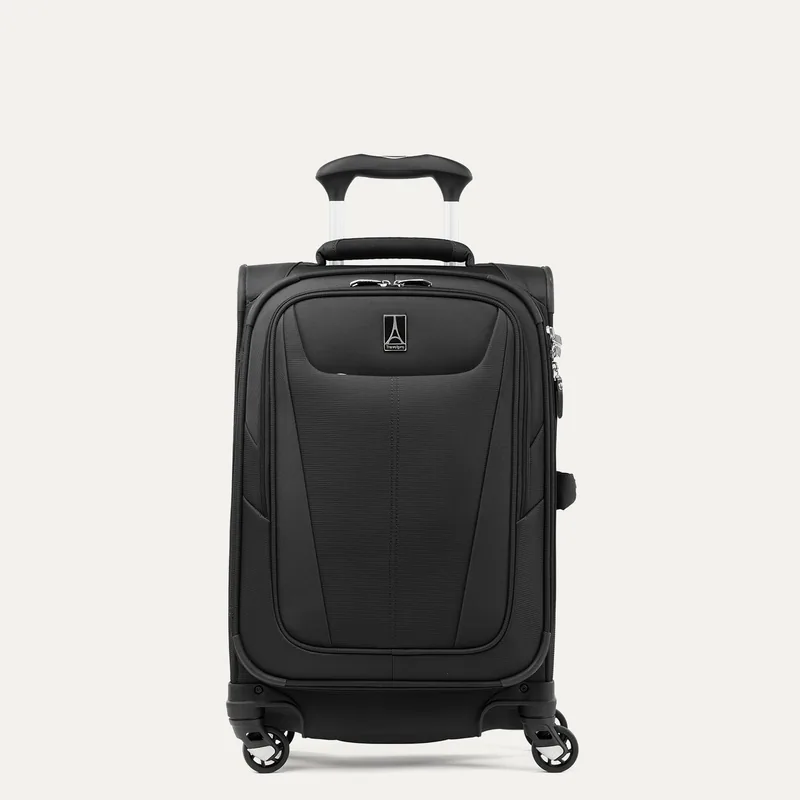
Travelpro Maxlite 5 Carry-On
A 5.4 lb softside spinner with two inches of expansion. Check its full exterior against your airline before buying.
The Maxlite 5 wins on empty weight. Travelpro lists 5.4 lb, two inches of expansion, and four spinner wheels. Its 23 x 14.5 x 9-inch overall exterior exceeds a 22 x 14 x 9-inch box on height and width, although it sits inside Frontier’s 24 x 16 x 10-inch dimensions when unexpanded. Travelpro's other rollers split along similar weight and organization lines, and we compare the full Travelpro carry-on range side by side.
Travelpro lists a PowerScope handle with two locking positions, a full-length lid pocket, tie-down straps, and a side accessory pocket. Its limited lifetime warranty covers defects in materials and workmanship. Our Maxlite review has the detailed specification table.
- 5.4 lb empty weight
- Two-inch expansion
- Limited lifetime warranty
- Overall 23 x 14.5 x 9 inches exceeds a 22 x 14 x 9 box
- No laptop sleeve or battery pocket
Start with the Maxlite 5 if you want a light softside case and your airline permits its 23 x 14.5 x 9-inch exterior including handles and wheels. Skip this size when you need to satisfy a published 22 x 14 x 9-inch box; Travelpro's separate Compact version is the relevant size comparison. Keep the expansion closed when checking any airline limit.
2. Samsonite Freeform 21": Best Hardside
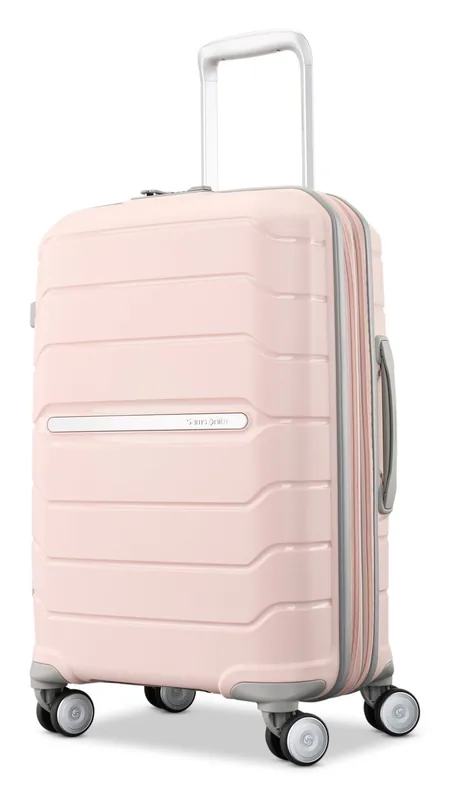
Samsonite Freeform 21 Inch Spinner
Samsonite lists item 78255 in the Freeform family with a polypropylene shell, double spinner wheels, a TSA lock, and one inch of expansion. The listed 23 x 15 x 10-inch overall exterior does not fit inside a 22 x 14 x 9-inch box, but it does sit within Frontier’s 24 x 16 x 10-inch maximum when unexpanded. Our Monos Carry-On Pro review covers a premium hardside alternative.
The clamshell opening splits into two equal-depth compartments with cross-straps and a mesh divider. It has no extra organizers, battery pocket, or laptop sleeve. If you want padded computer storage, our carry-on-luggage-with-laptop-compartment guide covers those bags. Our detailed comparison puts Samsonite and Travelpro side by side across their full lineups.
- 6.5 lb empty weight
- Polypropylene shell
- Built-in TSA lock
- One-inch expansion
- 23 x 15 x 10 inches exceeds a 22 x 14 x 9 box
- No laptop sleeve or extra organizers
- Heavier than the 5.4 lb Maxlite 5
Choose the Freeform for its polypropylene shell, built-in lock, and one-inch expansion. Check the 23 x 15 x 10-inch overall exterior against your airline before buying.
3. Travelpro Platinum Elite: Best Premium Softside
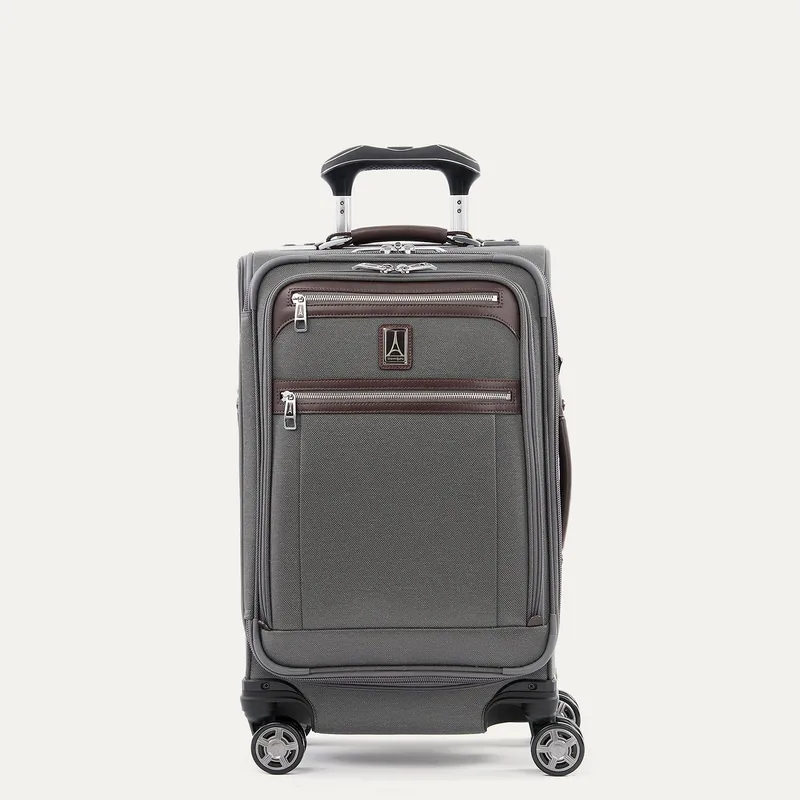
Travelpro Platinum Elite 21
The Platinum Elite is Travelpro's premium softside. Travelpro lists high-density nylon, its PrecisionGlide wheel system, and external USB A and C ports powered by a removable power bank that you supply.
It also lists a drop-in suiter, accessory pockets, a removable wet pocket, and up to two inches of expansion. The overall exterior is 23.5 x 14.5 x 9 inches and the empty weight is 7.8 lb. Our Platinum Elite carry-on review has the full specification table.
- PrecisionGlide wheel system
- Built-in USB charging port
- High-density nylon construction
- Dedicated suit compartment
- 23.5 x 14.5 x 9 inches exceeds a 22 x 14 x 9 box
- Heavier than the Maxlite 5
The Platinum Elite adds a suiter, denser organization, and the PrecisionGlide system. Its 23.5 x 14.5 x 9-inch listed exterior exceeds a 22 x 14 x 9-inch box.
4. Delsey Chatelet Air 2.0: Best Looking
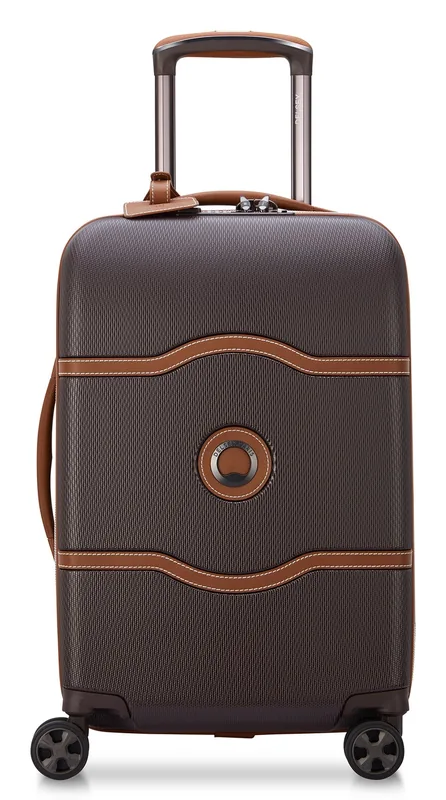
Delsey Chatelet Air
The 23-inch Chatelet Air 2.0 is the design pick, with a polycarbonate shell, leather-look accents, dual-density wheels, a TSA combination lock, and Delsey’s SECURITECH zipper. The current Delsey SKU 40167680522 doesn't list a wheel brake.
Delsey lists this version at 22.75 x 15 x 10 inches and 7.7 lb. That exterior exceeds a 22 x 14 x 9-inch box, while it fits inside Frontier’s 24 x 16 x 10-inch dimensions. Our Delsey sale guide covers places to check before buying.
- Dual-density spinner wheels
- Vintage-inspired shell with leather-look accents
- Polycarbonate shell
- 10-year warranty
- Heavier than the 5.4 lb Maxlite 5
- 22.75 x 15 x 10 inches exceeds a 22 x 14 x 9 box
- No expansion listed for this SKU
The Chatelet is the design-first carry-on. Choose it for the leather-look shell, divided interior, and SECURITECH zipper, and verify the listed exterior against your airline.
5. Away The Carry-On: Best Compression Interior
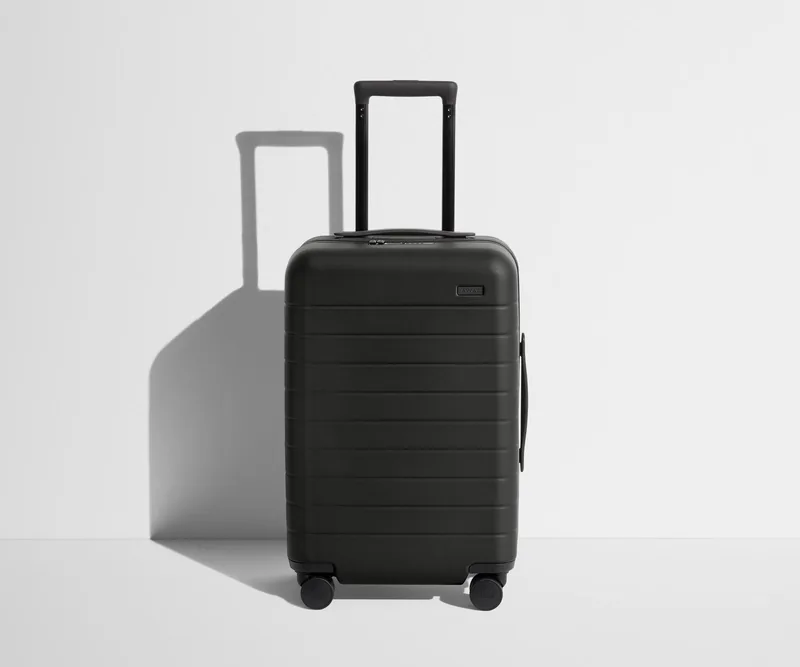
Away The Carry-On
Away lists a polycarbonate shell, interior compression system, and combination lock. Its current Jet Black page gives two different full-exterior measurements: 22 x 14.4 x 9.1 inches in the Size block and 21.7 x 14.4 x 9 inches in the FAQ. Both list a 14.4-inch width, which exceeds a 14-inch allowance. The page also gives conflicting weight and capacity figures, so confirm the exact variant with Away before relying on those specifications. Our Quince vs Away carry-on comparison lines alternatives up on cabin dimensions.
The standard Carry-On doesn't expand. Compare the dimensions and weight of an expandable model separately.
- Built-in interior organization
- Built-in compression system
- Built-in TSA combination lock
- 14.4-inch width exceeds a 14-inch published box
- Heavier than the 5.4 lb Maxlite 5
- Standard model doesn't expand
Choose the Away Carry-On for its compression interior if the exact bag meets your airline's full-exterior limit. Away's own page disagrees on its height and depth; both versions list a 14.4-inch width, over a 14-inch published box. Confirm the variant and packed measurements before buying for a specific flight.
6. Rockland Melbourne 20": Marketplace Hardside
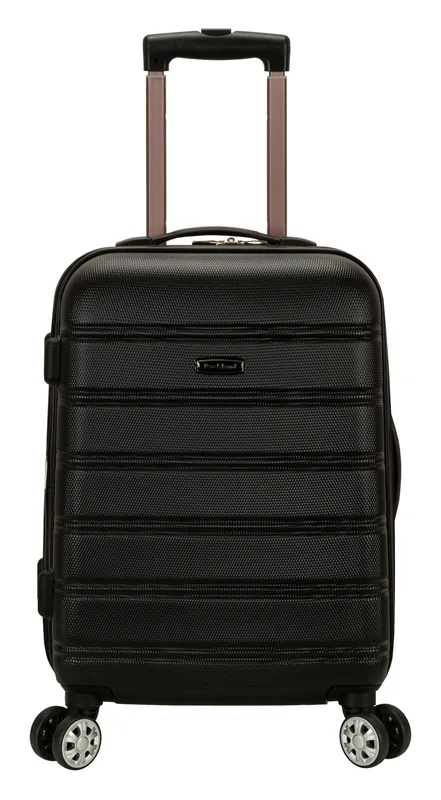
Rockland Melbourne Hardside
The Rockland Melbourne is a marketplace hardside option. The listing describes an ABS shell and four spinner wheels, but dimensions, weight, colors, and live availability can vary by seller or variant. Verify the exact item before ordering.
Its ABS construction is the main distinction from the manufacturer-documented models above.
- Marketplace hardside option
- Multiple colors and patterns on marketplace listings
- Marketplace specifications can vary by variant
- No current first-party specification page located
Choose the Rockland only after checking the exact listing’s overall dimensions, weight, warranty, and return terms. The lack of a current first-party specification page makes that verification part of the purchase decision.
Budget Carry-On Watchlist
Prices change, so treat this as a budget watchlist and confirm the live price, dimensions, warranty, and seller before ordering. The Rockland Melbourne already appears above as a marketplace hardside option. If you can wait for a sale, our month-by-month luggage sale calendar shows when the big luggage sales land each year.
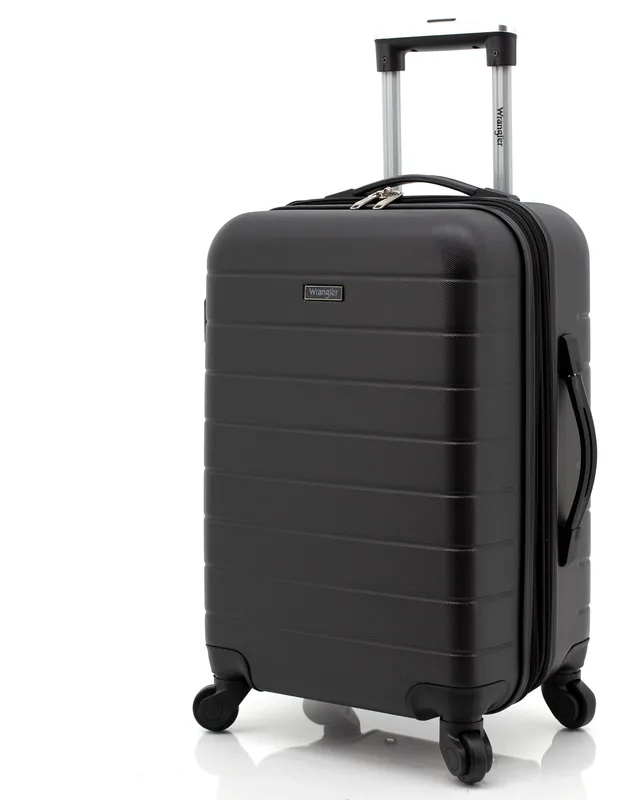
Wrangler Smart Luggage 22 inch
Check Price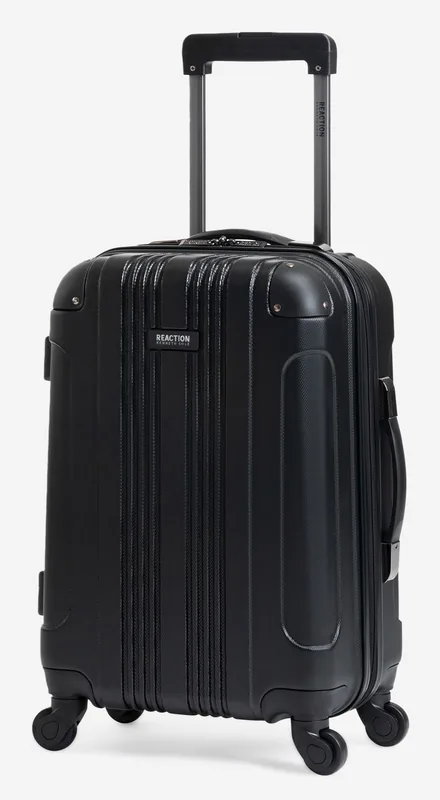
Kenneth Cole REACTION Out of Bounds 20 inch
Check Price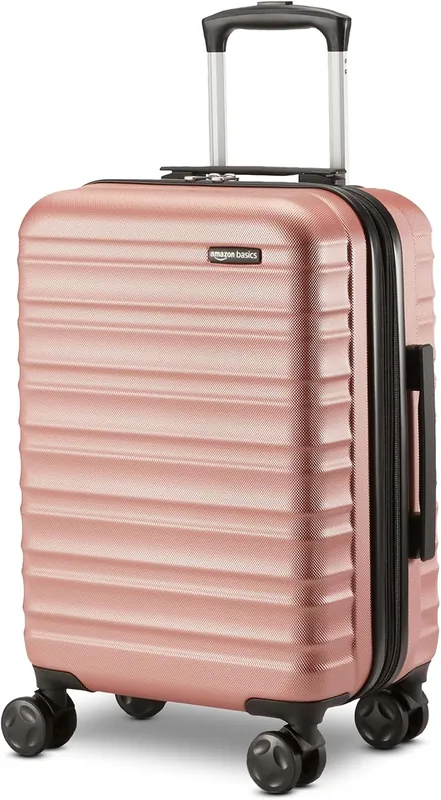
Amazon Basics 21 inch Hardside
Check Price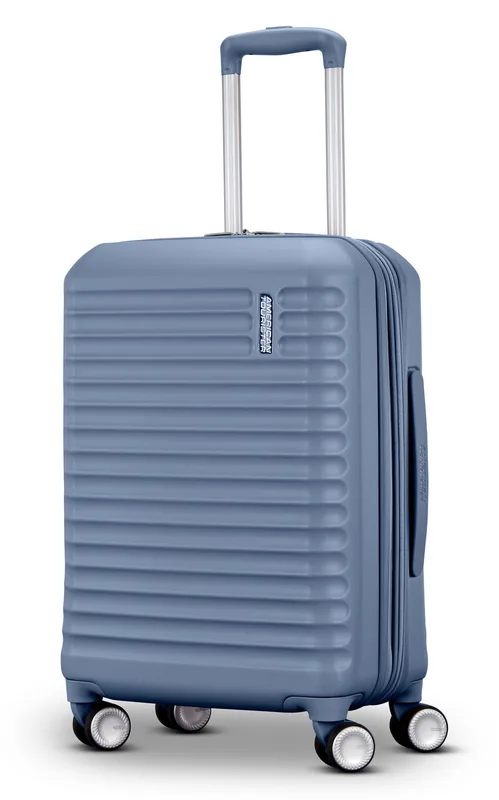
American Tourister Stratum 3.0 20 inch
Check Price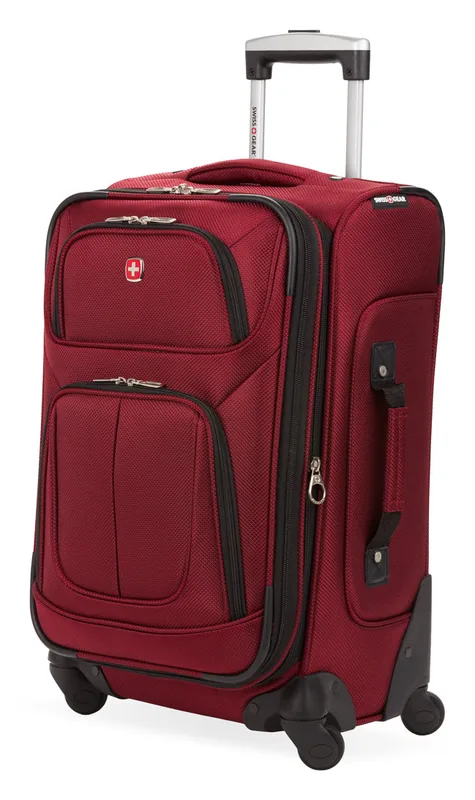
SwissGear Sion Carry-On Spinner
Check PriceThese marketplace listings emphasize different features, including charging pass-throughs, expansion zippers, and exterior pockets. Those features and measurements can vary by exact variant. Compare the full exterior, including wheels and handles, with your carrier. Do not rely on the inch number in the product title. Our Amazon Basics luggage review puts the Amazon Basics 21 inch listing next to the 22 x 14 x 9 inch box.
A lower price does not prove a bag will fail early or fit an airline sizer. Check the listed materials, hardware, warranty, return terms, seller, and current owner feedback for the exact item.
FAQ
What size carry-on fits all airlines?
No single size is guaranteed across all airlines and fares. American, JetBlue, and United publish 22 x 14 x 9 inches, while Frontier publishes 24 x 16 x 10 inches and Ryanair’s paid overhead bag is 55 x 40 x 20 cm. Not every pick here fits 22 x 14 x 9. Check our Southwest carry-on guide and the named rule for your ticket.
Is hardside or softside carry-on better?
Softside can provide exterior pockets and packing flexibility. Hardside provides a rigid shell and an easy-to-wipe surface. Empty weight, dimensions, expansion, water resistance, and construction vary by model, so compare the exact bags before choosing a shell type.
How much should a carry-on cost?
Set a budget after comparing the exterior size, empty weight, materials, hardware, warranty, and repair terms. Price alone does not establish lifespan, and live prices change.
Do I need a carry-on with a built-in battery?
No. A removable power bank can charge devices without being built into the suitcase. Follow the battery and smart-bag rules published by your airline and aviation authority, and remove any battery when the rule requires it.
Filed in Luggage Reviews