How to Measure Luggage the Way Airlines Do

This article contains affiliate links. We may earn a commission at no additional cost to you if you make a purchase through these links. See our affiliate disclosure for details. As an Amazon Associate I earn from qualifying purchases.
Measure the bag before you leave for the airport. Airlines judge the packed exterior, including wheels, handles, pockets, and anything else that protrudes. A product listing is useful only when it states that its dimensions cover the same points.
Measure height, width, and depth at the bag's widest packed points. Use the manufacturer's overall or exterior dimensions only if the listing says they include wheels, handles, and protrusions. If the basis is unclear, measure the bag instead of adding a guessed allowance.
- Measure floor to highest point
- Measure width at the side handle
- Turn it, measure depth to the pocket
- Record height x width x depth
How to Measure a Suitcase
Include everything that sticks out. Wheels, handles, external pockets, and an open expansion panel count toward the packed exterior. Do not assume a size name such as "21-inch carry-on" includes those points. Read the listing's measurement basis, then tape the packed bag if it is unclear.
Use a tape measure with a wall, book, or other straight edge. Measure a straight line between the furthest exterior points rather than following the shell's curve. Don't compress the bag. Measure it packed, as it will travel.
A flexible tape can help you position the endpoints, but the number you record is the straight exterior height, width, or depth.
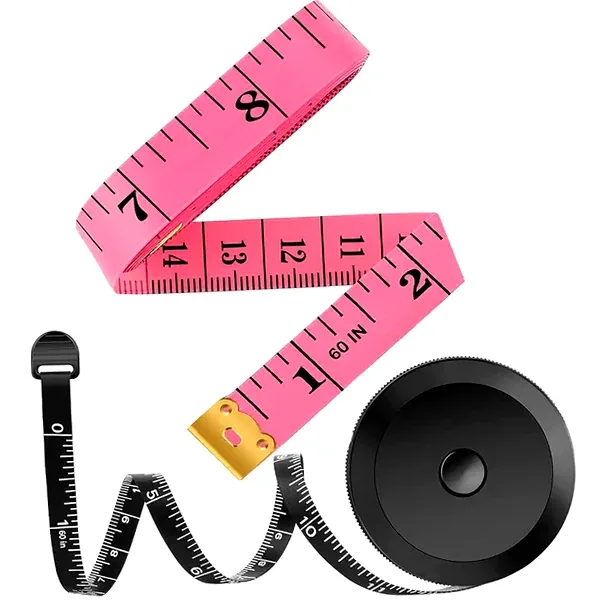
iBayam Soft Tape Measure 2-Pack
This is our method for entries explicitly labeled as TBE-measured. Our how we measure page shows where each published number came from, what we do when a figure is missing, and how often we go back and read the source again.
Why Manufacturer Dimensions Don't Match Airline Limits
Listings use different measurement bases. Some publish exterior dimensions, while others separate body and overall dimensions or leave the basis unclear. Airline limits apply to the bag's maximum packed exterior, including wheels, handles, pockets, and other protrusions.
A size name such as "21-inch carry-on" doesn't prove that the finished bag fits a particular airline's box. Compare stated overall dimensions with the airline limit, then measure the packed bag if the listing doesn't define its measurement points.
Use the manufacturer's overall or exterior dimensions only when the listing says they include wheels, handles, and protrusions. If the basis is unclear, measure the packed bag at its maximum exterior height, width, and depth. Do not estimate a fixed allowance.
Our luggage size visualizer draws a bag at true scale against a 22 x 14 x 9 inch frame. Treat its result according to the source basis shown for that bag, and measure your packed bag when the listing doesn't define the exterior points.
Carry-On Size Limits
American and Delta currently publish a carry-on limit of 22 x 14 x 9 inches, including wheels and handles. Other carriers publish different boxes, weights, and fare conditions.
International limits vary by carrier and can differ from the dimensions on a US domestic ticket. Check the operating airline's current page before packing, including the weight rule and the bag included with your fare.
Checking carriers one at a time gets old quickly. Our luggage size chart keeps 68 reference rows side by side: 66 current airlines and two historical rows. Each row names the page it came from and the date we last read it.
Convert centimetres without rounding the result
To convert centimetres to inches, divide by 2.54 and keep the unrounded result for the comparison. For example, 56 cm is about 22.05 in, so it remains over a 22 in limit. If the airline also publishes a limit in centimetres, compare your measurement directly with that figure instead of assuming its inch and centimetre boxes are identical.
Checked Bag Size Limits
American and Delta currently set the standard checked-bag size at 62 linear inches, the sum of height + width + depth. A bag measuring 28 x 20 x 14 inches equals 62 linear inches, right at that limit. A larger bag moves into the carrier's oversize rules and fees. Our 62 linear inches guide walks through the math.
A handheld scale gives you the weight at home, where repacking costs nothing.
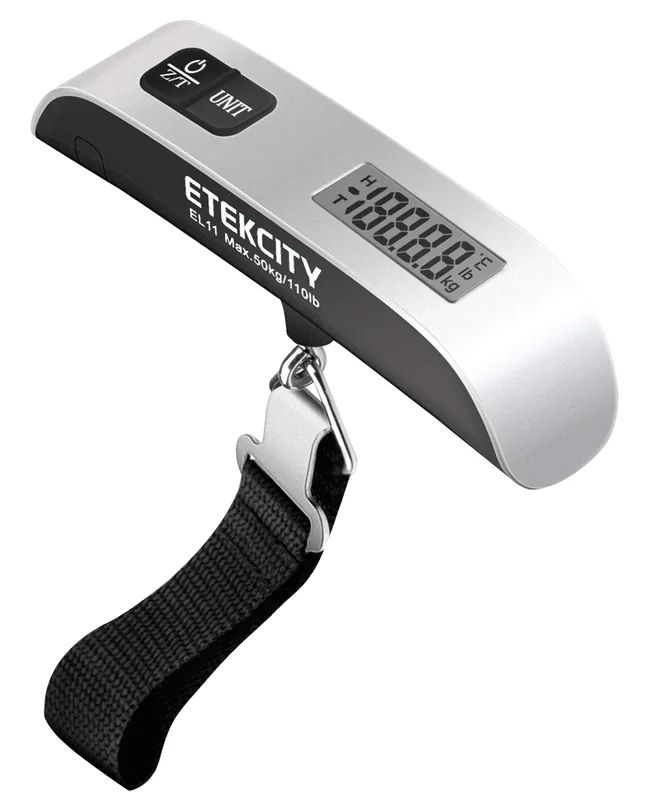
Etekcity Digital Luggage Scale
American and Delta currently use 50 pounds (23 kg) for a standard checked bag on the economy fares covered by their main baggage pages. Your limit and fee can change with airline, route, cabin, status, and ticket, so use the allowance attached to your booking.
Measuring Soft-Sided vs. Hard-Sided Luggage
A rigid, nonexpanded shell changes less than a soft bag, but pockets, attachments, and the way the case closes can still affect its maximum exterior. Measure it packed in the exact configuration you will carry.
Soft-sided bags change shape as you fill them. Measure a soft bag at its normal packed load, with the expansion zip in the position you plan to use. The added depth varies by bag and by how tightly it is packed, so measure it rather than relying on a standard allowance.
Weigh the Bag Too
Airlines weigh checked bags as well as measure them, and the overweight fee is charged at the counter, so get the number before you leave the house. A portable luggage scale is the usual answer, and it is only as accurate as the way you use it.
- Confirm the allowance on your own ticket. It moves by airline, route and fare class, so do not assume another passenger’s limit applies to you.
- Power the scale on with the hook empty and check that it reads 0.00. A scale that will not zero out needs new batteries or calibration before it is worth trusting.
- Set the unit, pounds or kilograms, to match the allowance you are working against. Check the unit again before recording the result.
- Hook or loop the scale onto the bag handle and make sure it is seated before you lift.
- Lift the bag clear of the floor and hold it steady until the model shows a stable or locked reading, following its instructions.
- Weigh it twice. Close readings give you more confidence in the result. A wide gap means you should steady the bag and try again.
No scale in the house? Step on a bathroom scale holding the bag, step on it again without, and subtract. It is a coarse method, but it will tell you whether you are anywhere near the line.
FAQ
Do airlines measure luggage with wheels?
Yes. Airlines apply their limit to the total exterior dimensions, including wheels, handles, pockets, and other protrusions. A body-height figure alone is not enough to judge the finished bag.
What is 62 linear inches for luggage?
It's the sum of your bag's height + width + depth. For example, 28 + 20 + 14 = 62 linear inches. American and Delta set 62 linear inches on the policies checked here; other carriers may differ. A bag over the applicable limit moves into that carrier's oversize rules.
How do I know if my bag will fit in the overhead bin?
Compare the packed exterior with the operating airline's published carry-on limit, including wheels and handles. Passing those dimensions does not guarantee bin space on a particular aircraft, and a soft bag's ability to compress does not override the carrier's maximum.
Why are luggage dimensions different on Amazon vs. the airline website?
Retail listings repeat manufacturer dimensions, but the measurement basis varies by product. Airline limits include the bag's full exterior. Use a listing only if it clearly says the dimensions include wheels, handles, and protrusions; otherwise, measure the packed bag rather than adding a fixed estimate.
Filed in Travel Tips