
2 Wheel vs 4 Wheel Luggage: Which Should You Buy?

Updated September 2026.
This article contains affiliate links. We may earn a commission at no additional cost to you if you make a purchase through these links. See our affiliate disclosure for details.
Two-wheel luggage is the better pick when you’ll pull the bag over pavement, cobblestones, or dirt. Four-wheel spinner luggage is the better pick when most of the trip is airport floors, hotel lobbies, and airplane aisles. Settle that split before buying a new suitcase.
Two-wheel bags sit on an axle at one end. You tilt them and tow them, which is why they cross broken pavement and dirt more easily than spinners.
Four-wheel bags stand upright on casters and roll in any direction. On airport linoleum and hotel lobbies they feel lighter to walk with, and you can send one down an aisle without turning it on its side.

Surface is not the only fork. Wheel hardware and build quality matter as much, because a suitcase is a long-term buy. Our common pitfalls guide covers the failure points that show up after the first year.
2-wheel luggage: What are the benefits and drawbacks?
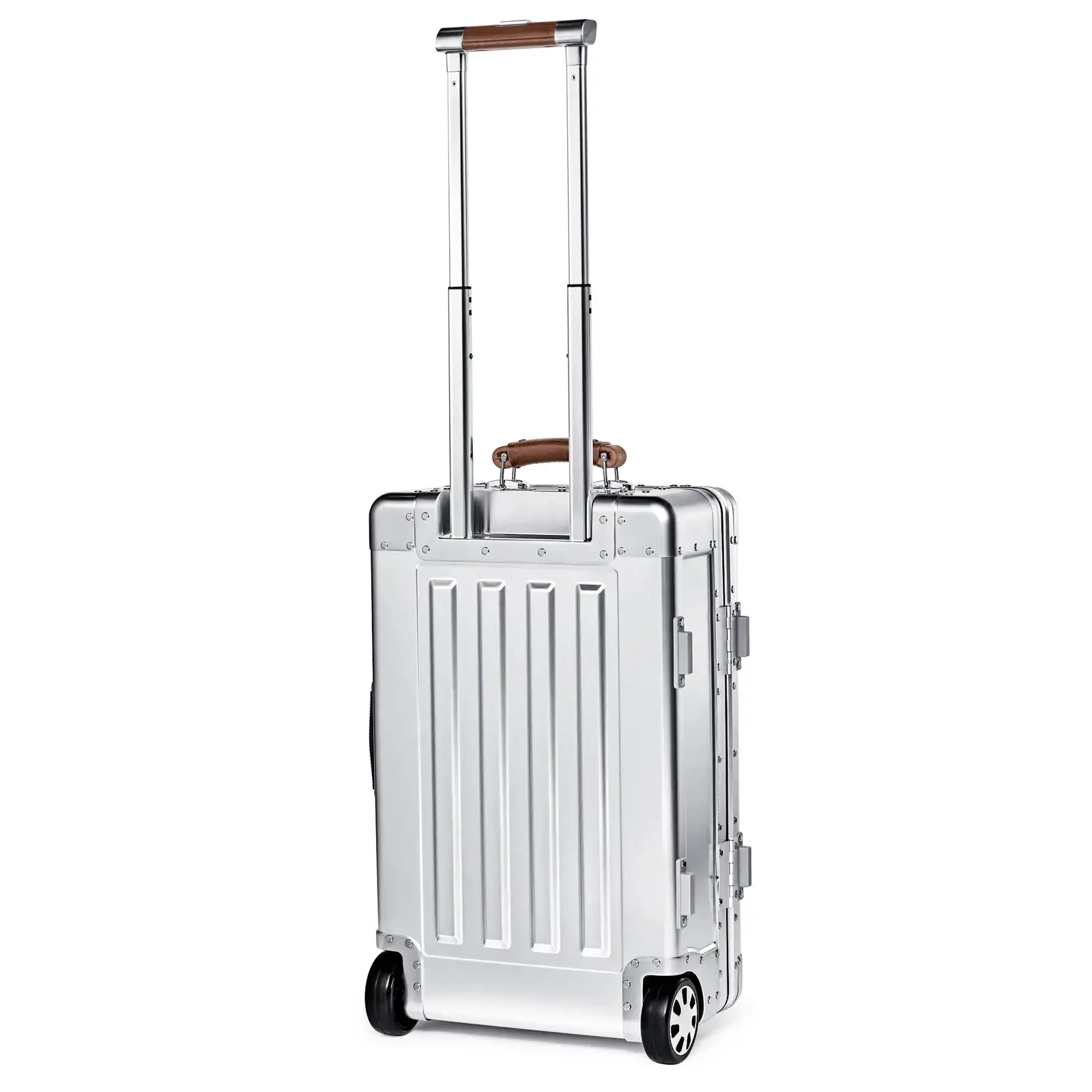
Editor’s Choice: Sterling Pacific 35L Cabin Travel Case
Sterling Pacific 35L Cabin Travel Case
A premium two-wheel cabin case built for rougher surfaces, confident pulling, and travelers who prefer a classic rollaboard feel.
Benefits to 2-wheel luggage
Two-wheel luggage tends to cost less than a four-wheel spinner, and there’s usually more space inside because there are fewer wheel housings eating the corners. That combination suits a budget trip where you need to pack a lot into one case.
If the trip involves a lot of walking on uneven surfaces, two-wheel luggage is built to be pulled behind you and copes with rough ground more easily. The wheels are usually larger, and an axle connects them, so a rogue stone is less likely to snap a caster housing.
The Sterling Pacific 35L Cabin Travel Case is a high-quality 2-wheel luggage example with an aluminum body and leather accents, built to pull over uneven ground. The Peak Design Roller Pro takes the same two-wheel format in a different direction, trading aluminum tubes for carbon fiber trolley arms.
If you prefer hauling the bag behind you through the terminal, two-wheel is the layout built for that.
Drawbacks of 2-wheel luggage
Two-wheel luggage works well if you travel with one case. Pulling two heavy suitcases behind you for a long walk is harder, so if you routinely travel with more than one case, a spinner is the easier layout.
Think about where you will take the case. A two-wheel bag can be too wide to drag behind you down a narrow aisle, and a heavy one is awkward to lift through a tight gap.
A two-wheel bag is also more likely to fall if you pack unevenly, and it does not stand as stably on its own, so the risk of it tipping and damaging the contents is higher.
Value Pick: Travelpro Platinum Elite
Travelpro Platinum Elite Rollaboard
Summary: 2 wheels, benefits and drawbacks
Pros: Rides over rough surfaces well, has sturdy wheels, is economical
Cons: Not easy to carry through aisles, difficult to use if you’ve several bags or suitcases, can tip over more easily
4-wheel luggage: What are the benefits and drawbacks?
Editor’s Choice: Samsonite Freeform
Samsonite Freeform Spinner
Benefits to 4-wheel luggage
Four-wheel luggage rolls easily across airport linoleum and hotel lobbies. It’s light to push, and if you have more than one suitcase you can walk two of them through a crowd without towing either one.
With four-wheel luggage, weight distribution is less of a packing issue because the case stands on four points of contact. That stability helps when you’re packing heavy, bulky items. The spinner is also easy to push in front of you, so it’s more visible and can carry another bag packed on top that’s in your sight. Four-wheel luggage is easy to move down a train or plane aisle without someone tripping over a tilted bag.
4-wheel luggage is so easy to maneuver that it’s also an excellent option for anyone with mobility issues or those who suffer from back issues. And, if the wait gets too long somewhere, you may even be able to rest some or all of your weight on a 4-wheel suitcase.
Drawbacks of 4-wheel luggage
Four-wheel luggage struggles on grass, cobblestone, and other rough ground. If you’ll still want a spinner on those surfaces, choose one with heavy-duty wheels that can take uneven pavement.
A 4-wheel suitcase has more wheels than a 2-wheel version (duh), which also means more wheels that can break. On 4-wheel luggage, the wheels sit in casings that can shatter mid-trip. If one wheel breaks, you’ve three others to limp on, which is why some travelers still prefer a spinner if wheel breakage is the worry.
A spinner on a slope will roll if you let go of it. Keep a hand on it on jet bridges and ramps. The same free-wheeling is a problem in train or bus luggage storage, so brace or strap the case if you’re leaving it in a compartment on a moving vehicle.
Summary: 4 wheels, benefits and drawbacks
Pros: Glides over smooth surfaces more easily, stands upright, easy to push through aisles, occasionally doubles up as a seat
Cons: Not great on rough surfaces, (if unattended) can slide down slopes or in moving vehicles/luggage compartments, more wheels mean more things that can break
2-Wheel vs. 4-Wheel Luggage at a Glance
Wheel type changes the height a gate agent actually reads, because the metal sizer takes the bag as it stands, spinners included. Our luggage size visualizer draws two bags at true scale against that 22 x 14 x 9 frame and a 5 ft 7 in person, and each row says what the published measurement covered.
2-wheel vs. 4-wheel luggage, other considerations
Wheels
Match the wheels to the ground you’ll actually walk. Spinner casters are tougher than they were a decade ago, but dirt paths, beaches, and grass still punish small wheels. If you want four-wheel luggage on those surfaces, look for larger, sturdier casters. Some bags even add a second set of wheels so you can tow them like a rollaboard when the ground gets rough.
Pay attention to the size of the wheels too. Little wheels can get caught in grooves on the ground (and in drains) and can get damaged as a result. A bigger, sturdier wheel will be a better idea if the luggage is being pulled through streets, especially cobblestone or uneven pavement. The same goes for backpacks with wheels for travel, which roll on two small inline wheels and feel every bump in the street.
Before replacing a wobbling case
Unload and repack the case so the weight is balanced, then roll it on a flat surface and inspect each wheel for visible damage, debris or uneven wear. A wobble can come from the load or from one damaged wheel; wheel count alone does not diagnose it. If the wobble remains with a balanced load, follow the exact maker’s repair instructions or use its authorized repair route before buying a replacement.
Handles
Handle height matters as much as wheel count. If you’re shorter than average, make sure the handle lowers to a height that suits you. If you’re very tall, try the bag so it isn’t smacking the back of your foot every other step. The handle mechanism should be stiff; test it before you buy. That handle is also the mount for a second bag, which is how trolley sleeve backpacks stay stacked on a rolling case instead of hanging off one shoulder.
Price and how often you travel
The 2-wheel case is generally cheaper than the 4-wheel version, though the brand of luggage plays a big part in the price too. Four-wheel luggage is more common now, so spinner prices have dropped. Choose the layout based on the type of travel and how often you’ll use the bag.
If you travel often, spend on a bag that will last several years. If you’ll use it once or twice a year, a cheaper version will most likely suffice. Buy for the destinations you actually walk, and walk through the journey in your head before you purchase.
FAQ
What is the difference between 2-wheel and 4-wheel luggage?
Two-wheel luggage, also called a rollaboard, has two large wheels at one end. You tilt the bag and pull it. Four-wheel luggage, also called a spinner, has a caster at each corner so it rolls upright in any direction. Two-wheel bags usually tow better on rough ground and have fewer small parts to snap. Spinners stand by themselves and turn in place in a crowded terminal.
What is the difference between four-wheel and eight-wheel luggage?
Eight-wheel spinner luggage puts two rollers on each of the four corners. That dual-caster layout tracks straighter on smooth floors and spreads the load. It also adds weight and more parts that can fail. Four-wheel spinner luggage uses one caster per corner, which is the standard airport spinner.
What is the difference between double-wheel and single-wheel luggage?
Double-wheel luggage is the eight-wheel layout under another name: two wheels on each corner. Single-wheel, in this comparison, is one caster per corner, four wheels total. Dual casters are more stable on smooth floors. They are also heavier, and they still lose to large inline two-wheel bags on cobblestones.
Are eight-wheel suitcases better than four-wheel suitcases?
Eight-wheel suitcases are better on smooth airport floors, where the extra rollers keep the bag tracking straight. They are usually heavier and cost more. Four-wheel single-caster bags are lighter and have fewer parts. Neither spinner layout matches a two-wheel rollaboard on dirt, grass, or cobblestones.
Can you pull a four-wheel suitcase on two wheels?
Yes. Tip a spinner onto two wheels and you can tow it over a short stretch of rough ground. The small caster wheels are still the weak point, so it will not tow as well as a dedicated two-wheel bag. If most of your walking is broken pavement, buy two wheels.
Filed in Travel Bag Tips