Best Backpacks with Wheels in 2026: 5 Picks for Travel and School
This article contains affiliate links. We may earn a commission at no additional cost to you if you make a purchase through these links. See our affiliate disclosure for details. As an Amazon Associate I earn from qualifying purchases.
A backpack with wheels is a compromise, and it pays to know which half you're buying. The wheel housing, the axle, and the telescoping handle add weight and eat the space your clothes were going to use. Wear the bag and you're carrying hardware you can't use. Roll it and you're pushing something softer and less stable than a suitcase.
Two kinds of buyers still come out ahead. They're travelers who hit stairs, curbs, and cobblestones between the wheeled stretches, and students or commuters who'd rather not hang a laptop and three textbooks off one shoulder. Those two want almost opposite bags, so we picked five across both. We haven't had these five in our hands. This is a specification-based comparison; it is not a report of our own hands-on testing.
What Matters in a Backpack with Wheels
Decide which bag you're actually shopping for, because travel rollers and commuter rollers barely overlap. A travel roller is a 40 to 50 liter soft bag with a real set of stowable straps behind a panel, sized for an overhead bin and for your back when the sidewalk gives out. A commuter roller is a laptop bag on wheels, usually 19 to 21 inches tall, built around a padded computer compartment and a stack of pockets.
The wheels, the handle, and the frame they bolt to all cost interior volume, and on a checked trip they cost airline allowance too. The hardware also sits against your spine when you wear the bag, which is why the better designs put a padded panel between the two. The cheapest way out of the compromise is to leave the wheels on the suitcase you already own and let a backpack with a trolley sleeve ride on its handle. If you never plan to carry it, a wheeled duffel skips the strap system and the padded back panel entirely.
Almost every wheeled backpack runs two wheels. Four-wheel spinners need a rigid base to keep the casters square, and a bag you also wear has to stay soft. Two wheels tilt and pull, survive gravel and curbs, and tuck closer to the body when the bag is on your back. Corner-mounted wheels keep the interior clear and cross broken pavement more easily, though they add width and take the scuffs first. Our breakdown of two-wheel and four-wheel luggage covers where each layout wins.
Check the laptop rating against the machine you already own, because it's the one spec that turns a bag into a non-option. A 16 inch rating covers most work laptops. A 17 inch rating covers the desktop-replacement machines and the gaming laptops students actually carry. Then look at how it carries: straps that disappear behind a panel, padding thick enough to sit over the wheel housing, and a handle that locks flush.
1. Osprey Sojourn 45L: The Travel Roller You Can Wear
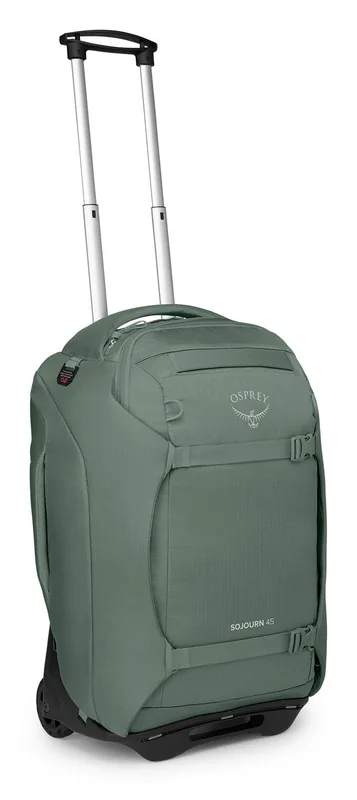
The Roller You Can Wear
The only bag here built for a real trip, with a full set of stowable straps for the ground wheels can't take.
The Sojourn is the one bag here built for a trip instead of a commute. Osprey puts 45 liters inside a 22 inch body, roughly a week of packing, and rolls it on the HighRoad chassis, an extra-wide stance with oversized wheels. Oversized wheels help if you've ever dragged a small-wheeled bag across gravel. A checked bag meets a 62-linear-inch limit only when its measured height, width, and depth add to 62 inches or less; a 22-inch height alone does not establish that result.
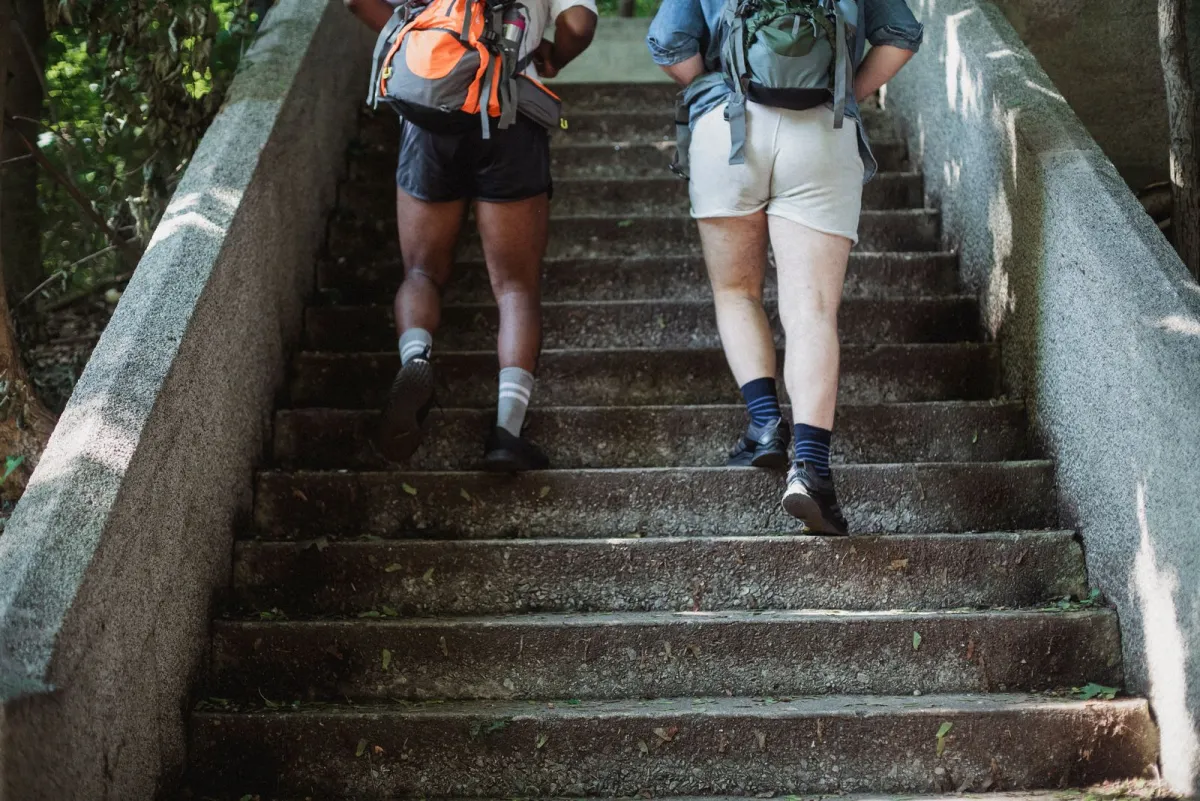
Stowable shoulder straps are the reason to consider a convertible roller for stairs and rough ground. Tuck the straps away before rolling so they do not drag near the wheels.
Osprey lists one main compartment and five pockets, so this is a big soft bucket and you'll want packing cubes to keep clothes sorted inside it. There's no padded laptop compartment in the spec either, so a machine travels in a sleeve inside the main bag. The fabric is a bluesign approved nylon woven from recycled yarn, water resistant enough for a wet tarmac. It's also the most expensive bag here, and the chassis that makes it roll is weight you carry the moment you unzip the straps.
- 45 liters inside a 22 inch body, about a week of packing
- Full stowable backpack straps, not token shoulder loops
- Oversized wheels and a wide chassis for rough ground
- Wingjacket compression straps steady a soft load
- Water-resistant nylon, bluesign approved and recycled
- The most expensive pick in this roundup
- One main compartment makes packing cubes near mandatory
- No laptop compartment listed, so bring a sleeve
- The chassis is dead weight while you wear it
The Sojourn is for trips that include stairs, cobblestones, or a long walk at the end of the day. If you only ever roll across airport tile, you'd be paying for straps you never unzip.
2. High Sierra Freewheel: The Student Workhorse
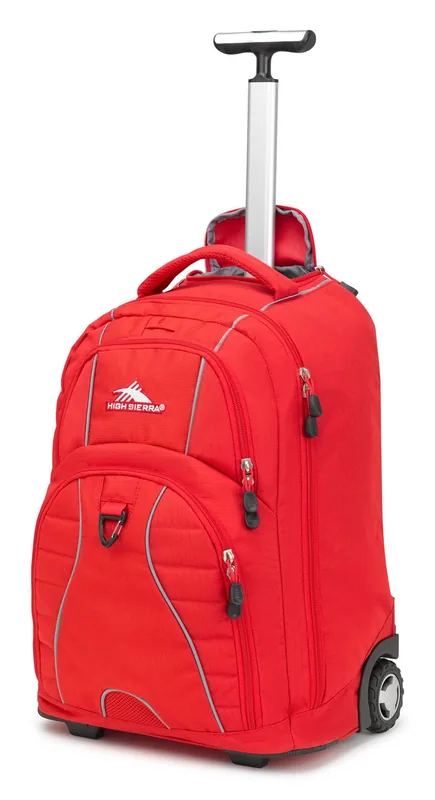
High Sierra Freewheel Wheeled Laptop Backpack
The Freewheel measures 20.5 by 13.5 by 8 inches, takes a laptop up to 17 inches in a padded Cushion Zone compartment, and mounts its wheels at the corners of the base. Corner wheels track straighter under a heavy load, so a bag full of textbooks rolls in a line behind you instead of wandering into your heels.

For students, the carrying side is the half that works hardest. The telescoping handle hides away flush so it isn't pressing into your spine between buildings, and the shoulder straps are padded for the stretches where wheels are useless, like a staircase or a wet field. The usual advice on how to choose a backpack applies once it's on your shoulders, mainly that the load should ride high and close.
The interior splits into several compartments, with a utility pocket for pens, cables, and a charger, so the laptop isn't sharing space with a water bottle. High Sierra rates the fabric water resistant, which covers drizzle and not a downpour. At 8 inches of depth it swallows a semester of textbooks and stands further off your back than any flat commuter pack.
- Takes laptops up to 17 inches in a padded compartment
- Corner-mounted wheels track straight under a heavy load
- Hideaway telescoping handle sits flush when carried
- Multi-compartment layout with a dedicated utility pocket
- Water-resistant fabric handles a walk through drizzle
- 8 inches of depth sits well off your back
- Corner wheels add width and collect the scuffs
- No compression straps listed, so light loads shift
- Water resistant only, a long way from sealed
The Freewheel is the safe answer for a student moving a 17 inch laptop and a stack of books between classes. Travelers should take the Sojourn. This one is shaped for the walk between classes.
3. Osprey Farpoint Fairview 36L: The Carry-On Sized Roller
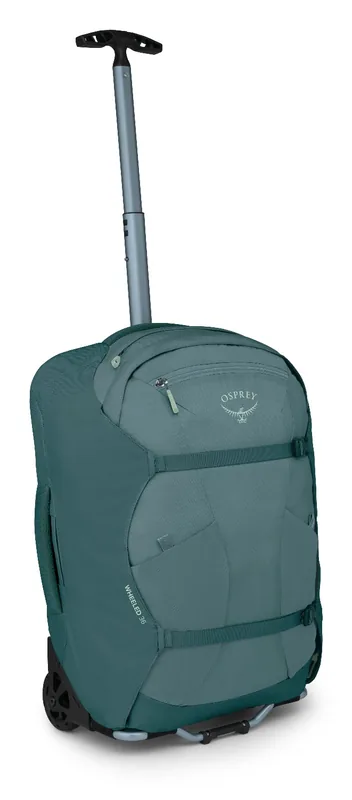
Osprey Farpoint Fairview 36L Wheeled Travel Pack
This is the second Osprey on the list, and it isn't a shrunken Sojourn. The Sojourn packs 45 liters into a 22 inch body, which is a week of clothes and, once it's full, a bag most people end up handing over at the desk. The Farpoint Fairview holds 36, and Osprey builds it to meet most carry-on size requirements, with the standard caveat that airlines set their own numbers and you should check yours before you fly. One bag is packed like checked luggage, the other is sized to stay with you.
Wheeling it is the easy part, so judge it on the carry. The straps are a full set, not a token pair, and the torso length adjusts. Put 36 liters on your back for the last kilometer to an apartment and a pack set at the wrong height dumps the load onto your shoulders. No amount of strap padding fixes that. Set the torso to your own back and the weight sits where you can hold it. Nothing else in this roundup adjusts, because nothing else expects you to walk that far.
Nine liters is the difference between a week and a long weekend once boots and a jacket are in the bag, so travelers who pack for five days or more, or who check luggage anyway and would rather have the room, should buy the Sojourn and skip this. This is also a recent listing with a short review history. You're trusting Osprey's reputation and the published specs, not years of owner reports.
- Built to meet most carry-on size requirements
- 36 liters, enough for a long weekend without becoming luggage
- Adjustable torso length, so the pack fits your actual back
- A full carry system, not an emergency pair of shoulder loops
- Osprey builds both halves of this bag, wheels and pack
- Nine liters smaller than the Sojourn, so a full week is a stretch
- A short review history, so there isn't much owner feedback yet
- Carry-on sizing still depends on the airline you booked
- The wheels and handle are weight you carry once it's on your back
Take the Farpoint Fairview if you fly often enough to care about staying out of the bag drop queue and still want something you can wear when the pavement runs out. Take the Sojourn instead if your trips run long, or if the extra nine liters matters more to you than the odds of getting your bag into the bin.
4. Samsonite MVS Rolling Backpack: The Value Roller
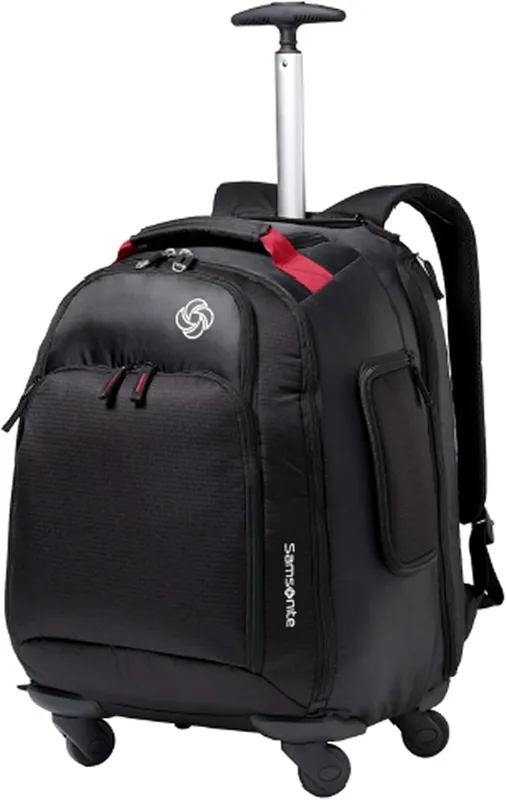
Samsonite MVS Rolling Backpack
Backpack brands own most of this category, and the MVS is Samsonite's answer to them. You can see it in the proportions. At 19 by 12 by 12 inches it's shorter and squarer than the High Sierra, with a laptop compartment rated to 15.6 inch screens and four pockets around it. The square footprint means it stands up beside a desk or a gate seat, off a wet floor.

Samsonite calls it quick-change back panel technology. The panel covering the wheels and handle flips to expose the straps, so switching from rolling to carrying is one motion at the bottom of a staircase. Most bags in this class make you fish the straps out of a zippered pocket, and we think that friction is why plenty of wheeled backpacks never get worn.
The laptop rating and the storage are where it stops. A 15.6 inch compartment covers standard work laptops and stops short of the 17 inch machines two other picks handle, and four pockets is modest organization for a body this size. The wheel housing and the retracted handle take their cut of that 12 inch depth, which is where the missing room goes. Samsonite lists the fabric as water resistant, with no rating published behind the phrase.
- Quick-change back panel switches modes in one motion
- Square 19 by 12 by 12 inch body stands upright
- Laptop compartment rated to 15.6 inch screens
- A known luggage name at commuter-roller money
- Water-resistant fabric and adjustable straps
- The 15.6 inch laptop ceiling is the lowest here
- Four pockets is thin organization for the volume
- 12 inches of depth eats floor space under a desk
- No wheel or chassis detail published, so durability is unproven
The MVS is the pick when you want a known luggage name, a padded laptop compartment, and fast switching between rolling and carrying without travel-roller money. Look elsewhere if your laptop is bigger than 15.6 inches.
5. EVERKI Atlas Wheeled 2: The Big Laptop Carrier
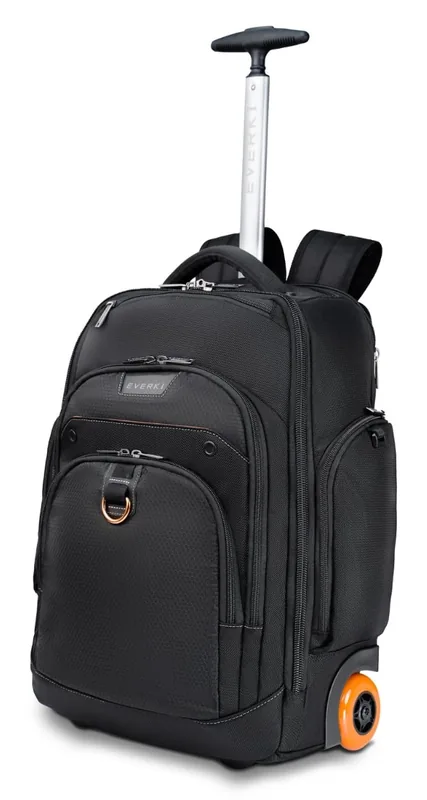
EVERKI Atlas Wheeled 2 Rolling Backpack
The Atlas Wheeled 2 is the only pick here that officially takes a 17.3 inch laptop, which makes it the only option for a lot of engineers, video editors, and anyone issued a mobile workstation. EVERKI gives it 30 liters, an adjustable padded compartment sized for 13 to 17.3 inch machines, a polyester shell rated water repellent, and a flap that covers the wheels so the hardware stays off your clothes when you wear it on your back.
The detail work is aimed at people who travel for work. There's an RFID-blocking pocket for cards and a passport, a removable padded pocket for whatever you want kept separate, and a cup holder for the gate when you're holding a coffee, a phone, and a boarding pass. The 30 liter volume sits between the commuter rollers and the Sojourn, so it covers an overnight without turning into a suitcase.
This is a new model with very little owner feedback behind it. You're buying on the published specs, because years of owner reports aren't there yet. The wheels also mount on the outside of the body for a steadier roll, which is exactly why the cover flap is there, since that hardware would otherwise sit against your back every time you put the bag on.
- Officially fits a 17.3 inch laptop, the largest rating here
- Adjustable padded compartment for 13 to 17.3 inch laptops
- 30 liters covers an overnight plus the work kit
- RFID-blocking pocket for cards and a passport
- Plain professional shape for client-facing travel
- New model with very little owner feedback behind it
- No published weight, so the carry load is a guess until it lands
- Water repellent, so heavy rain gets through eventually
- Second most expensive pick in this roundup
The Atlas Wheeled 2 makes sense when your laptop is 17.3 inches and your bag has to read as business kit in a client's office. Anyone carrying a normal 15 inch machine is paying for capability they'll never use.
At a Glance: The Five Rollers
How to Pick Between These Five
Start with whether you're buying for trips or for the week. Two picks here are built for trips, the Osprey Sojourn if the bag can be checked and has to hold a week of clothes, and the Osprey Farpoint Fairview 36L if it has to fit an overhead bin. The other three are laptop bags that happen to roll.
Between the two Ospreys, the choice is pure size. The Sojourn 45L carries roughly a week and is the one that ends up at the bag drop once it's full. The Farpoint Fairview 36L is built to meet most carry-on requirements, so it stays with you through the gate. Inside the commuter group, laptop size does the sorting. A 17 inch student machine and a stack of textbooks go to the High Sierra Freewheel. If it's a 17.3 inch workstation that has to look professional, take the EVERKI Atlas Wheeled 2. The Samsonite MVS is for a standard 15.6 inch laptop and a preference for a luggage brand.
If you never plan to wear any of them, buy a plain two-wheel roller. A wheeled backpack only pays for itself on stairs, cobblestones, and gravel.
FAQ
Is a backpack with wheels worth the extra weight?
It's worth it when you regularly meet ground the wheels can't take, like stairs, cobblestones, gravel, or a long walk from a station. If your route is airport tile and office carpet, the housing and handle are weight you carry for nothing, and a plain roller does that job better.
Can you use a rolling backpack as a carry-on?
A convertible roller still needs to meet the airline’s packed-bag allowance. Include wheels and handles in the measurement, and avoid overfilling soft exterior pockets. The Sojourn is the bigger sibling and the one you check once it's packed for a week. The three commuter rollers are smaller than either, but they're laptop bags rather than trip bags.
What size laptop fits in a wheeled backpack?
Most rolling laptop backpacks are rated between 15.6 and 17.3 inches, and that rating is a hard limit rather than a suggestion, because the padded compartment is sewn to a fixed size. The picks here run from the Samsonite MVS at 15.6 inches to the EVERKI Atlas Wheeled 2 at 17.3 inches.
Are wheeled backpacks bad for your back?
They beat a shoulder bag and lose to a proper backpack. Rolling takes the load off your spine entirely. When you do wear one, the wheel housing sits against your lower back and the straps are thinner than on a dedicated pack, so it's a poor choice for a heavy load over any distance.
Do the wheels handle cobblestones and gravel?
Bigger wheels on a wider stance handle rough ground better, which is why the Osprey Sojourn uses oversized wheels and an extra-wide chassis. Small wheels set close together, the layout most commuter rollers use, catch in gaps and end up dragged instead of rolled. On genuinely bad ground the answer is to stop rolling and put the bag on your back.
Social sharing photo: “2009-365-172 All Packed Up” by Alan Levine (cogdogblog), via Wikimedia Commons, licensed under CC BY 2.0. Resized from the original and converted to WebP. Generic travel photograph of a rolling duffel.
.jpg)
Filed in Luggage Reviews