Tumi vs Briggs and Riley: The Business Luggage Decision

We may earn a commission if you buy through links on this page. As an Amazon Associate I earn from qualifying purchases.
Tumi vs Briggs and Riley is the argument that follows every frequent flyer into the departure lounge. Tumi is the bag you recognize from across the gate. Briggs and Riley is the one the person next to you has owned for eleven years and never thought about again. Both sit in the same premium bracket, both use ballistic nylon on their softside cases, and both make a hardside case that looks the part, though on Amazon the Tumi Alpha costs about a third more than the Briggs and Riley it's usually weighed against.
We built this comparison from the two brands' published warranty terms, read clause against clause on briggs-riley.com and tumi.com, plus each brand's own spec sheets, the Amazon listings and the number of ratings behind every bag. Briggs and Riley takes four of the seven slots because it fields four genuinely different answers on Amazon US: a two-wheel softside, a spinner sized for international bins, a hardside with a front laptop pocket, and a wheelless cabin bag. Tumi's carry-on range narrows to the softside Alpha and the hardside 19 Degree, so it takes two. Travelpro holds the seventh slot as the value benchmark. The materials are close enough that they don't decide anything, and neither does the wheel count. What separates the two brands is what happens the day a baggage handler snaps a handle.
Our verdict comes down to how long you keep luggage. For a bag you expect to own for a decade, Briggs and Riley wins, because its "Simple as that" guarantee repairs every functional part of the bag for life and fixes airline damage at no charge. For a bag you'll replace in four or five years, the Tumi Alpha is the better daily tool: a dual-access front panel, four spinner wheels and less weight than any Briggs and Riley suitcase here, backed by a five-year warranty that covers airline damage only in year one.
Tumi vs Briggs and Riley: The Warranty Is the Whole Argument
Briggs and Riley calls its guarantee "Simple as that", and the wording on briggs-riley.com is unusually plain: the company repairs all functional aspects of the bag for life, and it keeps repairing your old bag even after you've bought a newer one. Airline damage counts. The brand suggests you file a claim with the carrier before leaving the airport if you want to hold them responsible, and if you'd rather skip that fight, it repairs the bag free anyway. You pay to ship it in, they pay to ship it back. Cosmetic wear such as scratches, dents and scuffs, cleaning after stains or odors, and lost or stolen bags are out.
Tumi covers wheeled luggage for five years, and the coverage thins out after month twelve. Year one is what Tumi calls the First-Year Worry-Free Warranty: functional or structural failure from manufacturing, workmanship or wear and tear, plus damage from airline and transit mishandling, with shipping paid in both directions. From year two through year five the coverage narrows to functional and structural failure from manufacturing defects, workmanship and wear and tear. Airline and transit damage drops out at that point, and you become responsible for shipping the bag in, though Tumi still pays the return leg on a repair its warranty covers, and a Tumi store can take the bag in person. Past year five, Tumi still services bags, but repair and refurbishment become a paid service. Our full TUMI luggage review digs into which lines are worth the spend at retail.
Run that difference over a decade of flying. A cracked wheel housing in year seven is a free repair on one brand and a quoted invoice on the other. That gap is why Briggs and Riley keeps coming up whenever people who fly every week compare luggage, even though Tumi builds the nicer object.
Everything else is closer than the marketing suggests. Both brands use ballistic nylon on their soft bags and a molded polycarbonate shell on their hard ones, and both expand. The one build difference worth knowing is interior space. Briggs and Riley mounts the handle tubes on the outside of the bag, so the inside packs completely flat, and Tumi runs them through the interior, which costs you a ridge down the middle of your packing.
Briggs and Riley Baseline Essential 22 Inch: The Default Pick
Briggs and Riley Baseline Essential Carry-On
The outside frame packs the interior flat wall to wall, and the guarantee repairs every functional part of the bag for life.
Ask a road warrior which Briggs and Riley they own and this two-wheel 22 inch softside is the usual answer. It's ballistic nylon over the outside frame that defines the Baseline range, 22 by 14 by 9 inches unexpanded and 9.7 pounds, and the lifetime guarantee is the reason it keeps getting recommended to people buying a premium carry-on.
The outside frame matters more than it sounds. On almost every other suitcase, the telescoping handle tubes run inside the case, and you pack around two long ridges. Here they sit on the exterior, so the interior is a flat rectangle from wall to wall. Shirts lie without a fold across the middle, and packing cubes sit flush. The CX expansion opens the case out to 11.5 inches deep, which Briggs and Riley rates at up to 30 percent more space, and then compresses it back to 9 inches, which is the trick that lets you overpack on the way home and still board.
Two wheels means dragging the bag behind you at an angle, and through a long terminal your arm knows about it. Some people prefer it, since two wheels can't roll away from you on a sloped jet bridge and there are no spinner castors to shear off. If you've never thought about which you want, our guide to two-wheel versus four-wheel luggage lays out the trade in detail.
The listing carries about 140 ratings, a modest sample for a bag this well known. The extras are the ones business travelers use: a USB pass-through pocket for a power bank, a suit compartment, an exterior checkpoint pocket, two mesh-lid zip pockets, and self-repairing YKK zippers.
- Outside frame gives you a completely flat packing surface
- Lifetime repair coverage that includes airline damage
- CX expansion opens to 11.5 inches then compresses back to legal
- Built-in suit compartment and a USB pass-through pocket
- Two wheels drag behind you instead of rolling alongside
- Plain to look at next to any Tumi on the same belt
- 9.7 pounds, half a pound more than the Tumi Alpha
The one to pick if you want to make one luggage decision and be done. Over ten years, the flat interior and the lifetime repair are worth more than the spinner wheels and the badge you're giving up.
TUMI Alpha Dual Access Expandable Carry-On: The Direct Rival
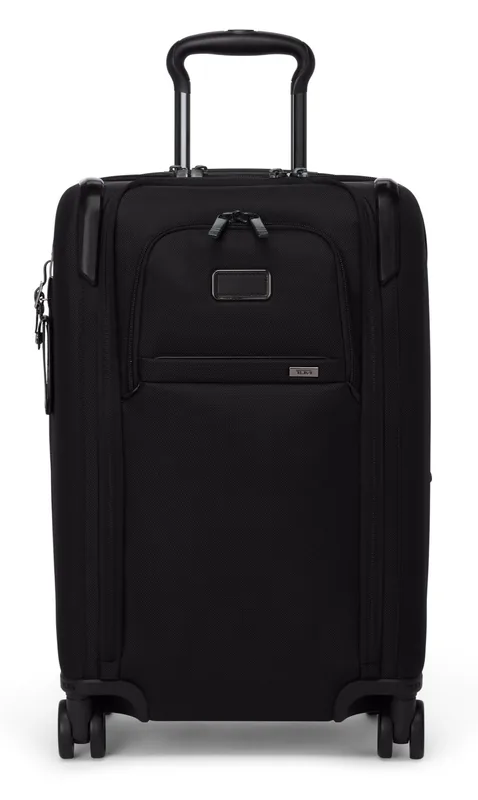
Set the Alpha next to the Baseline Essential and the differences show up in the hand before the spec sheet. Tumi's version is FXT ballistic nylon, 21.8 by 14.0 by 9.0 inches and 9.2 pounds on tumi.com, on four dual spinner wheels, which makes it half a pound lighter than the Baseline Essential and lighter than all three Briggs and Riley suitcases here. Zip expansion takes it to 11 inches deep, and the extras run to USB-C charging, a pocket sized for an AirTag and a recycled lining. On Amazon it's the most expensive bag in this comparison, about a third more than the Briggs and Riley it competes with.
The dual-access front panel is the feature worth paying for. You get a laptop out through the front without laying the case flat on a filthy airport floor, which anyone who has hunted for an outlet at a crowded gate will recognize. The spinners beat the Baseline's two wheels through a long connection, and registering the Tumi Tracer number ties the bag to you, which is how Tumi's Tracer program reunites owners with lost or stolen luggage.
Against it: five years of coverage where Briggs and Riley offers a lifetime, interior handle tubes eating packing space, and a price gap of about a third over the Baseline Essential. The listing has about 120 ratings, so nobody is buying this on popularity either. If you want the older Alpha generation and the case for Tumi at full retail, our TUMI Alpha 3 review covers it.
- Front panel opens for laptop access without unpacking the case
- Four dual spinners plus USB-C charging and an AirTag pocket
- 9.2 pounds, lighter than every Briggs and Riley suitcase here
- Five-year warranty, and airline damage stops being covered after year one
- Interior handle tubes cost you usable packing space
- About a third more than the Baseline Essential on Amazon
The best bag here to use day to day, and the worst one to own for a decade. If you replace luggage every few years anyway, the Alpha is worth the premium.
Briggs and Riley Baseline Global 21 Inch Spinner: For Non-US Airlines
Two objections people raise about Briggs and Riley disappear with this bag. It rolls on four 360 degree spinner wheels, so the brand clearly does make spinners, and it's sized at 21 by 15 by 9 inches, about 53 by 38 by 23 centimeters, which fits the 55 by 40 by 23 centimeter cabin box many European and Asian carriers use, where a 22 inch US-spec bag runs long.
It carries the same outside frame, the same CX expansion to 11.5 inches and the same lifetime guarantee as the Essential, plus two mesh-lid pockets and a hide-away ID tag, at 9.9 pounds. With more than 650 ratings it's also the best-evidenced bag either brand fields here, more than four times the count behind the Baseline Essential.
The inch of height you lose against the Essential is the only real cost, and on a US domestic route you'll feel it as one fewer layer of packing. For anyone whose flying is mostly abroad, it should be the default choice.
- 21 by 15 by 9 inches, inside the common 55 by 40 by 23 cm international limit
- Four spinner wheels plus the outside frame
- More than 650 ratings, the largest sample either premium brand has here
- You lose an inch of height against a US-spec carry-on
- 9.9 pounds, the heaviest of the softside suitcases here
If your flying is mostly outside the US, this is the Briggs and Riley to own, and the spinner wheels remove the last excuse for buying the Tumi instead.
TUMI 19 Degree Expandable Carry-On: The Hardside Statement
People pick the 19 Degree with their eyes first. The sculpted polycarbonate shell is distinctive on a carousel, and underneath it Tumi lists four dual spinners, a zipper expansion, an integrated TSA lock, a USB-C port and a Tracer number, at 21.8 by 14.0 by 9.0 inches, 7.9 pounds and 38 liters. That makes it the lightest premium suitcase in this comparison, 0.1 pounds behind the Travelpro, and it sits inside the US carry-on box on all three axes.
That sculpting has a cost. Angled ridges take some usable space out of the interior, so a 19 Degree packs less neatly than a flat-sided case of the same external size, and the shell shows scuffs that Tumi's warranty explicitly won't touch, since cosmetic damage sits outside the coverage on both brands. The listing carries just over 100 ratings, about the same thin sample as the Alpha. If you're cross-shopping it against aluminum, our Tumi vs Rimowa comparison puts the 19 Degree next to Rimowa's two cabin cases.
- The most recognizable shell either brand makes
- Four dual spinners, TSA lock, USB-C port and Tracer registration included
- 7.9 pounds, the lightest of the five premium suitcases here
- Sculpted panels make the interior harder to pack square
- Scuffs show, and cosmetic damage isn't covered
- Five-year warranty against a lifetime from the hardside rival below
Worth it if you want this specific object and know what you're paying for. On coverage and laptop access, the Sympatico below beats it for similar money.
Briggs and Riley Sympatico Essential 22 Inch: Hardside With a Front Pocket
Briggs and Riley Sympatico Essential
Almost no hardside carry-on has an exterior laptop pocket, because cutting one into a molded shell is a manufacturing problem most brands decline. The Sympatico Essential has one: a padded front compartment that takes most 15 inch laptops plus a tablet slip pocket, all reachable without laying the case flat, with lockable zippers on top.
Underneath that it's a recycled three-layer polycarbonate shell with CX Smart Packing, which the brand rates at up to 25 percent more space when expanded. Briggs and Riley lists it at 22 by 14 by 10 inches and 10.45 pounds, so it runs an inch deeper than the 22 by 14 by 9 box even before you expand it, and it's the heaviest bag in this comparison. The outside-mounted handle keeps the interior flat, a built-in TSA lock comes standard, and the same lifetime guarantee applies. If you're weighing this against the softside Baseline, the shell material is the real fork in the decision, and our breakdown of ABS versus polycarbonate luggage shells explains what polycarbonate buys you.
The Amazon listing is new, with only a handful of ratings so far, so this recommendation leans on the front pocket and the guarantee.
- Exterior padded pocket fits most 15 inch laptops, rare on a hardside
- CX Smart Packing expands up to 25 percent then compresses back
- Polycarbonate shell with lockable zippers and a built-in TSA lock
- Lifetime repair coverage on a hardside case
- 10 inches deep, an inch over the US carry-on box before expansion
- 10.45 pounds, the heaviest bag in this comparison
- Only a handful of Amazon ratings so far
The most useful bag here for anyone who works during a layover, and the strongest direct answer to the 19 Degree. Similar money, a laptop pocket and a lifetime of repairs, as long as your airline doesn't measure depth to the inch.
Briggs and Riley Rhapsody Multi-Pocket Cabin Bag: The Cheap Way In
This one costs less than half of any wheeled Briggs and Riley here, and it's the entry point to the brand for anyone who wants the guarantee without the suitcase price. It's a wheelless under-seat bag at 16.75 by 10.5 by 8.75 inches and 2.2 pounds, micro-weave nylon with full-grain leather touchpoints, four exterior front pockets and a hidden back pocket, a tech section in the main compartment with a padded 15 inch laptop sleeve and a tablet pocket, and a slip-through panel that rides on a suitcase handle.
With no wheels and that footprint, it's an overnight bag or a personal item to pair with a carry-on, not a rival to the Baseline. And with fewer than ten ratings, the average score proves nothing. Judge it on the materials, the pocket layout and the lifetime coverage, which applies here exactly as it does to the suitcases.
- Lifetime guarantee at less than half the price of the suitcases
- Padded 15 inch laptop sleeve and a tablet pocket built in
- Slip-through panel stacks it on any rolling bag
- No wheels, so it's carried or shouldered the whole way
- Fewer than ten ratings, far too few to read anything into
- Overnight capacity, not a week of packing
A good second bag and a cheap way to find out whether the brand's build quality lives up to the reputation before you commit to a suitcase.
Travelpro Platinum Elite 21 Inch Spinner: The Bag That Keeps Both Brands Honest
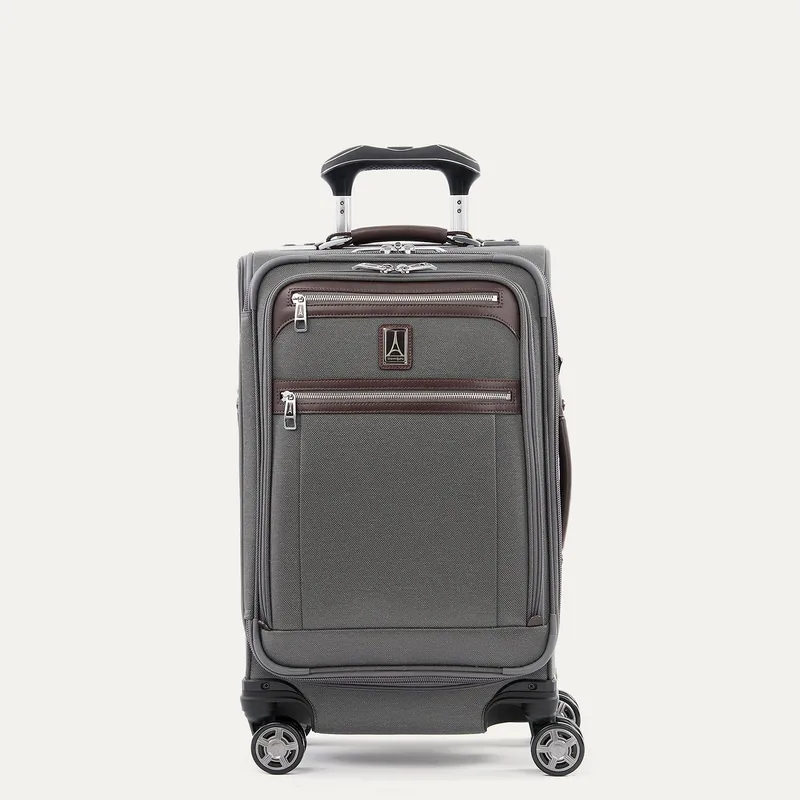
The Platinum Elite costs a little over 40 percent of the Tumi Alpha and a bit over half of the Baseline Essential, and in use it gives up surprisingly little to either. Eight magnetic self-aligning wheels, a PowerScope handle with four stops, USB A and C ports wired to a power bank pocket, a tapered 2 inch expansion and a drop-in suiter all come in a DuraGuard-coated nylon case at 7.8 pounds, almost two pounds under the Baseline Essential.
Read the size figures carefully. The case itself measures 21 by 14 by 9 inches. The overall footprint with wheels and handle runs 23.5 by 14.5 by 9, so a strict gate sizer reads it as taller than the 22 inch box even though the packed body isn't. With more than 4,700 ratings it's the only bag here whose average score counts as evidence.
The warranty is closer to Briggs and Riley than the price suggests. Travelpro's limited lifetime warranty covers defects in the wheels, zippers and handles, and its Trusted Companion Promise repairs airline damage for as long as the original buyer or gift recipient owns the bag, provided you register it; register within 120 days and Travelpro covers shipping to its repair center too. Briggs and Riley's page sets neither condition. The material quality and the finish are where the savings show. The nylon is thinner, the zips are ordinary, and the bag looks like what it is. For a lot of people that's the correct trade, and it's the value benchmark we hold everything against in our best carry-on luggage picks.
- A little over 40 percent of the Tumi price with most of the same features
- Eight magnetic spinner wheels and a four-stop PowerScope handle
- External USB A and C ports with a dedicated power bank pocket
- Lifetime airline-damage repair once registered, for the original owner
- More than 4,700 ratings, the only large sample among the seven
- Airline-damage cover depends on registration and ends with the original owner
- Overall height with wheels and handle is 23.5 inches, above the 22 inch box
- Materials and finish are a clear step below both premium brands
If the premium price makes you hesitate for even a second, this is the bag. It covers almost everything either premium brand does for well under the money, and the registered warranty is better than its price suggests.
Seven Carry-Ons by Build, Weight and Warranty
Seven bags, stripped of prose. Build and size come from the listings, weight from each brand's own published figure, and warranty from each brand's own policy page.
Briggs and Riley or Tumi: Matching the Bag to Your Flying
Frequent flyers planning to keep a bag for a decade belong with Briggs and Riley. The Baseline Essential is the default answer, the Global 21 is the one for international flying, and the Sympatico suits anyone who wants a hard shell and a laptop pocket they can reach. Lifetime repair that includes airline damage, with no registration step on Briggs and Riley's page, is the single strongest argument either brand makes, and Tumi doesn't offer it at any price.
Tumi makes more sense when the daily experience matters more than the decade. The Alpha's dual-access front panel, spinner wheels and lighter build make travel days easier, and if you replace luggage every four or five years anyway, the five-year warranty covers your whole ownership window. The 19 Degree is a style purchase, and there's nothing wrong with that as long as you're not telling yourself it's the practical pick.
And if the price bracket makes you wince, the Travelpro packs like a 21 inch case, charges your phone, survives crew-level abuse, and costs a bit over half of the cheapest premium suitcase here.
FAQ
Is Briggs and Riley better than TUMI?
For long-term ownership, yes. Briggs and Riley repairs the functional parts of the bag for life, including damage caused by an airline, and it keeps doing that even after you've bought a newer bag. Tumi covers wheeled luggage for five years, with airline and transit damage included only in the first. On weight, wheels and daily usability the two are close, and Tumi arguably edges it.
Which luggage brand is better than TUMI?
Two brands beat it, depending on the column. On warranty depth, Briggs and Riley: it repairs every functional part of the bag for life and covers airline damage at no charge, where Tumi's coverage stops at five years and drops airline damage after year one. On value, Travelpro: the Platinum Elite costs a little over 40 percent of the Tumi Alpha, weighs 1.4 pounds less, and repairs airline damage for life once you register it. On materials, hardware and how the bag feels to use day to day, nothing here clearly beats Tumi.
Are TUMI and Briggs and Riley the same company?
No. Tumi is owned by Samsonite, which acquired it in 2016. Briggs and Riley is a separate American brand and part of U.S. Luggage. They compete directly in the premium business carry-on market but share no ownership.
What does the Briggs and Riley lifetime guarantee cover?
It covers repair of every functional part of the bag for as long as the bag exists, airline damage included. Cosmetic wear such as scratches, dents and stains falls outside it, as does cleaning after odors, lost or stolen bags, and anything inside the bag. You pay to ship the bag to them and they pay to ship it back.
Why is TUMI more expensive if the warranty is shorter?
You're paying for materials, finish and the brand. FXT ballistic nylon, the hardware and the dual-access panels are all real, and Tumi's bags feel more considered in the hand. On Amazon the Alpha runs about a third more than the Baseline Essential, and the warranty runs the other way.
What luggage is comparable to Briggs and Riley?
Travelpro is the closest working substitute at a much lower price: a limited lifetime warranty on defects, and airline damage repair for as long as the original buyer owns the bag once it's registered. Victorinox and Hartmann sit in similar territory on build quality. Briggs and Riley still has the simplest terms of the group, with airline damage covered for life and no registration step on its guarantee page.
Which bag fits international carry-on limits?
The Baseline Global is the one built for it, at 21 by 15 by 9 inches, inside the 55 by 40 by 23 centimeter box common in Europe and Asia. The Travelpro's case is 21 inches, but its overall height with wheels and handle is 23.5 inches, so a strict sizer will catch it. The 22 inch Baseline Essential and the 21.8 inch Alpha are sized for the US box and can get turned away on stricter carriers.
Briggs and Riley wins the ownership and Tumi wins the trip. Work out which of those you'll care about in year nine, then pick the size that matches the airlines you fly.
Filed in Luggage Reviews