Tumi vs Rimowa: Which Premium Luggage Is Worth It?

We may earn a commission if you buy through links on this page. As an Amazon Associate I earn from qualifying purchases.
Tumi and Rimowa sell two completely different arguments for buying at the top of the luggage market. Tumi loads a case with hardware you use at the airport: a dual-access front panel, a USB-C port, an AirTag pocket, and a Tracer registration number that helps get a lost or stolen bag back to its owner. Rimowa sells the object itself, grooved aluminum or molded polycarbonate that people recognize from across a lounge, backed by a guarantee that covers functional damage for the life of the case.
One of those brands is a click away and the other isn't. Amazon US carries no Rimowa suitcases: a search for "rimowa suitcase" returns Away, LEVEL8 and a page of aluminum lookalikes, and the only Rimowa-branded result is a third-party cover. So this comparison runs in two halves. The Tumi side comes off live Amazon listings plus Tumi's own spec sheets. The Rimowa side comes off rimowa.com, cited every time, with four other carry-ons alongside to show what the same money buys elsewhere.
Tumi vs Rimowa: The Head-to-Head
Here are the four cases the headline is about, side by side, all on brand-published figures so nobody's numbers get an unfair basis. Rimowa prints "Measurements include wheels and handles" under its spec tables. Tumi publishes 21.8 by 14.0 by 9.0 inches for both of its carry-ons, which matches the 22 by 14 by 9 inch box Tumi markets them against on Amazon.
| Tumi Alpha Dual Access | Tumi 19 Degree | Rimowa Essential Cabin | Rimowa Original Cabin | |
|---|---|---|---|---|
| Shell | FXT ballistic nylon | Polycarbonate | Polycarbonate | Anodized aluminum |
| Weight | 9.2 lbs | 7.9 lbs | 7.1 lbs | 9.5 lbs |
| Volume | 35 L | 38 L | 36 L | 35 L |
| Cabin-fit width | 14.0 in, inside the 22 x 14 x 9 box | 14.0 in, inside the 22 x 14 x 9 box | 15.8 in wide and 9.1 in deep, over on two axes | 15.8 in wide and 9.1 in deep, over on two axes |
| Warranty | 5 years, airline damage in year one | 5 years, airline damage in year one | Lifetime on functional damage | Lifetime on functional damage |
Three things fall out of those rows. Rimowa wins the warranty line outright, because functional damage covered for the life of the case beats five years of Tumi coverage that drops airline damage after the first twelve months. Tumi wins the sizer line, since both Tumis come in at 14.0 inches wide against Rimowa's 15.8, a 1.8 inch gap that a metal gate sizer will find every time. And the weight column is closer than the materials suggest: the aluminum Original Cabin is only 0.3 pounds heavier than the nylon Alpha, while the polycarbonate Essential is the lightest of the four at 7.1.
Rimowa runs two cabin cases that matter here. The Essential is high-performance polycarbonate at 36 liters. The Original is the grooved anodized aluminum that made the brand, at 35 liters, so the metal case holds slightly less and weighs 2.4 pounds more. Both measure identically on the outside. Every figure in the table below comes from the two rimowa.com product pages we read for this guide, and it's brand-published, so treat it as the manufacturer's word.
| Model | Shell | Measurements | Weight | Volume | Guarantee |
|---|---|---|---|---|---|
| Essential Cabin | Polycarbonate | 21.7 x 15.8 x 9.1 in, wheels and handles included | 7.1 lbs | 36 L | Lifetime, functional damage |
| Original Cabin | Anodized aluminum | 21.7 x 15.8 x 9.1 in, wheels and handles included | 9.5 lbs | 35 L | Lifetime, functional damage |
At 15.8 inches wide and 9.1 inches deep, both Rimowa cabin cases miss the common 22 by 14 by 9 inch cabin box on two axes, so a strict metal sizer catches them twice over. Rimowa's lifetime guarantee covers all functional damage to a suitcase bought new from July 25, 2022 onward, which is the strongest warranty language in this comparison. Cases bought before that date carry five years if registered and two if not, which matters if you're shopping secondhand. Cosmetic wear sits outside the guarantee, and on an aluminum case cosmetic wear arrives fast. Dents and scuffs are part of the look. If you're weighing this tier against the rest of the luxury field, we've ranked the most expensive luggage brands and what each one charges for.
Four Alternatives, Plus The Two Tumis You Can Buy Today
The head-to-head above is the matchup. Every price comparison below is a ratio against the Tumi Alpha's Amazon listing, and the product cards carry the current prices, which move. This table is the wider field the matchup sits in, because we think most people weighing these two brands end up buying something else, and it's worth seeing what that costs them. Rimowa has no row here for one reason: it doesn't sell on Amazon, so there's no listing to pull specs, ratings or availability from.
Rimowa Doesn't Sell On Amazon, And That Changes The Question
Search Amazon US for a Rimowa suitcase and you get other brands. The one Rimowa-adjacent listing that surfaces is a third-party neoprene cover cut to fit the Classic Check-In L. The brand sells through rimowa.com, its own boutiques and a handful of department stores, and it runs no Amazon storefront at all.
That decides how you buy, what recourse you have, and what evidence you get to read before you commit. A Tumi carry-on comes with a return window, a dispute process and a public rating history from people who paid for it. A Rimowa comes with a boutique, a brand-published spec sheet and a repair network you deal with directly. Both are legitimate ways to buy a suitcase. They just aren't the same transaction, and anyone weighing the two should know that before they start comparing shell materials.
So the comparison is uneven by construction. We put the buyable Tumi cases against Rimowa's own published numbers and say where each one wins. If you want the wider case for the brand before you get into individual models, our Tumi brand review works through whether the price holds up across the range, and if your real alternative is the lifetime-repair route, we've set Tumi against Briggs and Riley warranty clause by warranty clause.
What To Weigh Before Spending This Much
Start with what dents and what scuffs. Aluminum takes a permanent dent from a single hard baggage-handler drop, and owners either love that or hate it. Ballistic nylon absorbs the same hit and shows a scuff. Polycarbonate flexes and springs back until it doesn't, then it cracks. None of those is the correct answer, but the choice is permanent from the day the bag leaves the shop.
Then weight, because the luxury tier isn't light. The Tumi Alpha is 9.2 pounds empty and the Rimowa Original Cabin is 9.5. On a US domestic route your cabin bag rarely gets weighed. On a European or Asian carrier with a 7 or 8 kilogram cabin allowance, either one has used more than half of a 7 kilogram limit before you pack a shirt, and the 7.1 pound Essential is the only case of the four that leaves real room.
Shell material below the luxury tier is where the price ladder shows itself. Cheap hard cases blend polycarbonate with ABS, which costs less and cracks in the cold where pure polycarbonate flexes back. We've pulled apart polycarbonate versus ABS luggage shells if you want the detail, and it's the clearest single thing you give up when you drop to a fifth of the money.
Last, what happens in year four. Tumi covers the Alpha line for five years against defects and wear, with airline damage covered only in the first year. Rimowa covers functional damage for the life of the suitcase and repairs in its own network. Travelpro fixes defective wheels, zippers and handles for life and, once the bag is registered, airline damage too, for as long as its first owner keeps it. The Away and Amazon Basics listings publish no warranty terms at all, which is why the table above reads "Not listed" for them. Unpublished terms are the thing you can't plan around.
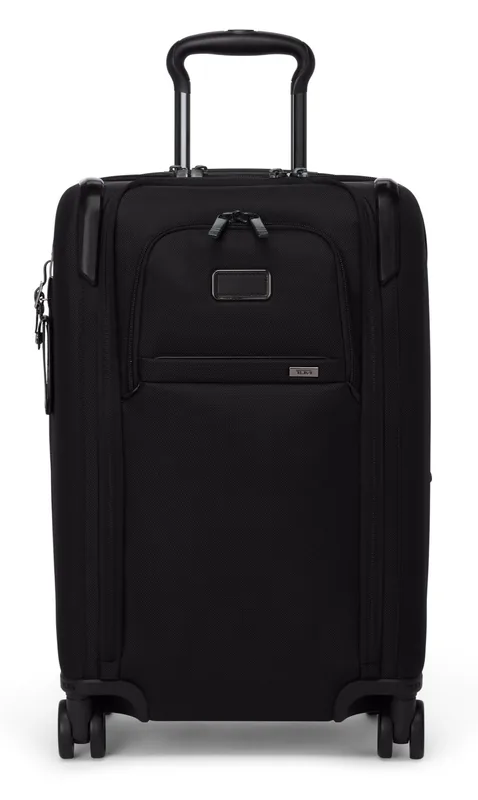
1. Tumi Alpha Dual Access: The Buyable Answer To The Headline
Tumi Alpha Dual Access Carry-On
The only half of the matchup you can buy in two clicks, with a front panel neither Rimowa cabin case offers.
This is the bag someone typing "Tumi vs Rimowa" is usually holding when they type it, and it's the only half of the matchup they can buy in two clicks. On tumi.com it measures 21.8 by 14.0 by 9.0 inches, weighs 9.2 pounds and holds 35 liters in FXT ballistic nylon, and a zip expansion takes the depth out to 11 inches. Four dual outboard wheels, a TSA lock and a recycled lining round it out. The warranty runs five years, and each case carries a Tracer number Tumi uses to authenticate it and help return it if it goes missing.
Neither Rimowa cabin case has anything like the dual-access front panel. You get into the case from the front without laying it flat, which is the difference between pulling a laptop out at the gate and unpacking on a terminal floor. There's also a USB-C charging pass-through and a dedicated AirTag sleeve, and neither Rimowa product page lists an equivalent. On airport function the Alpha wins the comparison outright, and it does it from a softside case that fits a 22 by 14 by 9 sizer.
A nylon softside looks like a very good bag. An aluminum Rimowa looks like an object, and nobody buys the grooves by accident. If the case is meant to say something in a hotel lobby, the Alpha says less. For the model-by-model detail on the wider Alpha family, our Tumi Alpha 3 review covers how the generations differ.
The purchase history behind it is thin. This listing carries about 120 ratings, a small sample by Amazon standards, so the case for it rests on construction, warranty terms and the feature set.
- Dual-access front panel, which neither Rimowa cabin case has
- FXT ballistic nylon scuffs where aluminum dents permanently
- USB-C charging pass-through and an AirTag pocket built in
- 14.0 inches wide, inside the 22 by 14 by 9 inch cabin box
- Zip expansion takes depth from 9 to 11 inches
- 9.2 pounds empty, 2.1 pounds more than the Rimowa Essential
- About 120 ratings, too small a sample to prove anything about long-term durability
- Nylon softside doesn't deliver the visual argument people buy Rimowa for
If the question is which brand you can buy today and use hardest at an airport, this is the answer. The front access, the sizer fit and the first-year airline cover are what you're paying for, and they're all real.
2. Tumi 19 Degree Expandable: The One That Fights Rimowa On Looks
Tumi's sculpted polycarbonate case goes after the Rimowa buyer directly. Its spec sheet reads 21.8 by 14.0 by 9.0 inches, 7.9 pounds and 38 liters, and the angled contour gives the line its name. It shares the Alpha's dual outboard wheels, five-year warranty and Tracer number, expands to 11 inches deep, and adds a built-in TSA lock and its own USB-C port. It's the closest thing in the Tumi range to what the Essential Cabin is selling.
This is the fairest single comparison in the article, because it's the only place where both brands are selling the same thing: a molded hard shell you buy partly because of how it reads. On the spec sheets the Tumi is the more practical case. It's 1.8 inches narrower than the Rimowa's 15.8, it holds 2 liters more, and it gives up only 0.8 pounds to the lighter Essential.
Textured polycarbonate is not milled aluminum, and anyone who wants the Rimowa grooves specifically isn't going to be argued out of them by a spec sheet. This listing carries just over 100 ratings, so the same small-sample caveat applies as on the Alpha. The Matte Black we link to was down to a few units when we rechecked it, so check stock before you settle on the color.
- Hard shell aimed at the same buyer as the Rimowa Essential
- 7.9 pounds and 38 liters, lighter than the Alpha and roomier than either Rimowa
- Five-year warranty and Tracer registration carry over from the Alpha line
- Polycarbonate doesn't do what aluminum does for the people who want aluminum
- Just over 100 ratings behind it
- Stock on the Matte Black was down to a few units
The most direct Tumi answer to Rimowa, and the better buy on function. If you want the aluminum specifically, this bag was never going to be the one that changed your mind.
3. LEVEL8 Zipperless: The Rimowa Look At A Fifth Of The Price
This one copies the two things people buy Rimowa for. It has a latched zipperless closure with two TSA locks, and it runs a polycarbonate shell on an aluminum frame, in a 22 by 14.9 by 9 inch case holding 38 liters at 9.9 pounds. There are two main compartments with a wet-dry separation pocket. It costs roughly a fifth of the Tumi Alpha, and more than 450 people have rated it.
The frame is aluminum and the shell isn't, and the shape of this bag invites people to blur that line. There's no lifetime guarantee, no global repair network, and no answer at all for what happens when a latch fails in year three. Of the cases here with a published weight it's the heaviest, 0.4 pounds over the all-aluminum Original Cabin, so you're carrying the metal without getting the metal shell.
The latched closure and the framed silhouette are the whole appeal, and at this price they're a fair deal for someone who wants the look without the badge. Expecting the same object for less is where buyers go wrong, because the money in the two brands above it pays for a warranty and a repair network this case doesn't have.
- Zipperless latched closure with two TSA locks, the Rimowa design cue at a fraction of the price
- Aluminum frame under the polycarbonate shell
- More than 450 ratings, four times the sample behind either Tumi listing here
- Wet-dry separation pocket across the two main compartments
- The shell is polycarbonate, so it looks like the aluminum case without being one
- No lifetime warranty and no repair network stated
- 9.9 pounds, the heaviest published weight in this comparison
The clearest value case in this lineup and the one that forces the question. If you can look at this bag and still want the Rimowa, then you know exactly what you're paying for.
Three Carry-Ons That Answer The Same Brief For Less
Both luxury brands sit far above the rest of the market, and these three show what the money buys on the way down: better packing hardware for under a third of the Tumi, a repair-first softside for well under half of it, and the floor price every luxury luggage decision is measured against.
Away The Carry-On: The Bag Most People Buy Instead
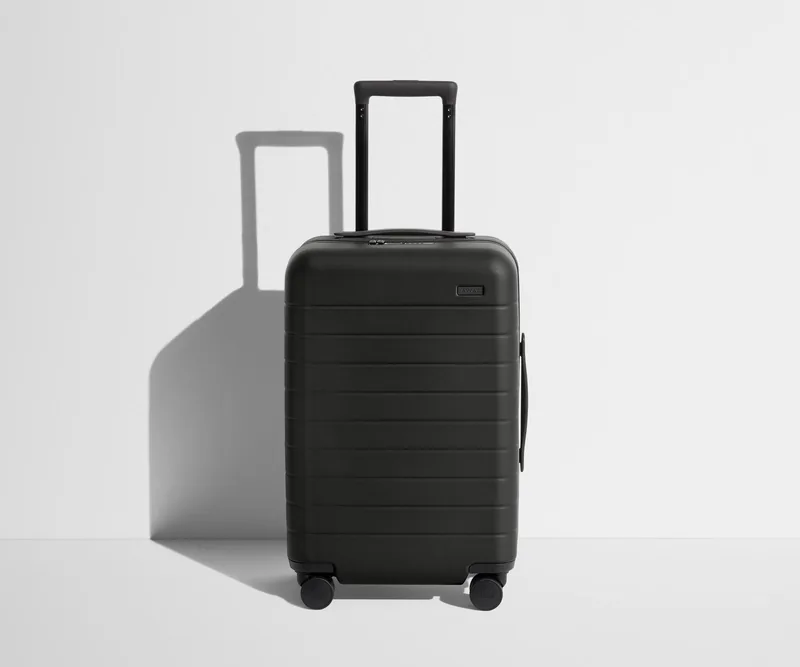
Plenty of people who start at "Tumi or Rimowa" end up here. It's a 100% polycarbonate shell measuring 21.7 by 14.4 by 9 inches on the exterior with four 360-degree spinners, a TSA-approved combination lock and a patented double-buckle compression panel, which is better packing hardware than either luxury brand ships. It has more than 450 ratings and sells through Away's own Amazon storefront. It clears depth at 9 inches and runs 0.4 inch over on width, so it passes most gates and fails a metal sizer, which still puts it 1.4 inches closer to legal than either Rimowa. What the money doesn't buy is a repair network, a metal frame, or a case anyone in a lounge will recognize, which is what a Tumi or Rimowa buyer is paying for in the first place.
Travelpro Platinum Elite 21-Inch: Crew Luggage At Under Half The Price
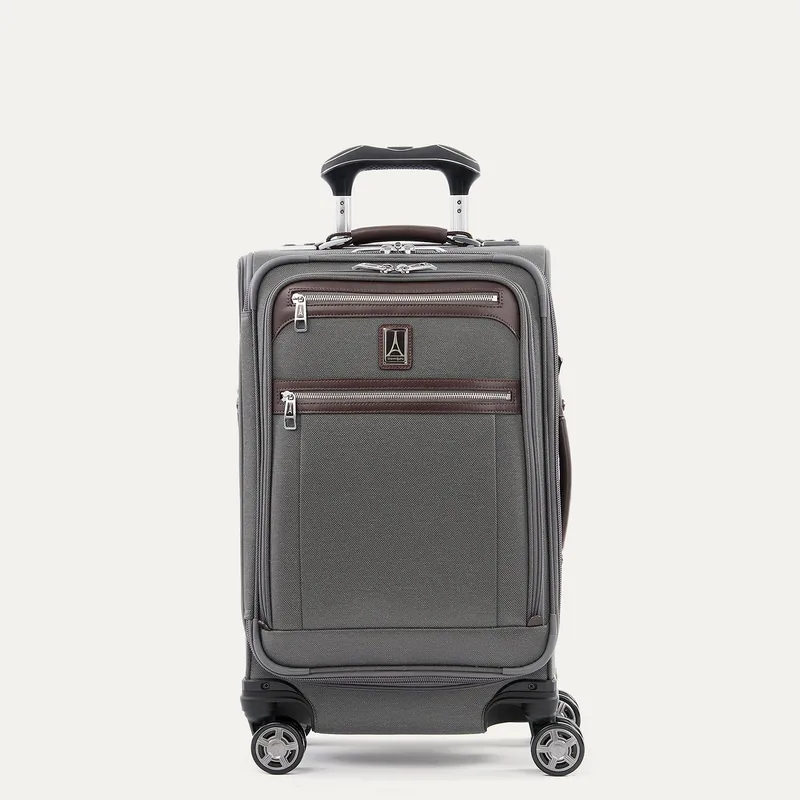
Travelpro is what flight crews wheel through terminals, and it's the one pick here that prints both size figures. The case body is 21 by 14 by 9 inches; with wheels and handles it's 23.5 by 14.5 by 9, so a strict sizer reads it as tall and half an inch wide. At 7.8 pounds it undercuts the Alpha by 1.4 pounds, and its DuraGuard-coated nylon, eight magnetic spinners, USB A and C ports and 2 inch expansion cover most of what the Tumi does for well under half the Alpha's price. The warranty is where it gets interesting for this matchup: that registered airline-damage cover has no end date, which puts Travelpro closer to Rimowa's lifetime promise than to Tumi's single year. It has more than 4,700 ratings, enough to make a common failure visible. Our roundup of the best carry-on luggage across price bands covers where it sits against the rest of the field.
Amazon Basics 21-Inch Hardside: Where Carry-On Prices Start
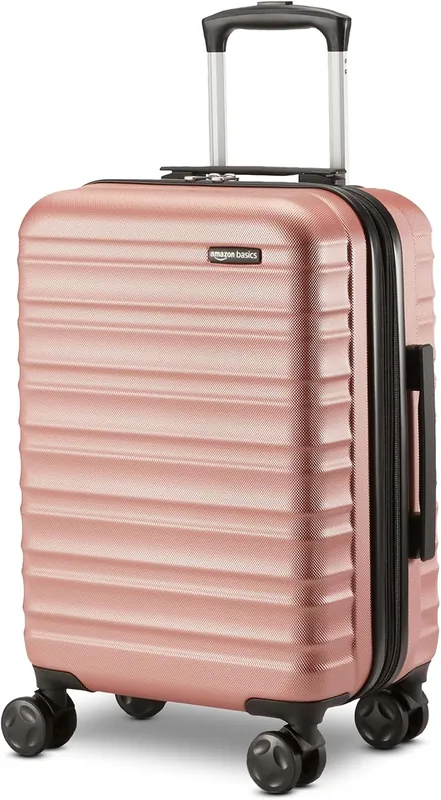
We include this one as a yardstick. It's 21.7 inches tall, 14.8 wide and 10 deep with wheels included, so it misses a 22 by 14 by 9 sizer by 0.8 inch on width and a full inch on depth, the same two axes the Rimowa fails. It weighs 6.8 pounds, expands for up to 25% more space and carries an interior divider, three zippered pockets, four multi-directional wheels and a telescoping handle. More than 62,000 people have rated it, two orders of magnitude more than either Tumi listing, which tells you what a working carry-on costs before a logo enters the picture. It has no TSA lock and no warranty terms on the listing, so we wouldn't expect it to hold up over four years of regular flying. Everything else in this comparison is priced above this line.
Tumi Or Rimowa: How We'd Decide
Tumi is the pick for the traveler who uses the bag hard and wants it this week. The dual-access panel, the USB-C port, the AirTag pocket and the Tracer number are airport features neither Rimowa cabin case answers, both Tumis clear a 22 by 14 by 9 sizer, and the whole transaction comes with a return window and a public rating history.
Rimowa is the pick when the case itself is the point. No other case in this comparison looks like the grooved aluminum, the lifetime guarantee on functional damage is the strongest warranty here, and the repair network is real. Go in knowing what you're accepting: you're buying through a boutique, the case is 15.8 inches wide and 9.1 inches deep and won't clear a strict sizer on either axis, and the dents start early and never leave.
If neither answer feels worth the money once you've read the specs, that's a defensible conclusion too. The Travelpro gives you expansion, USB charging and airline-damage repair with no end date for well under half the Tumi's price, and the LEVEL8 gives you the latched framed look for about a fifth. What you trade away is the materials on one and the warranty on the other.
FAQ
Which is better, Tumi or Rimowa?
Tumi, if you want the case that works hardest at an airport: front access, USB-C, an AirTag pocket, Tracer registration and five-year coverage, all in a case that fits a 22 by 14 by 9 sizer. Rimowa, if you care more about what you're carrying than what it does, because the anodized aluminum and the lifetime guarantee on functional damage have no equivalent here. Both Rimowa cabin cases are wider than a strict sizer allows.
Is Tumi considered high end?
Yes, on the terms Tumi argues for. The Alpha carry-on is FXT ballistic nylon with five years of warranty coverage, Tracer registration behind it, and hardware like the dual-access panel and the USB-C pass-through that Rimowa's cabin cases don't list. It sits in the same tier as Rimowa and makes an engineering case where Rimowa makes a materials one.
Is Rimowa owned by Louis Vuitton?
Not quite. Rimowa is owned by LVMH, the group Louis Vuitton belongs to, which took an 80 percent stake in 2016. Louis Vuitton and Rimowa are sister brands under one parent. Tumi sits under Samsonite, which acquired it the same year, so both halves of this comparison belong to a larger group.
Which luggage is better than Rimowa?
On airport function, Tumi. The Alpha opens from the front, charges a phone and carries a Tracer number, and neither Rimowa cabin case lists any of that. On raw material and resale, nothing here beats the aluminum Original. Cabin fit is where Rimowa loses to both Tumis, since both Rimowa cabin cases are 15.8 inches wide and 9.1 inches deep against a 22 by 14 by 9 box.
Why can't I find Rimowa on Amazon?
Because Rimowa doesn't sell there. Our Amazon US search turned up no Rimowa suitcases at all, only a third-party cover made to fit a Rimowa check-in case. The brand routes buyers through rimowa.com, its own boutiques and selected department stores, so anything Rimowa-branded you see on a marketplace listing is a reseller or an accessory.
Does Rimowa's lifetime guarantee cover dents?
No. Rimowa covers the functional parts of the suitcase for its lifespan, meaning what makes it work: wheels, handles, locks, hinges. Cosmetic wear sits outside that, and on an anodized aluminum case the cosmetic wear starts on the first flight. The lifetime terms also apply only to suitcases bought new from July 25, 2022, so an older secondhand case carries the earlier five-year or two-year terms. Plenty of owners treat the scars as the point, so how much this costs you depends on which camp you're in.
Is a Rimowa carry-on worth it?
For most people, no. At the top you're buying warranty depth, a repair network and materials that outlive the bag's owner, and that's worth it if you keep a suitcase for a decade and care more about repairs than replacement. The Amazon Basics further up does the core job of a carry-on for a small fraction of the price with more than 62,000 ratings behind it, and most buyers would be fine with something in between, like the Travelpro.
The Bottom Line
Pick Tumi if you fly a lot, pack in a hurry, and want the bag this week. Pick Rimowa if you want the object, and budget for the width and the depth when you hit a sizer.
Filed in Luggage Reviews