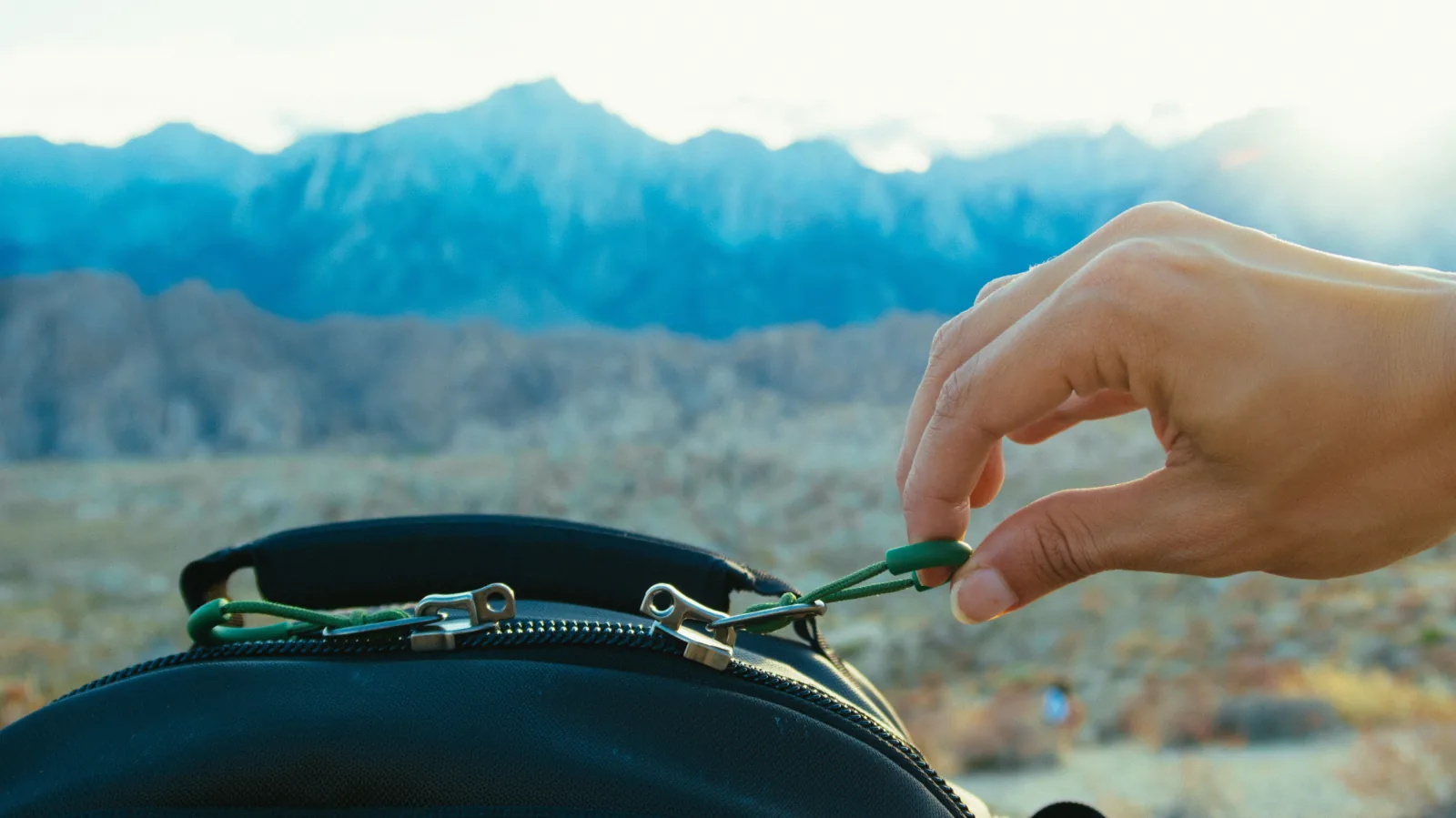
How to Fix a Backpack Zipper That Sticks, Splits, or Won't Close

Some links on this site are affiliate links. We may earn a commission at no additional cost to you if you make a purchase through them. See our affiliate disclosure for details.
A backpack zipper can fail in several different ways. A slider that will not move is a different repair from a zipper that opens again behind the slider. Before buying a replacement part, empty the bag, bring the two sides of the opening together, and find the exact point where it stops working.
Start with the reversible checks below. A fabric snag or dirt in the teeth may take a few minutes to clear. Damaged teeth, torn zipper tape, or a failing seam call for a different repair. Forcing any of them can turn a small fault into a full zipper replacement.
Buying one? Packable Backpacks: The Best Travel Hack You're Not Using
Find the fault before you pull harder
| What you see | Likely place to inspect | First move |
|---|---|---|
| Slider stops at one spot | Fabric, thread, or grit caught in the slider or teeth | Ease the slider backward and free the obstruction. Do not yank it forward. |
| Teeth close, then separate behind the slider | Worn or bent slider; also inspect teeth and tape | Unload the bag and check for missing teeth before considering a slider repair. |
| Pull tab is missing, but the slider still closes the teeth | Pull tab only | Replace the pull tab or add a short cord. Leave the working slider in place. |
| Slider has come off one side | Top stop, teeth, tape, and zipper construction | Identify the zipper type and access point before trying to refit a slider. |
| Teeth are missing or tape is torn | Zipper chain or its stitching | Stop using the zipper under load and ask the bag maker or a repair shop about repair. |
YKK describes a zipper as three working parts: the elements that mesh, the slider that joins or separates them, and the fabric tape that holds them. That distinction matters. Replacing a slider cannot restore a missing tooth or torn tape.
First, take pressure off the zipper
Empty the crowded pocket or remove enough clothing to let the two sides of the opening meet without strain. Hold the bag fabric near the slider and try one gentle pass. YKK warns that forcing an overfilled bag closed can damage both the zipper elements and tape. If the zipper works when the bag is empty but fails when packed, solve the load problem before changing parts.
Look along the whole track, especially at the corners where a backpack zipper curves. Check for a loose lining, a narrow strip of fabric, or a thread entering the slider. Back the slider toward the snag while easing the fabric away. YKK's guidance is to move it slowly and avoid force when fabric is caught.
If you can see grit in the teeth, gently clear it with a soft brush. Patagonia's repair guide also recommends brushing away dirt before treating the slider as broken. Check the bag maker's care instructions before adding any product to a coated or water-resistant zipper. REI warns that household oil and petroleum jelly can attract dirt on technical gear. REI's backpack-care guide mentions purpose-made zipper lubricant, while Patagonia advises cleaning without lubricant. Follow the instructions for your bag rather than a universal home remedy.
If it closes and then splits, inspect the slider
- Watch the teeth split behind the slider
- Squeeze the slider lightly with pliers
- Move the slider back down
- Close it again: the teeth hold
Move the slider down, line up the two sides, and close the zipper slowly on the unloaded bag. Watch where the teeth part. If they separate directly behind the slider and the teeth and tape are intact, the slider may no longer press the two rows together firmly enough. iFixit's repair guide shows this failure on backpacks and other gear.
A careful squeeze with pliers can sometimes bring a worn metal slider back into contact with the teeth. Treat that as a temporary measure, not a cure for a worn part. Use very light pressure on the slider body, keep fabric and the pull tab out of the jaws, then test after each adjustment. Squeeze too hard and the slider can jam or break. If you are unsure where the jaws would sit, skip the squeeze and have the slider replaced. REI's repair guidance describes the same temporary fix and its limits.
Do not keep tightening a slider if one section of teeth is missing, crooked, or pulling away from the tape. The problem is farther down the chain. A repair shop can assess whether that section or the entire zipper needs replacing.
Replace only the part that failed
A missing pull tab is the simplest case. If the metal or plastic slider still closes the teeth, attach a short cord or a suitable replacement tab to the slider's existing opening. You do not need to remove the slider to replace the part your hand holds.
If the slider itself is damaged, identify the zipper before ordering a replacement. iFixit's identification guide separates coil and individual-tooth zippers and explains why the replacement must match the zipper. Look for a size or model marking on the old slider, then compare the part with the maker's instructions. A slider that is merely close in size can still fail to engage the teeth.
Backpack pockets and main openings usually use non-separating zippers. Their ends may be sewn into the bag, hidden under a seam, or held by stops. That can make a slider swap more involved than the familiar jacket-zip demonstration. iFixit's non-separating repair guide shows several construction-specific methods, many of them temporary. Inspect the actual bag before removing a stop or cutting stitching. If reaching the slider requires opening the seam, a bag repair shop is a sensible next stop.
When to stop and use the maker's repair route
Stop the home fix when teeth are missing, the woven tape is torn, the zipper has pulled away from the bag, or the slider cannot move after the obstruction is cleared. Those faults need more than a new cord pull. A temporary closure may get the bag home, but do not rely on it for a full travel load.
Check the brand's current repair instructions before paying for an independent replacement. Some makers can supply the exact slider or evaluate the whole bag. For example, Osprey has a repair intake for its packs; its coverage and exclusions depend on the product and claim. A photograph of the zipper, its size marking, and the damaged section will make that conversation more useful.
Once the repair is done, open and close the zipper several times with the pocket empty, then with a normal load. If it only fails when the pack is stuffed, the packed load may be too much for the closure, or damage may remain. Reduce the load and have the zipper checked if it still separates.
If the bag cannot be repaired before your trip
Move essentials into an intact bag instead of trusting a zipper that opens under load. If you plan to carry an additional bag aboard, check the airline's current allowance and measure it against the published box in our luggage size chart. A dimensional pass is not a promise that a bag will fit under a particular seat.
If the pack is beyond repair, the travel gear database can help compare bag sizes and weights. Check whether a row is a manufacturer specification or a TBE measurement before using it as a substitute for the pack you know.
Backpack zipper questions
Can I fix a zipper that keeps opening behind the slider?
Sometimes. Check for missing teeth or torn tape first. If those are intact, a worn slider may be the cause; a gentle adjustment may work briefly, while a correctly matched replacement is the more durable repair.
Can I use oil or soap on a stuck backpack zipper?
Do not start there. First release caught fabric and brush away visible dirt. REI warns against household oil and petroleum jelly on technical gear, while manufacturer guidance on purpose-made zipper lubricants varies. Follow your bag maker's instructions, particularly for a coated zipper.
Does a broken pull tab mean I need a new zipper?
No, if the slider still joins the teeth. The pull tab is only the handle. Replace it or add a suitable cord without disturbing the working slider.
Should I replace the slider myself?
Only after identifying the zipper and confirming how the slider comes off this bag. A non-separating backpack zipper may hide its stop inside a seam. A matching part and the correct access method matter more than a generic repair kit.
Filed in Travel Bag Tips