Bundle Wrapping: Pack Outfits Around a Core
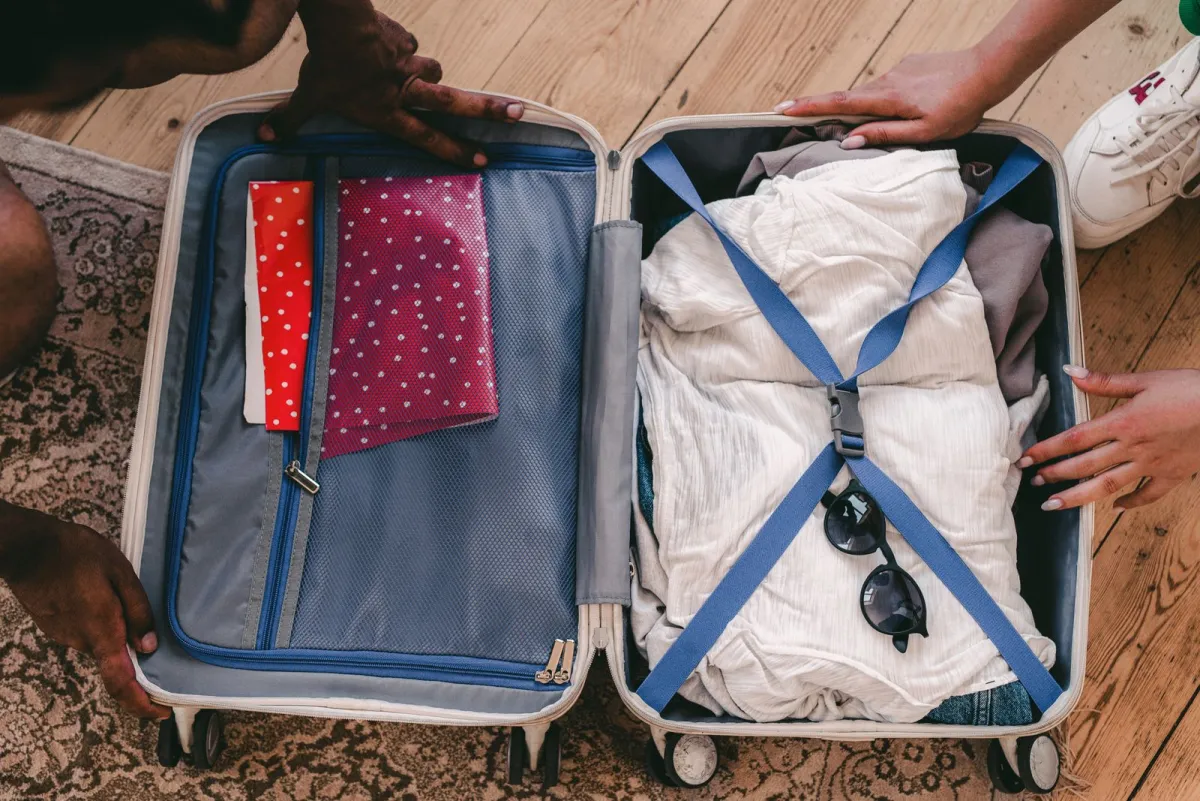
Bundle wrapping packs a full outfit around a socks-and-underwear core so the bundle is the unit, not the garment. Wrap the t-shirt, then the pants, then one extra layer. Pull that package from the bag and you have the day's clothes without digging.
Buying one? The Ranger Roll: How to Pack Clothes Tight Without Wrinkles
What is bundle wrapping?
Bundle wrapping is a packing method that folds a shirt, pants, and a spare layer over a small core of underwear and socks. Each piece stays mostly flat. You wrap in order, like closing a parcel, until the outfit lifts as one package you put in the bag.
The lock is the wrap. Nothing gets rolled into a cylinder, and nothing gets tucked into a cuff or a sock. If you already know the ranger roll packing method, this is the other technique: outfit as the unit, shirt as a layer inside it.
A ranger roll is one garment, packed so you can grab that garment alone. A wrapped bundle is one planned outfit. You open it when you dress, and you accept that the pants come off the parcel before the shirt does.
The Five Pieces You Wrap
One bundle uses five pieces you already own: one t-shirt, one pair of pants or shorts, one extra layer, one pair of underwear, and one pair of socks. The extra layer is an overshirt, a light sweater, or a button-up. That set is one outfit.
A weekend is two or three of those outfits, wrapped as two or three bundles. Extras stay out of the wrap. Sleep clothes, gym shorts, and a spare tee belong in their own rolls if you want them without opening a parcel.
You also need a table or a made bed, and the bag you fly with. Cubes are optional here, and our take on whether packing cubes are worth it applies the same way. If a cube is already in the house, a finished bundle can sit in it. You can wrap on the table with no cube at all.
Leave two or three days to pick the outfits and wash the shirt you want in the wrap. That's the short-trip case in how many days before a trip, and it's what keeps the wrap from becoming a 1 a.m. scramble.
How to Bundle Wrap an Outfit
- Set the core below center
- Fold left sleeve, then right
- Fold the hem over the core
- Fold the collar into a packet
Work on a dining table or a made bed, window light, one outfit at a time. Smooth each piece before it goes on the stack. A crease you wrap in is a crease you unpack.
1. Lay the outfit out
Put the t-shirt, pants, extra layer, underwear, and socks on the table so you can see the whole set. Check that the shirt and the extra layer are the ones you wear with those pants. If they aren't a set, don't wrap them together.
2. Stack the core
Fold the underwear into a small rectangle. Fold the socks in half and set them on the underwear. That pad is the core. Keep it small. A fat core makes a fat bundle, and a fat bundle fights the zipper.
3. First wrap: the t-shirt
Lay the shirt face down, sleeves out, hem toward you. Set the core on the back, a little below center. Fold the left sleeve over the core, then the right. Fold the hem up over the core, then fold the collar end down so the shirt is a closed packet. Smooth the fabric as you fold. Loose cloth is the next crease.
4. Second wrap: the pants
Lay the pants flat, legs together, waistband away from you. Set the shirt packet on the seat. Fold one leg over the packet, then the other. Fold the waistband over the legs so the packet sits inside the pants. If you can pick the bundle up and it holds, the wrap is tight enough.
5. Extra layer on the outside
Lay the overshirt or sweater face down. Set the pants bundle in the middle. Fold the sleeves in, then the hem, then the collar, same parcel wrap as the shirt. The outer layer takes the scuffs in the bag. It's also the piece you can grab if the cabin is cold, as long as you're willing to open the bundle to get it.
Bundle Versus Separate Rolls
Finish the wrap, then ranger-roll the same five pieces into separate cylinders and set both versions side by side. Lay a tape measure next to them if you want a packed-height number in centimeters. Four rolls fill leftover corners. One bundle is one block. Which stack sits shorter depends on the clothes and on how hard you wrap, so measure your own clothes before you trust anyone's centimeter count.
Rolling several garments into one fat cylinder is still rolling. That mixed roll wrinkles at the edges and usually packs larger than separate cylinders, which is why the rolling versus folding clothes page tells you to roll one garment at a time. Bundle wrapping keeps each piece mostly flat and uses the core so the middle doesn't collapse. Don't roll the outfit and call that a wrap.
Where the Bundle Sits in the Bag
Shoes go first, along the sides or at the wheel end. Bundles sit in the main cavity in a row. Two or three fill a weekend. Toiletries stay out of the wrap. A damp shell stays out of the wrap.
To dress, lift one bundle onto the bed and unwrap it in reverse: extra layer, pants, shirt, then the core. You get the day's clothes in the order you put them on.
The cost shows up when you only want the t-shirt. You still unwrap the pants. If you live out of the bag and grab random pieces, wrap is the wrong method for those pieces. Roll them, or stand them in a cube with file fold packing so every piece shows at once.
When Rolling Wins
Use ranger rolls when you want one shirt without opening an outfit. Gym clothes, a spare tee, and anything you might wear twice in a different pairing all belong in cylinders. Wrap the outfits you already know you'll wear as a set: a city day, a dinner, the travel day.
Thick denim and a puffy extra layer make a clumsy outer wrap. Roll the jeans. Wrap the shirt with the lighter layer if you still want an outfit packet.
Don't wrap a blazer this way and treat it as a suit pack. A tailored jacket wants its own fold, and the trousers that match it want to stay on their crease. Bundle wrapping is for a t-shirt, pants, and a casual layer.
What to Wrap, What to Roll
Wrap the outfits you already planned. Roll the leftovers. The method is done when you can lift tomorrow's clothes in one hand and the bag still has a place for shoes and a toiletry kit.
FAQ
Is bundle wrapping the same as a ranger roll?
No. A ranger roll folds a garment, rolls it into a cylinder, and tucks the last flap so it cannot unwind. Bundle wrapping never rolls. It folds flat garments over a small core until one outfit is one package you can lift.
Does bundle wrapping keep clothes from wrinkling?
It can, because the garments stay mostly flat and the core stops the middle from falling into a hard fold. Creases still happen if you wrap a wrinkled shirt, wrap loosely, or park jeans on a thin tee. Smooth each piece before you fold it over the core.
Can you take one shirt out of a wrapped bundle?
You can, and you'll unwrap the pants to do it. Bundle wrapping assumes you want the outfit as a set. If you want a single extra tee, ranger-roll that tee on its own and leave it out of the wrap so the parcel stays closed.
Do you need packing cubes to bundle wrap?
No. The wrap holds itself. A cube is only a box for a finished bundle. Skip cubes unless you already pack with them and want the bundle sitting in a labeled container. The clothes and the bag you fly with are enough.
How many outfits should you wrap for a weekend?
Two or three bundles cover two or three days. Wrap the outfits you'll wear as sets. Roll the leftovers: a spare tee, gym shorts, sleep clothes. If every garment in the bag is inside a parcel, you'll spend the trip opening packages to find a sock.
Does bundle wrapping pack smaller than rolling?
Not as a rule. Four tight rolls fill leftover corners. One bundle is a single block. Measure packed height of the same clothes both ways if you care about the number, with a tape on the table. Treat wrapping as an outfit method, not a volume trick.
Filed in Packing Tips