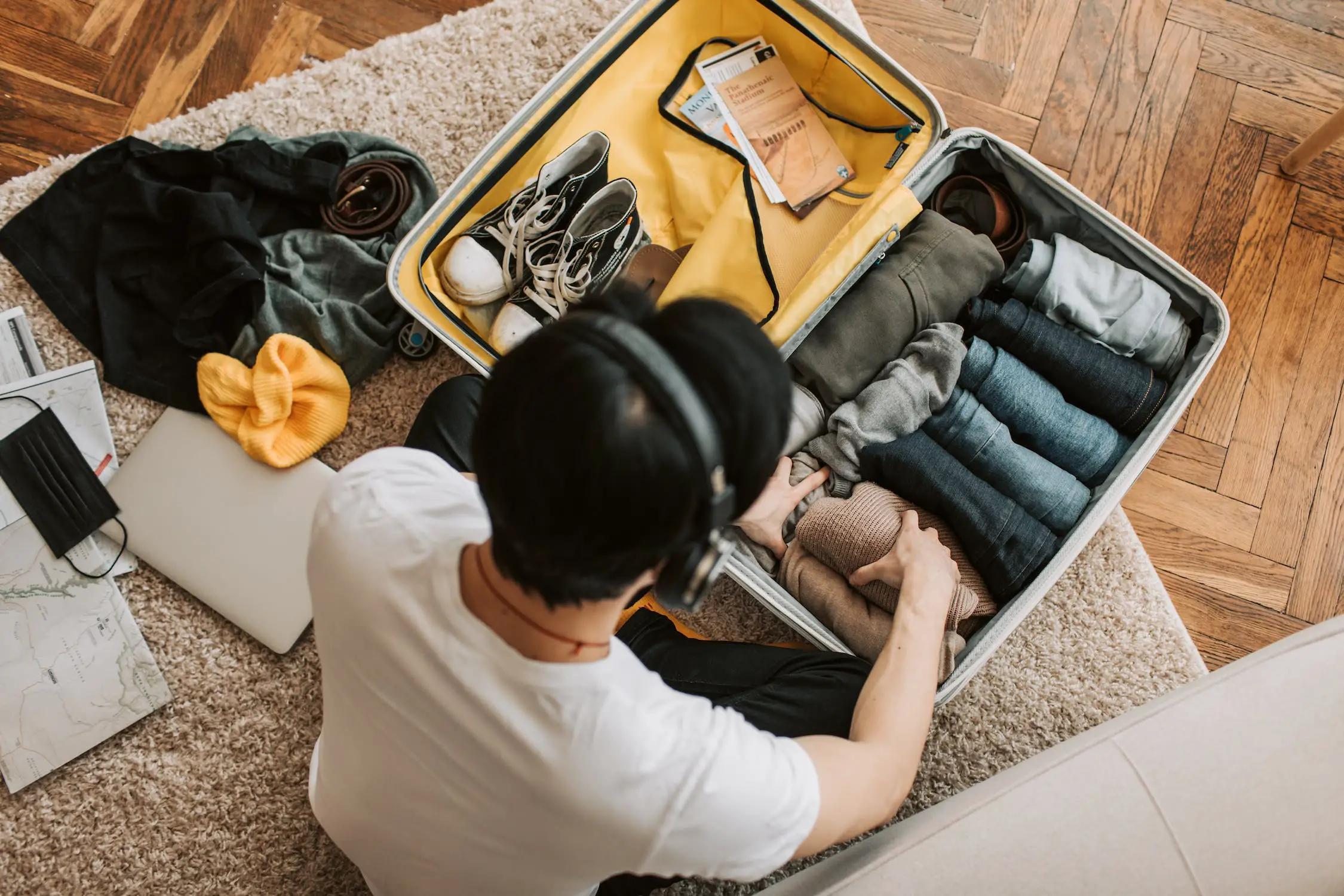
Rolling vs. Folding Clothes: How to Pack Each Garment

This article contains affiliate links. We may earn a commission at no additional cost to you if you make a purchase through these links. See our affiliate disclosure for details. As an Amazon Associate I earn from qualifying purchases.
We'd roll soft T-shirts and underwear, fold a pressed shirt, and try a bulky sweater both ways before deciding where it fits. A useful suitcase usually contains a mix. The right method depends on the garment, the space available, and what you need to pull out first.
Rolling can make small items easier to arrange. Folding can make a flatter layer for clothes that need room around collars, seams, or pleats. Neither guarantees a smaller bag or wrinkle-free clothes.
- Stack three folded shirts
- Pack the same three, rolled
- Add socks: the block grows taller
- Fill leftover gaps with socks
Rolling vs. folding: what changes?
A roll turns a garment into a cylinder. A fold makes a flat rectangle. Both begin by smoothing the fabric and bringing loose sections inward. You can use either method inside packing cubes; the cube contains the clothes but doesn't choose the method for you.
The ranger roll adds a tucked cuff that holds the roll together. An ordinary roll can simply rest with its loose edge underneath. Start with that gentler option if you don't want to stretch a hem or work the fabric into a tight bundle.
Choose by garment, then check the fit
Eagle Creek's packing guidance favors rolling lightweight casual clothes and folding bulkier or dressier pieces. That's a useful starting point, not a rule for every fabric.
- Soft T-shirts, underwear, and exercise clothes: try individual rolls in a shallow layer so you can see each item.
- Button-up shirts and pressed trousers: try broad folds that follow the garment's existing shape. Keep collars and any pressed crease aligned.
- Thick sweaters and jeans: compare a flat fold with a roll in your actual bag. A large cylinder may leave awkward gaps.
- Structured jackets, delicate trims, and formalwear: follow the garment maker's packing and care advice. Avoid forcing them into a tight roll.
For a useful comparison, pack the same clean, dry clothes into the same compartment both ways. Keep shoes and toiletries in their planned positions. Close the bag normally, then check its packed dimensions and weight. A method that lets you add more clothing can still put the bag over its allowance.
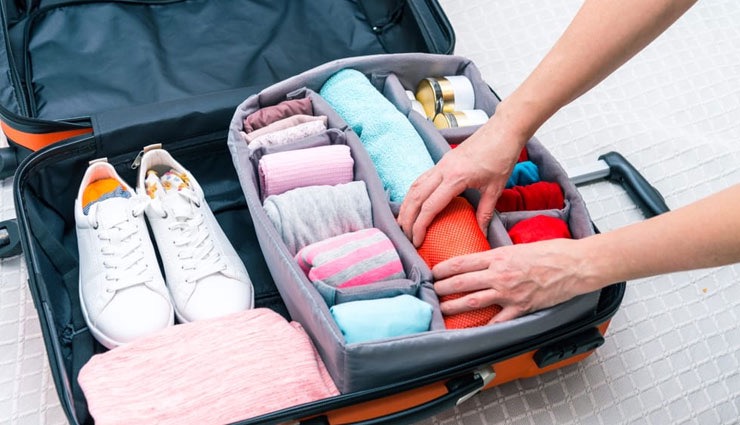
Rolling clothes for a trip
When rolling is useful
Roll small, flexible items when you want to spot one shirt without lifting a stack. A row of short rolls can also fit beside a shoe pouch or along a narrow compartment. Start packing a few days before the trip so you can try the layout before departure.
Don't make every roll as tight as possible. If a thick seam bunches up or a decoration is under pressure, loosen the roll or fold that piece. The aim is a manageable shape you can repack after wearing it.
Five steps for a simple roll
- Lay one garment on a flat surface and smooth it with your hands. Start with dry fabric.
- Fold sleeves and side edges inward to make a strip that fits your cube or compartment.
- Roll steadily from one end, smoothing any bunching as you go. Use light pressure around thick seams.
- Place the loose edge underneath. A nearby roll or a lightly filled cube can help keep it in place.
- Open the bag and remove one item as a trial. Leave enough room to put it back without forcing the zipper.
A shallow clamshell and a deep top-opening backpack may need different roll lengths and arrangements. If you're also choosing the bag, our luggage brand guide provides a starting point.
Cubes and vacuum bags do different jobs
A standard cube keeps clothing together. A vacuum bag uses a sealed valve system to remove air. Neither is necessary for a simple roll, and neither removes the weight of the clothes.
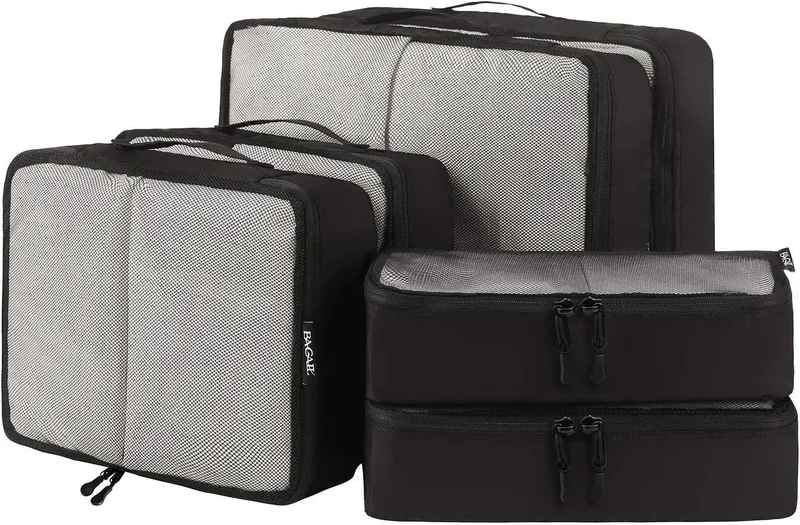
For a cube set, choose the sizes that fit your compartment and leave the rest at home. Check the selected set's contents and dimensions before buying; BAGAIL sells several combinations. You can place folded garments and rolls in separate cubes if that makes daily access easier.
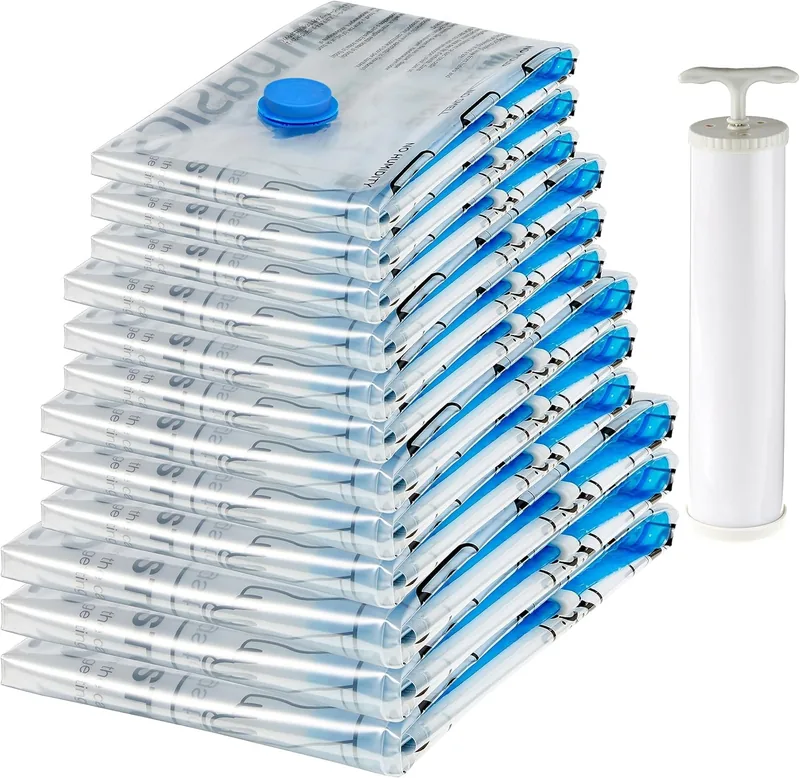
The linked Amazon Basics 12-bag set includes a hand pump and four size groups. Its largest bags are meant for substantial storage loads, so check the smallest bag's dimensions against your case before choosing it for travel. Allow space for the pump if you'll need to recreate the compressed load for the return trip.
Check the clothing maker's instructions before compressing delicate or insulated pieces. A vacuum bag can leave firm creases, and a tightly packed load may be inconvenient to open during a trip. Our guide to compression bags for travel explains how vacuum bags, roll-up bags, and compression cubes differ.
Folding clothes in a suitcase
When folding is useful
Folding belongs in a suitcase as well as a dresser. It gives a shirt or pair of trousers a broad surface, and lets you place fold lines deliberately. A shallow cube or garment folder can hold that shape. Leave room around a collar, and avoid putting a heavy shoe directly on top of it.
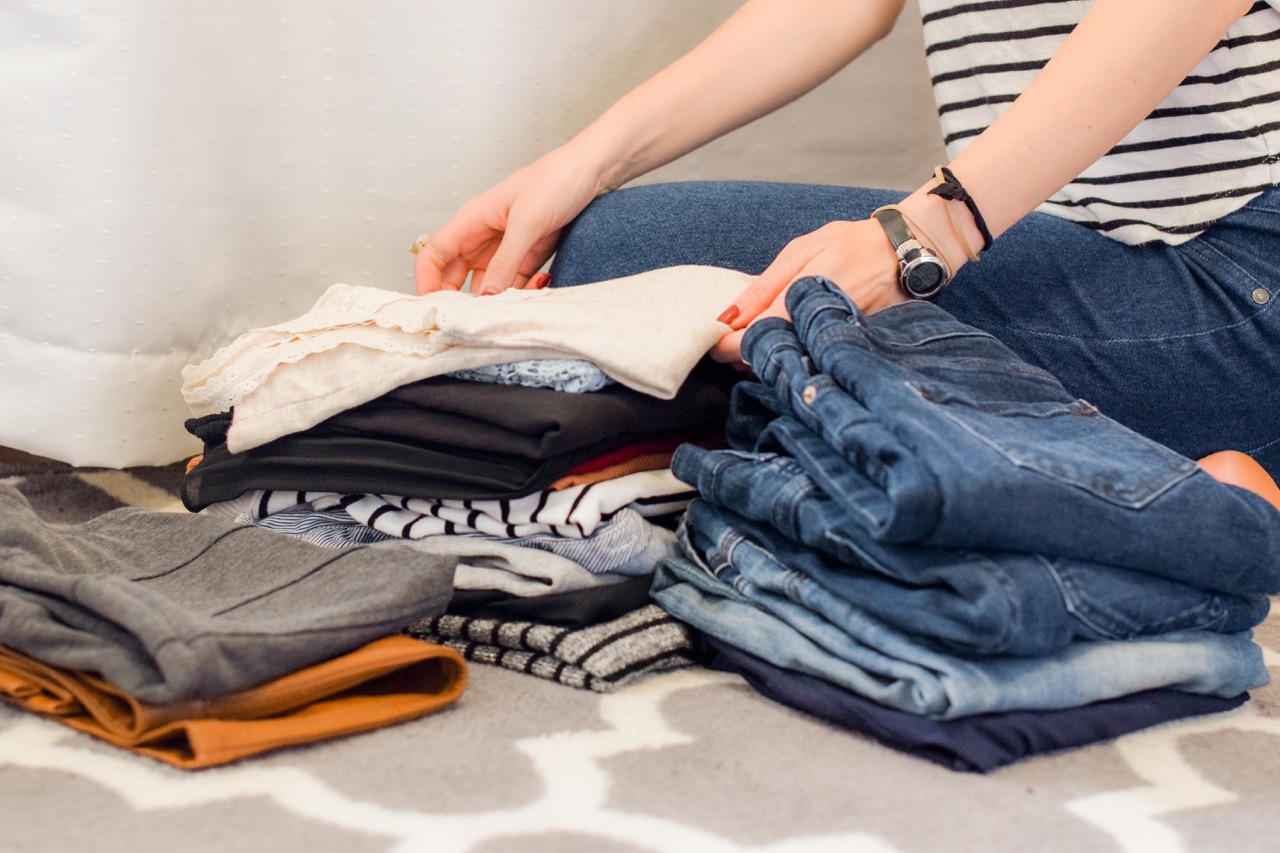
Five steps for a travel fold
- Lay the garment flat and smooth the front, back, and sleeves.
- Fold side sections inward to match the width of the compartment or folder.
- Make only the folds you need to fit the available length. Keep a trouser's intended crease aligned.
- Place the garment on a flat layer, with collars and bulky seams away from concentrated pressure.
- Check that the case closes without crushing the stack. Remove an item if you have to strain the zipper.
Leave the first shirt you'll wear accessible. If the load still feels crowded, cutting the packing list may help more than changing how every piece is folded.
Tools for folded clothes
A garment folder provides a flat place for shirts, while a shallow cube can keep a small folded stack together. Eagle Creek describes both rolled and folded cube layouts. Choose an organizer around the clothes and the bag you already have. A dresser divider is useful at home, but doesn't need to come on the trip.
FAQ
What is the best way to fold a shirt?
Smooth it flat, bring the sleeves and sides inward, and fold the length to fit its compartment. Give a structured collar room. A soft T-shirt is a reasonable candidate for rolling; a pressed button-up may travel better in a flat folder.
What is the best way to roll a pair of pants?
Align the legs and smooth the fabric before rolling from the cuffs toward the waistband. Stop if the waistband becomes a bulky lump. Fold pressed trousers along their existing crease if you want to preserve that line.
What is the difference between folding and rolling clothes?
Folding creates flat layers; rolling creates cylinders. Their usefulness depends on the garment and the compartment. Neither changes the garment's weight.
Is it better to roll or fold clothes for travel?
Use both. We'd start with rolls for soft basics and folds for pressed or structured pieces, then adjust the layout to the bag. No single method saves a fixed amount of space for every packing list.
What are the benefits of rolling clothes?
Individual rolls can be easy to see and retrieve, especially in a shallow cube. They may also fit narrow gaps. Rolling doesn't guarantee fewer wrinkles; fabric, pressure, and time packed still matter.
Why sort clothes by type before folding?
It helps you find the right piece and see duplicates before packing. An outfit-based system can work too. Choose the grouping that makes sense for how you'll dress and unpack.
Should I use drawer organizers when folding clothes?
At home, they can separate small items or shared storage. On a trip, use the cubes you packed if you need similar separation. Extra rigid dividers take up room in a suitcase.
What tools help with folding clothes?
A clear, flat surface is enough to start. A garment folder or shallow cube can help hold the finished folds. Check the care label before using an iron or steamer; our clothes-steamer travel guide covers the separate question of carrying one.
What tools help with rolling clothes?
A cube can contain loose rolls, but you can also pack them directly into a compartment. Buy an organizer for a specific fit or access problem, not because rolling requires one.
How many pieces should I roll at a time?
Start with one garment per roll for easy retrieval. An outfit bundle is an option if you'll use every piece together, but try taking it apart and repacking it before committing to that layout.
Pack for the clothes you'll actually wear
We'd use a small group of rolls for everyday basics, a flat section for clothes that need careful folds, and room to repack without a struggle. Try the same load both ways where the choice is unclear. Finish by closing, measuring, and weighing the bag, then removing anything you don't need.
Filed in Packing Tips