
The Ridge Luggage Review: Is It Worth It?

This article contains affiliate links. We may earn a commission at no additional cost to you if you make a purchase through these links. See our affiliate disclosure for details. As an Amazon Associate I earn from qualifying purchases.
Ridge made its name on a milled metal wallet. The carry-on uses the same formula: a thick German Makrolon shell, anodized aluminum hardware, reinforced corners, and a tracker pocket molded into the bag. There is no expansion zip and no second compartment.
We have not packed the Ridge Carry-On. This recommendation rests on Ridge's current dimensions and listed features plus clearly attributed independent reports; it should not be read as hands-on durability testing.
The Ridge Carry-On at a glance
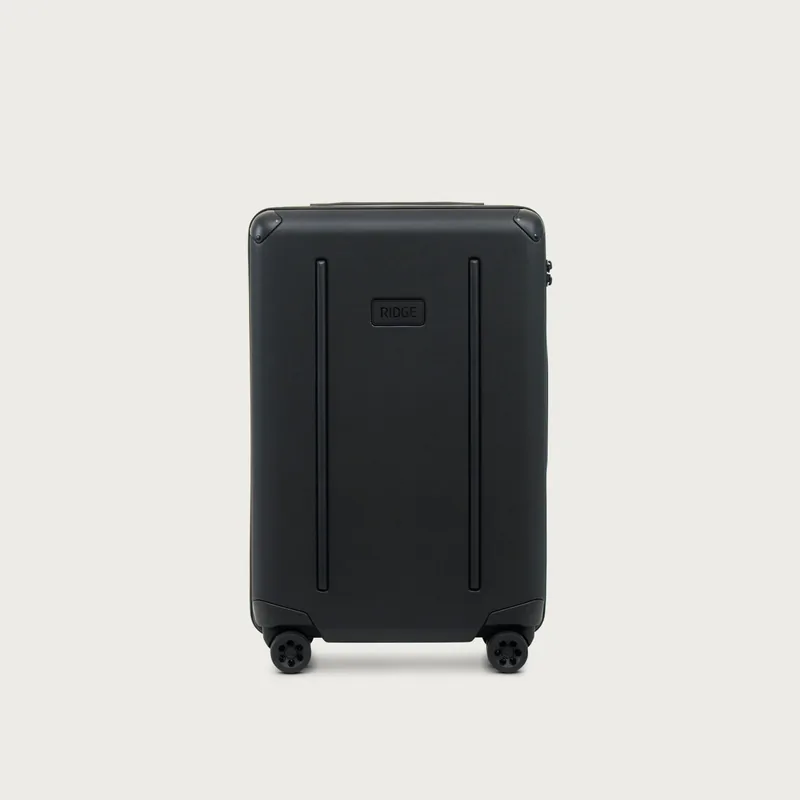
The Ridge Carry-On
A German Makrolon shell stated at 30 percent thicker than standard, reinforced corners and a molded tracker pocket, all at 7.6 lb empty.
The pitch is thickness. Ridge builds the shell from German Makrolon polycarbonate and states it's 30 percent thicker than a standard carry-on shell, then wraps the corners in reinforced ABS protectors, which are the two places a hard case dies first. The rest of the hardware is anodized aluminum, an aluminum telescopic handle, dual carry handles on the top and side, four spinner wheels, and a built-in combination lock. That's a young brand competing on hardware against the established names in our guide to the best luggage brands.
Ridge lists a bright 200D nylon lining, an interior compression panel, a zippered divider and no expansion zipper. The bright lining can improve contrast for dark items, but that is a usability preference rather than a performance guarantee.
Ridge’s current US product page lists one exterior measurement: 22.5 x 14.5 x 9 inches. That exceeds a 22 x 14 x 9-inch box by 0.5 inch in height and width.
The shell is what you're paying for
Makrolon is a polycarbonate, the same family of material used for the shells on most premium hard cases, and it's the one that flexes under impact and comes back rather than cracking the way an ABS blend does. Our comparison of polycarbonate versus ABS luggage shells covers what that difference looks like after a season of baggage carousels. Half the market builds in polycarbonate, so Ridge's argument rests on the extra 30 percent of it.
Thickness only pays you back under load. A bag that lives in an overhead bin never sees the force that cracks a shell. A bag that goes down a belt, gets stacked under other cases in a hold, and comes off a conveyor onto concrete sees it several times per trip. Frequent checking makes wheel and handle repair support worth examining before paying a premium for the shell. If the answer is rarely, you're buying armor you'll never dent.
What thickness costs is weight, and the number is better than the extra material suggests. The bag weighs 7.6 lb empty, which puts it within a tenth of a pound of Away's carry-on and more than a pound under the LEVEL8 below. The extra shell material didn't come out of your allowance.
Packing it, and the size question
A compression panel and a zipped divider organize the two halves of a clamshell differently. Compare which side you would use for clothes and which for loose items. That suits stacked clothing and packing cubes. Ridge’s current product page lists no front-access laptop pocket. A laptop therefore needs space inside the main compartment or in a separate personal item.
The missing expansion zip is the other limit. Expansion changes a suitcase’s exterior depth. An expanded bag should be measured again against the operating carrier’s current sizer. Ridge picked the side of that trade where the suitcase stays the same size it was when you bought it. If you're the person who comes home heavier than you left, that's a real constraint. Our best carry-on luggage picks cover the field across price bands.
Wheels, handle, and the tracker pocket
Four spinner wheels and an adjustable telescopic handle are table stakes at this money, and Ridge doesn't publish a wheel brand, so we can't tell you whose bearings are in there. The dual carry handles matter more than the spec sheet suggests: a top handle plus a side handle is the difference between lifting a full case into a bin cleanly and wrestling it in at an angle.
Ridge lists a dedicated 50 x 50 mm tracker pocket, giving a tracker a consistent place inside the case. A secure interior pocket can serve the same packing purpose in another suitcase. The tracker still depends on its battery, settings, and network; it does not replace a baggage identification tag or airline claim.
Is Ridge luggage worth the money?
Owner sample is the weak point. There are around 107 ratings on the Amazon listing, and Ridge's Check In model has fewer still. That's not enough of a sample to tell you how the handle feels in year three or whether a wheel bearing grinds after forty flights, and any review that spins a hundred ratings into a durability verdict is guessing. What we can document is the materials and how the bag is put together, which is the same evidence you'd have on day one of owning it.
For frequent checked travel, we would compare wheel mounting, lift handles, and repair support alongside the shell specification. The tracker pocket is part of the same argument. Fewer features with thicker hardware behind them is the bet. If most of your carry-on time is a domestic overhead bin, you're paying for a shell that will never be tested, and the same money goes further among the other hardside luggage worth buying. Warranty coverage should come from Ridge’s published terms, not from whether a retailer listing includes a warranty field. Use Ridge’s warranty policy to check covered damage, exclusions, and proof-of-purchase requirements.
- German Makrolon shell stated at 30 percent thicker than a standard carry-on
- Reinforced ABS corner protectors on the four places a hard case fails first
- A dedicated tracker pocket provides a consistent place to store a tracker
- 7.6 lb empty, within a tenth of a pound of the lighter Away despite the thicker shell
- Bright 200D nylon lining, so small dark items don't disappear into the bag
- TSA-recognized A026 combination lock and an interior compression panel included
- Around 107 ratings behind it, too thin a sample to judge long-term durability
- 22.5 inches tall against a 22 inch allowance, so it's over on any airline that measures
- No laptop sleeve or front-access pocket anywhere on the bag
- No warranty term stated on the Amazon listing
Ridge lists a thicker Makrolon shell, corner protection and a tracker pocket. Those features are relevant if the bag may be checked, but the specifications alone do not prove better impact survival, and the 7.6 lb empty weight still counts against an airline limit.
The Ridge Check In, and when the bigger bag is the right one
Ridge lists the Check In at 70 L and 10.2 lb with a Makrolon shell and A026 combination lock. Compare the current product pages for exact construction; similar materials do not establish identical performance between sizes.
That matters, because the whole case for a thick shell rests on the bag being handled by other people, and a checked bag is handled on every trip. If you check a bag on most flights, and especially if you fly two-week trips or carry gear that was never going to fit a 22 inch case, the 70 L bag is the one where the money lines up with the design.
The owner sample is thinner still. Amazon holds 28 ratings on the Check In, against 107 on the carry-on, so those numbers can't tell you anything about how the bag ages. We'd judge it on the shell spec and the hardware, the same way we judge the carry-on, and neither number is a durability verdict. Stock has also run thin on it, so confirm availability before you plan a trip around owning one.
If a carry-on covers your usual trip, get the carry-on and skip the size question. If you check a bag either way, the Check In is where the thicker shell is doing the job it was built for.
Two carry-ons worth weighing against it
Both of these answer a different objection to the Ridge. The Away is the direct-to-consumer bag Ridge is really competing with, and the LEVEL8 is the one that asks whether you need to spend this at all. If you want a third data point on what the premium direct brands charge for, our Monos luggage review covers the brand this shelf gets cross-shopped against most.
2. Away The Carry-On, 22 inch
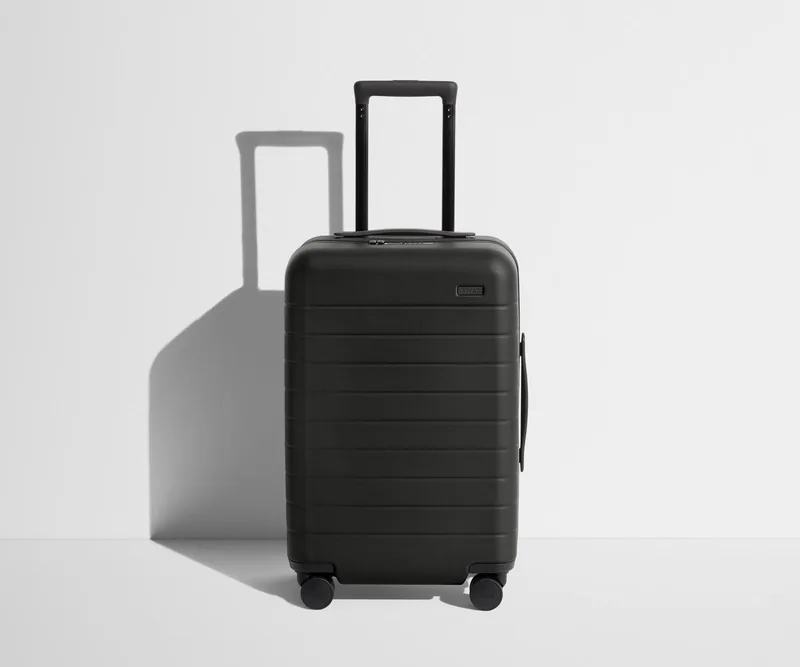
Away The Carry-On
Away lists a polycarbonate shell, spinner wheels, a combination lock and an interior compression system. Verify trim, lining and handle details on the current model page, since configurations can change and those features do not prove easier lifting.
Away’s listed 21.7 x 14.4 x 9-inch exterior is smaller than Ridge’s 22.5 x 14.5 x 9-inch exterior in height and width. Away’s current weight figures conflict across product descriptions, so we do not use them to rank these bags.
Away's published carry-on specifications do not list Ridge-style corner protectors or a dedicated tracker pocket. Its listed interior measurements are 20.1 x 13.9 x 7.5 inches; place any tracker in a secure interior location you can remember.
- Away’s 21.7 x 14.4 x 9 inch exterior meets a 22-inch height limit but exceeds a 14-inch width limit
- 426 ratings, four times what the Ridge has behind it
- 21.7-inch listed exterior height
- Underside grab handle for lifting it into a bin
- No stated shell thickness advantage and no corner protectors
- No tracker pocket, so an AirTag rides loose inside
The default answer for anyone who likes the minimal hardside look and doesn't need a bag built for the hold. It's lighter, cheaper, closer to legal on height, and it has four times as many owners reporting back.
3. LEVEL8 Grace Carry-On, 20 inch
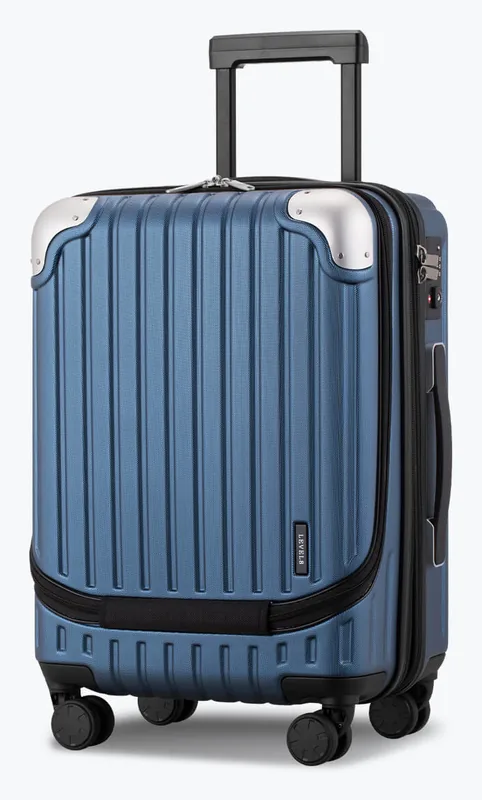
LEVEL8 Grace Carry-On
This is the inexpensive option, and the one built for occasional flyers who want a deep review history behind the purchase. It costs a fraction of the Ridge and it carries more than 2,000 ratings, the only long-run durability evidence anywhere in this comparison. The question every buyer has is whether the bag survives. Two thousand owners on a platform where the seller doesn't curate the display answer that better than a spec sheet does.
The budget alternative lists an ABS-and-polycarbonate shell, 9 lb weight, 36 L capacity and 21.8 x 14.5 x 9.4-inch exterior. Those dimensions exceed a 22 x 14 x 9-inch box on width and depth; the material label alone does not establish how it will fail.
A front-opening laptop compartment is useful when you need a computer without opening the main case. Choose that access pattern if it matters more to you than a conventional clamshell.
- More than 2,000 ratings, the only deep owner history in this comparison
- Front-opening laptop compartment neither premium bag offers
- A fraction of the Ridge's price for the same core hardware set
- ABS and polycarbonate blend shell rather than pure Makrolon
- 9 lb empty, over a pound heavier than the Ridge
- Check the exact front-access model’s overall width and depth against your airline’s allowance
If you fly a few times a year, get this. You trade shell material and a pound and a half for a laptop pocket you'll use and a much larger review sample.
At a glance: all three carry-ons
Which one should you buy?
Ridge's corner protection, tracker pocket and listed shell thickness may appeal if the bag is likely to be checked. Its 22.5-inch height exceeds a 22-inch limit, and the available review sample is too small to prove durability, so buy on verified features and current airline rules.
The Away is the same minimal look in a lighter bag that clears the height limit, with four times the owner feedback and a lower price. The LEVEL8 is the pick if you fly a handful of times a year, want a laptop pocket, and would rather trust two thousand strangers than one thick shell.
FAQ
Is the Ridge Carry-On TSA approved?
Ridge lists a built-in TSA-approved combination lock and a 22.5 x 14.5 x 9-inch exterior. The lock label does not certify that the bag fits an airline sizer.
What makes Ridge luggage unique?
The shell is German Makrolon polycarbonate that Ridge states is 30 percent thicker than a standard carry-on, backed by reinforced ABS corner protectors. Ridge lists a 50 x 50 mm pocket for an AirTag or tracker card, plus a tearaway tag slot. Confirm compatibility with your tracker model before relying on the fit. Compare the wheel hardware, handle, lock, and compression layout on their own merits; a premium price does not make those components interchangeable.
Are rigid suitcases any good?
Ridge lists a rigid polycarbonate shell and no external laptop pocket. The product page does not establish that rigid shells protect fragile contents better than fabric in general.
How heavy is the Ridge carry-on?
Ridge lists the Carry-On at 7.6 pounds empty. That weight comes out of any cabin-bag weight allowance; weigh the fully packed case before departure.
Does the Ridge carry-on fit in the overhead bin?
Ridge currently publishes 22.5 x 14.5 x 9-inch exterior dimensions. Compare that single current figure with the operating carrier’s limit.
Should I get the Ridge Check In instead?
Only if you check a bag on most flights. Ridge lists the Check In at 70 L and 10.2 lb with a Makrolon shell and A026 combination lock. Those are relevant checked-bag specifications, but they do not by themselves prove the thicker shell survives handling better. It has just 28 ratings behind it, and stock has been patchy, so confirm availability first. If a carry-on covers your usual trip, get the carry-on.
The verdict on Ridge luggage
Ridge built a carry-on the way it built the wallet, by picking a few things to do properly and leaving the rest off. The thicker Makrolon shell, the corner protectors and the tracker pocket are real advantages, and all that material still weighs 7.6 lb. The limits are the half inch over the standard height and the 107 ratings, which can't tell you how it ages.
Featured photo: “GIB Bags New” by MKY661, via Wikimedia Commons, released into the public domain. Resized from the original and converted to WebP. Generic travel photograph.
